
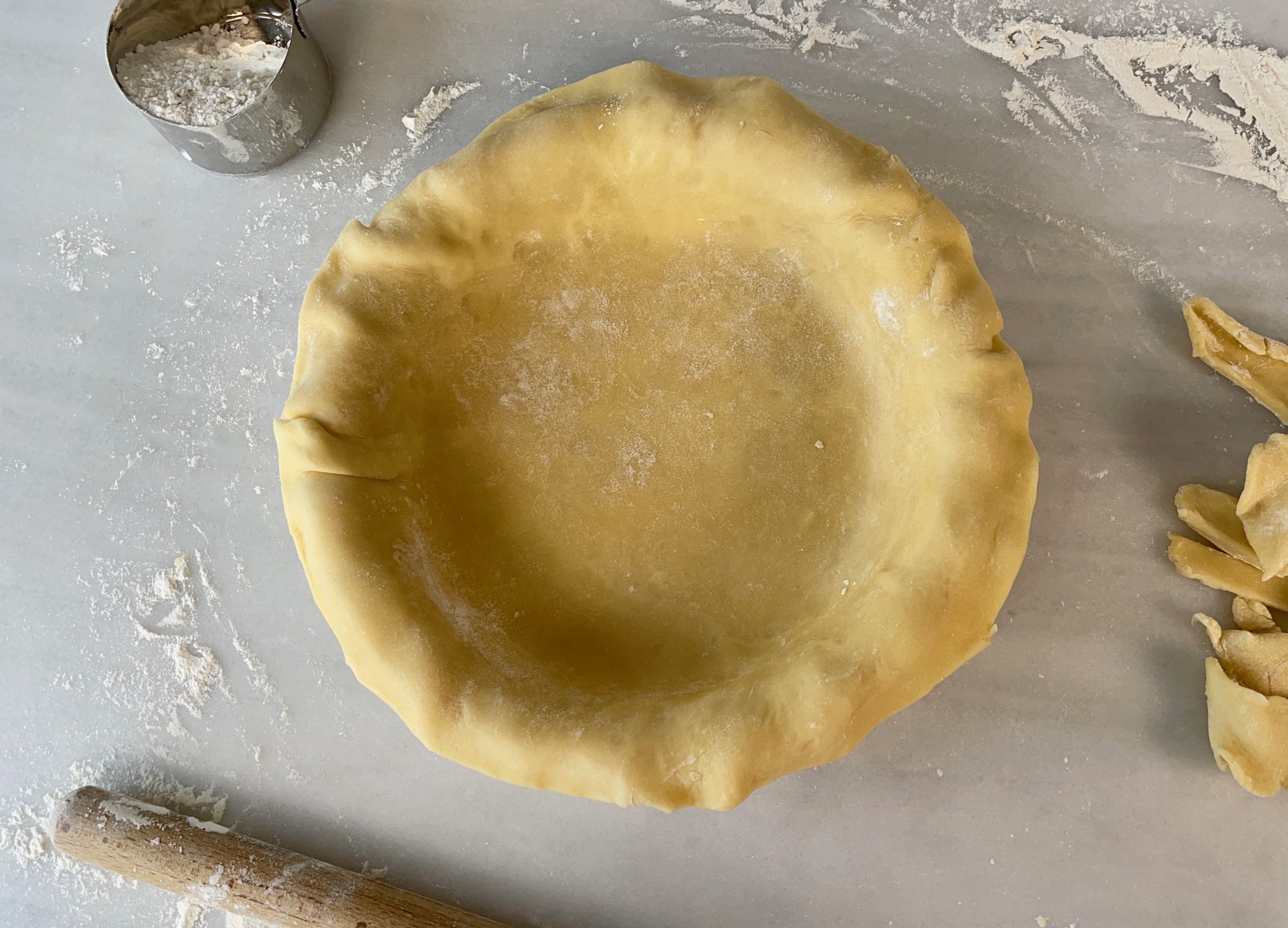
Pâte brisée is one of the foundational building blocks of French pastry. Crisp, buttery, and beautifully flaky, this classic short-crust dough is incredibly versatile. Because it balances a delicate crumble with structural integrity, it is the perfect canvas for both savory and sweet creations, from classic quiches to elegant fruit tarts and rustic galettes.
If you have ever been intimidated by French pastry, don’t worry—with a few professional techniques, mastering this dough is easily within your reach.
What is Pâte Brisée?


Pâte brisée (pronounced “pat bree-ZAY”) literally translates from French as “broken dough,” referring to the method of cutting fat into flour to interrupt gluten development.
While it shares the spotlight with its cousin, pâte sucrée (sweet short-crust), they serve very different culinary purposes:
- Pâte Sucrée: Contains sugar and often a higher proportion of egg, giving it a crisp, melt-in-your-mouth, cookie-like texture best suited for sweet fruit or chocolate tarts.
- Pâte Brisée: Contains little to no sugar, resulting in a remarkably flaky texture. It is sturdy enough to handle moist or liquid fillings—such as an egg custard for quiche—without becoming soggy.
Pâte Brisée vs. American Pie Crust: What’s the Difference?

At first glance, pâte brisée and traditional American pie crust seem identical—both rely on flour, fat, water, and salt to create a flaky crust. However, the nuances lie in the ingredients and the final texture:
- The Fat: American pie crusts frequently use a combination of butter and vegetable shortening or lard to maximize flakiness. Pâte brisée relies strictly on pure butter for a richer, more elegant flavor profile.
- The Hydration: American recipes often call for slightly more hydration (sometimes adding vinegar or vodka) to encourage a bit more elasticity, resulting in a sturdier, structural crust.
- The Texture: Pâte brisée features a much finer, more delicate, and uniform crumble than the large, distinct layers of an American pie crust.
The Science Behind the Ingredients

- Flour: All-purpose flour or pastry flour works beautifully. Chef’s Tip: After scaling your flour, place it in the refrigerator for 15 minutes. Cold flour keeps the ambient temperature low and prevents the butter from melting during mixing.
- Butter: Use high-quality unsalted butter, and ensure it is ice-cold.
- Water: Must be ice-cold to protect the integrity of the solid butter pieces.
- Egg Yolk: Adding an egg yolk introduces lecithin, a natural emulsifier. Lecithin binds the water and coats the flour particles, preventing direct contact that would otherwise trigger excessive gluten. This results in a dough that is less sticky to handle and exceptionally tender.
- Salt: A crucial flavor enhancer. Without a precise amount of salt, the crust will taste dull and flat.
Optional Variations
- Sugar: Adding a small tablespoon of sugar doesn’t just add sweetness; it aids in caramelization during baking, helping your crust achieve that gorgeous, deep Kitsune-iro (golden-brown) finish.
- Cheese Powder: For savory bakes like quiches or tomato tarts, incorporating a tablespoon of finely powdered cheddar or parmesan directly into the dry ingredients adds a wonderful depth of flavor.
Step-by-Step Method: Flaky vs. Mealy
The ultimate texture of your pâte brisée depends entirely on how finely you cut the butter into the flour. Depending on your final dish, you can aim for two different styles:
- Flakier Crust (Ideal for fruit tarts or galettes): Leave the butter pieces slightly larger—about the size of small peas. When baked, these pockets of butter melt, creating steam that lifts the dough into delicate, flaky layers.
- Mealy Crust (Ideal for quiches and liquid fillings): Work the butter into the flour until it resembles fine, coarse sand. Because the fat coats the flour molecules more thoroughly, it creates a moisture-resistant barrier that prevents liquid fillings from making your crust soggy
Step 1: Mise en Place


Sift your flour. Cut the ice-cold butter into small cubes. In a small bowl, whisk together the egg yolk, salt, and cold water, then store the liquid mixture in the refrigerator until needed.
Step 2: Incorporate the Fat


- By Hand (Traditional Method): Working quickly on a cool surface, use your fingertips or two bench scrapers to rub and pinch the butter cubes into the flour. Aim for a sandy texture with pea-sized pieces of butter. If the dough begins to feel warm or greasy, stop immediately and chill the mixture in the fridge for 10–15 minutes before proceeding.
- By Food Processor: Combine the flour and cold butter cubes in the bowl of a food processor. Pulse 8 to 10 times in short bursts until the mixture resembles a coarse meal.
Step 3: Add the Hydration


Drizzle the cold liquid mixture over the flour-butter blend little by little. Pulse or toss gently just until the dough barely holds together when pinched. It should look crumbly, not wet or sticky.
Step 4: Fraisage and Chill


Turn the shaggy dough out onto a cool work surface. Use the heel of your hand to gently smear the dough away from you once or twice (a French technique called fraisage). This homogenizes the fat without developing gluten. Gather the dough, press it into a smooth, flat disc, wrap it tightly in plastic wrap, and chill in the refrigerator for at least 1 hour before rolling.

Storage and Make-Ahead Tips
Refrigerator: Keep the wrapped dough disc in the fridge for up to 3 days.
Freezer: For long-term prep, roll the dough out between sheets of parchment paper, wrap tightly, and freeze. It will stay fresh for 1 to 2 months. You can bake it straight from the freezer or thaw it in the fridge overnight.

Classic French Pâte Brisée (Short-Crust Pastry)
Ingredients
- 250 g Pastry flour or All-Purpose flour (chilled)
- 170 g Unsalted butter (ice-cold, cubed)
- 20 g Egg yolk
- 50-60 g Ice-cold water
- 3 g Fine sea salt
- 12 g sugar optional
Instructions
- Sift the flour into a bowl and chill. Cut the cold butter into small cubes. In a small container, whisk together the egg yolk, fine sea salt, and ice-cold water with a fork; place in the refrigerator until ready to use.

- Add the chilled flour and cubed butter to the bowl of a food processor. Pulse 8 to 10 times in short bursts until the butter is broken down and the mixture resembles a coarse meal with pea-sized pieces remaining. (Alternatively, quickly rub the butter into the flour by hand or using bench scrapers on a cold work surface).

- Drizzle the cold egg and water mixture into the food processor a little at a time, pulsing briefly after each addition. Stop pulsing when the mixture just begins to clump together.

- Pinch a small amount of the crumbly mixture between your fingers. If it holds its shape seamlessly, it is ready. If it remains too dry and powdery, add an extra teaspoon of ice water.

- Turn the shaggy dough out onto a clean, cold surface. Gently press the crumbles together with your hands to form a cohesive mass. Avoid over-kneading, which develops gluten and results in a tough texture. Flatten the dough into a smooth disc.

- Tightly wrap the disc in plastic wrap and refrigerate for a minimum of 1 hour before rolling out and baking to allow the gluten to relax and the butter to firm up.


1 comment
MIQWQFBpVAkReFPgeTEQLuKk