
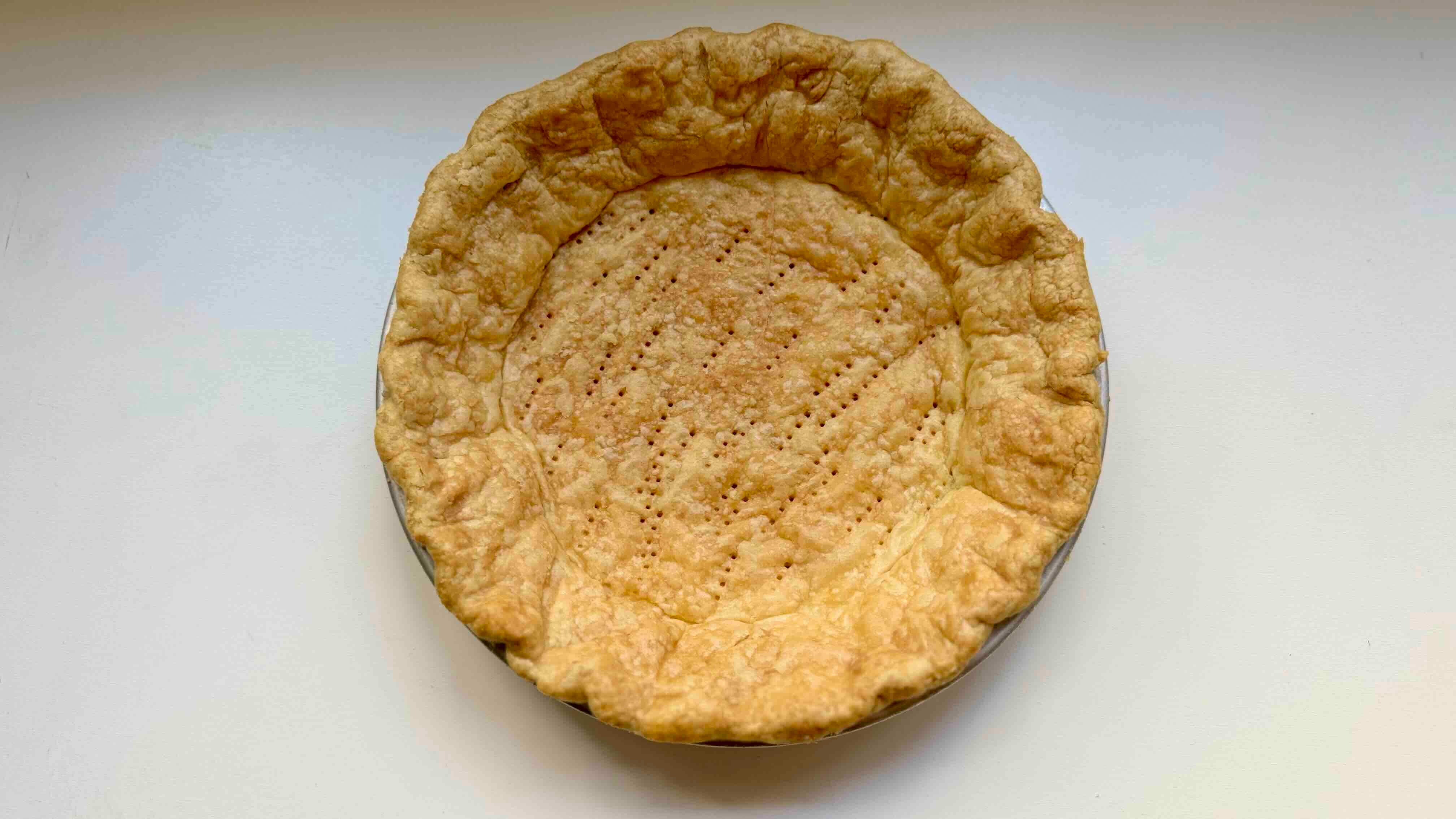
There is nothing quite as satisfying as a beautifully golden, crisp pie crust. But if you’ve ever ended up with a soggy bottom or a crust that shrank down the sides of the pan, you know that baking the perfect pie shell requires a bit of technique.
Whether you are making a silky chocolate cream pie or a classic pumpkin pie, mastering blind baking and par-baking is your ticket to bakery-quality results. Here is your ultimate pro-guide to lining, weighting, and baking your pie shell to absolute perfection.
Blind Baking vs. Par-Baking: What’s the Difference?


While they use the exact same preparation technique, the difference comes down to baking time and your choice of filling.
- Par-Baking (Partial Baking): This gives your crust a head start. You partially bake the crust before adding a wet filling that needs to go back into the oven (like pumpkin, pecan, custard, or fruit pies). Par-baking prevents the liquid filling from making the dough soggy.
- Blind Baking (Full Baking): This means completely baking the crust until it is fully cooked and crisp. You use this for no-bake fillings that won’t see the inside of an oven again, such as lemon meringue, chocolate cream, banoffee, or French silk pies.
Everything You Need to Get Started
Before you begin, gather your tools. Keeping your ingredients and equipment cool is the secret to a flaky crust!
Equipment Checklist

- Chilled Pâte Brisée Dough: (Grab my go-to French Short-Crust Dough Recipe here)
- Butter: 5g to 10g (for greasing the pan)
- Flour: For dusting your work surface
- Rolling pin
- Pie dish or Tart pan: A standard 9-inch pie pan works beautifully. If you want a pro-level finish, use a bottomless tart ring (cercle), which is preferred by French pastry chefs for easy removal.
- Fork or dough docker
- Paring knife or peeler
- Parchment paper & Pie weights
Step-by-Step: How to Blind Bake a Pie Crust
Step 1: Prep the Pan

Thinly coat the inside and sides of your tart pan with a small amount of butter. Make sure it’s an even, thin layer with no clumps left behind.
Step 2: Roll the Dough

Lightly dust your work surface with flour and place your chilled Pâte Brisée on top. Roll the dough out to a thickness of 4mm to 5mm.


Pro Tip: To keep the thickness perfectly uniform, rotate the dough a quarter turn (90 degree) after every few rolls. Hover your pan over the dough to ensure it’s rolled out wider than the pan itself.
Step 3: Transfer to the Pan

Gently roll the dough loosely around your rolling pin, lift it up, and unroll it smoothly over your pan.
Step 4: Fit and Shape

Lift the edges of the dough and gently guide it down into the corners of the pan. Use the backs of your index and middle fingers to press the dough firmly against the bottom and sides.
- If using a traditional pan: Trim the excess dough, leaving a slight overhang to crimp, or run your rolling pin over the top edge of a fluted tart pan to cleanly cut off the excess.
- If using a tart ring: Cut the overhang with a paring knife. Wrap any leftover dough scraps in plastic wrap and save them for patches later.
Step 5: Dock and Chill (Crucial Step!)

Prick the bottom of the dough all over with a fork or a dough docker. This process, called docking (or piquer in French), lets steam escape so the bottom doesn’t puff up.
Pop the lined pan into the fridge for at least 30 minutes. Chilling relaxes the gluten and solidifies the butter, which keeps the sides from collapsing or shrinking during baking.
The Baking Process


- Preheat: Heat your oven to 180°C (350°F). Keep your pie shell in the fridge until the exact moment you are ready to bake.
- Add Weights: Cut a piece of parchment paper slightly larger than your pan. Crumple it up into a ball (this makes it easier to fit into the corners), unfold it, and lay it snugly over the dough. Fill it completely with your choice of pie weights.
- The First Bake (15 mins): Bake for about 15 minutes. You’ll know it’s ready for the next step when the exposed edges of the crust start to take on a light golden color.
- Remove the Weights: Carefully lift out the parchment paper and weights.
- For Par-Baking: Return the naked crust to the oven for another 5–8 minutes just until the bottom looks set and dry, but not fully browned.
- For Full Blind Baking: Return it to the oven for 10–15 minutes until the entire shell, including the bottom, is a beautiful golden brown.
- Cool and Trim: Let the crust cool in the pan on a wire rack. (Optional) For a perfectly clean, professional pastry-shop finish, gently shave down any uneven top edges using a vegetable peeler or a sharp paring knife.
The Ultimate Guide to Pie Weights
You don’t need expensive baking gear to weigh down your crust. Here are the best options to keep your dough flat:

- Granulated Sugar: A brilliant pro-tip! Because sugar is so fine, it distributes weight incredibly evenly. After baking, let it cool; it will have a lovely, subtle caramel aroma and can still be used normally in your everyday baking recipes.
- Ceramic Pie Stones / Baking Beans: The gold standard. They conduct heat wonderfully. My Routine: After baking, let them cool down completely inside the oven or on a heat-safe surface, then store them in an airtight container for your next baking session.
- Dried Beans: An affordable classic. You won’t be able to cook and eat these beans after they’ve been baked, but you can save them in a jar and reuse them as pie weights indefinitely.
- Uncooked Rice: Works just like dried beans. It fills small gaps perfectly due to its size. Keep a designated jar of “baking rice” in your pantry.
Troubleshooting: Why Does My Pie Crust Shrink or Puff Up?
The bottom of my crust puffed up!
The Cause: Air got trapped between the dough and the pan, or steam couldn’t escape.
The Fix: Make sure you press the dough firmly into the bottom corners of the pan when lining it. Don’t skip docking the crust thoroughly with a fork, and make sure your pie weights fill the pan all the way to the edges.
When should I remove the pie weights?
The Rule: Take them out as soon as the edges of the crust look stable and have a hint of color. If you leave the weights in for the entire bake time, the bottom of the crust will stay pale, doughy, and undercooked.
My crust shrank significantly during baking!
The Cause: This usually happens if the butter melted before baking, the dough was overworked, or the oven temperature fluctuated.
The Fix:
- Keep everything cold. If your kitchen is warm or your hands melt the butter, chill the dough frequently.
- Don’t over-knead the dough; too much handling develops gluten, making the crust snap back like rubber.
- Avoid opening the oven door constantly, as dropping temperatures prolong the baking time and cause the crust to sag.
- Roll the dough evenly—thin spots will cook too fast and pull the rest of the crust down.
How to Store Raw and Baked Pie Shells
- Before Baking: Raw, lined pie shells store beautifully. Wrap the pan tightly in plastic wrap. It will keep in the fridge for up to 3 days or in the freezer for up to 3 months. If freezing, you can bake it straight from the freezer—just add an extra minute or two to your bake time!
- After Baking: Baked pie crusts act like a sponge for moisture. For the crispiest texture, it is best to fill and serve them as soon as possible after they cool down. Let’s create something delicious!


How to Blind Bake a Pie Crust (Perfect Pie Shell Guide)
Ingredients
- 1 recipe Pâte Brisée dough (or 1 store-bought pie crust sheet, kept cold)
- 5 g Butter (for greasing the pan)
- 1 tbsp All-purpose flour (for dusting)
Instructions
- Prep the Pan: Thinly coat the inside and sides of a 9-inch tart pan or pie dish with 5-10g of butter. Ensure there are no clumps.

- Roll the Dough: Lightly dust your work surface with flour. Roll the chilled Pâte Brisée out to a thickness of 3mm to 4mm, rotating a quarter turn after every few rolls to keep it even.

- Line the Pan: Gently roll the dough around your rolling pin and unroll it over the pan. Lift the edges and ease the dough into the bottom corners, pressing gently with the backs of your fingers. Trim any excess dough.

- Dock and Chill: Prick the bottom of the dough thoroughly with a fork to let steam escape. Place the lined pan in the refrigerator to chill for at least 30 minutes.

- Preheat and Weight: Preheat your oven to 180°C (350°F). Line the chilled dough with crumpled parchment paper and fill it to the brim with your chosen pie weights (ceramic stones, beans, rice, or sugar).

- Bake: Bake with weights for 15 minutes until the edges are stable and lightly golden. Remove the parchment and weights.

- For Par-Baking: Return to the oven for 5–8 minutes until the bottom looks dry.

- For Full Blind Baking: Return to the oven for 10–15 minutes until the entire shell is golden brown.

- Trim and Cool: Let the shell cool on a wire rack. (Optional) For a perfectly clean, professional pastry-shop finish, gently shave down any uneven top edges using a vegetable peeler or a sharp paring knife.
