
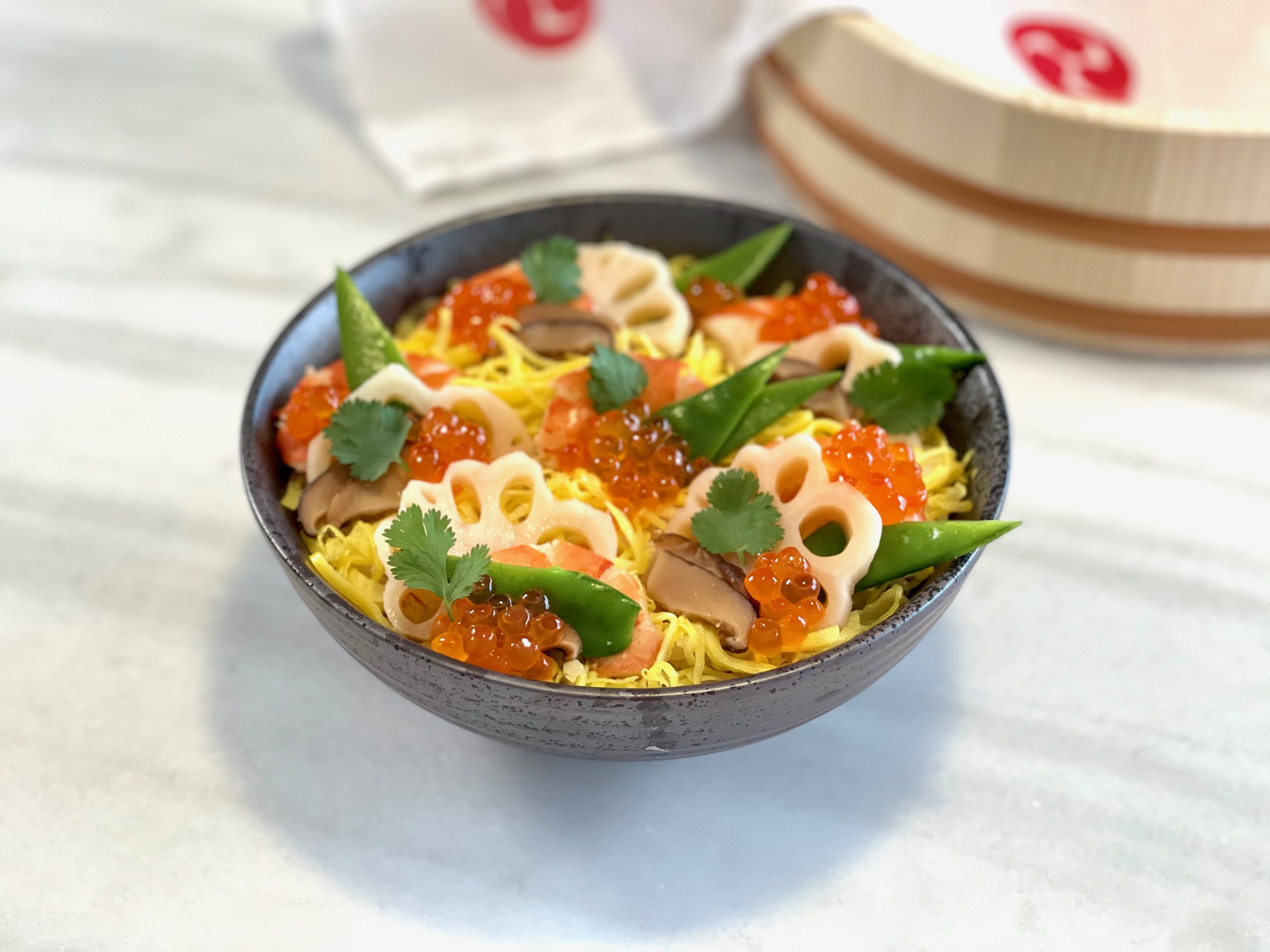
Unlike in Western culinary culture, where sushi is often tied to dining out, in Japan, traditional nigiri is considered a distinct specialty, frequently reserved for ordering out to celebrate milestones like birthdays, graduations, or family gatherings.
However, Chirashi Sushi (along with inari and temaki hand-rolls) is the ultimate comforting sushi made entirely at home. It requires no intense technical rolling or slicing skills, making it beautifully approachable while remaining incredibly festive and elegant.
While chirashi is a year-round staple, it is famously the star dish of Hina Matsuri (Girls’ Day) on March 3rd. With its vibrant colors and balanced flavors, it is the perfect stunning centerpiece for home parties, spring gatherings, or a fun, interactive kitchen project with your family.
What is Chirashi Sushi? (Gomoku vs. Kaisen)

The word Chirashi (ちらし寿司) translates to “scattered” in Japanese, referring to the beautiful array of ingredients arranged over a bed of seasoned sushi rice. Generally, you will encounter two main styles:

- Edomae or Kaisen Chirashi: Popularized in the Tokyo area, this style features premium slices of fresh, raw sashimi scattered elegantly over sushi rice.
- Gomoku Sushi (or Bara Sushi): Gomoku means “five ingredients,” representing a traditional style where seasoned, cooked vegetables are folded into the sushi rice before the top is decorated.

Growing up, my family always made Gomoku Sushi. It relies on comforting, deeply flavorful pantry staples, making it both accessible and highly customizable. While my mother occasionally used an instant grocery store chirashi mix for speed, making the simmered vegetable base from scratch elevates the depth of flavor to an entirely new level.
A Flexible Canvas: Scatter What You Love

Chirashi is inherently flexible. If you have access to pristine, sashimi-quality raw fish, it makes a luxurious addition. However, fully cooked toppings like poached shrimp, beautiful vegetables, and bright pickles are just as elegant.
For a vegetarian or vegan version, swap the seafood for avocado, edamame, crisp cucumber, or sweet-tangy pickled daikon. It is a dish designed to brighten your table and adapt to whatever ingredients inspire you.
The Foundation: Perfect Sushi Rice

A spectacular sushi bowl depends entirely on the quality of your rice. The grains should be glossy, perfectly seasoned, and hold their structure without being mushy.
For my deep-dive method, troubleshooting tips, and the secrets to achieving restaurant-quality texture, check out my Step-by-Step Guide to Perfect Sushi Rice.

Chirashi Sushi (Gomoku Style)
Ingredients
For the Sushi Rice
- 2 cups uncooked short-grain sushi rice
- 1.8 cups water
- 1 strip Kombu (Kelp, approx. 2 inches / 6 cm)
- 4 tbsp rice vinegar
- 2 tbsp sugar
- ½ tbsp sea salt
For the Gomoku Mix (Simmered Vegetables)
- 1 medium carrot
- ⅓ medium lotus root (renkon)
- 5- 6 dried shiitake mushrooms
- 1 cup reserved shiitake soaking liquid (replenish with water if needed to reach 200ml)
- 1 ½ tbsp sugar
- 1 ½ tbsp sake
- 1 ½ tbsp Japanese soy sauce
For the Kinshi Tamago (Shredded Egg)
- 2 large eggs
- 1 tsp sake
- 1 tsp sugar
- 1 pinch salt
- 1 tsp potato starch (dissolved in 1 tsp water)
- 1 tsp neutral oil (for greasing the pan)
For the Decoration & Toppings
- 6-8 large cooked shrimp (peeled and de-veined)
- 7-8 snow peas
- 2 tbsp salmon caviar (ikura)
Instructions
Prepare the Gomoku Base
- Rehydrate Mushrooms: Soak the dried shiitake mushrooms in warm water until completely soft (about 30–45 minutes). Squeeze out excess liquid, thinly slice the caps, and reserve the soaking water.

- Prep Vegetables: Peel the lotus root and cut lengthwise into quarters, then slice crosswise into thin 1/8 inch quarter-rounds. Slice the carrot into small, delicate rectangles.

- Simmer: In a small pan, combine 200ml of the reserved shiitake water, sugar, sake, and soy sauce. Bring to a simmer over medium heat, add the carrots, lotus root, and shiitakes, and braise for about 5 minutes until the liquid is almost entirely evaporated. Let cool completely.

Make the Kinshi Tamago
- Whisk & Strain: In a small bowl, thoroughly whisk the eggs, sugar, sake, salt, and the dissolved potato starch mixture. Pass the mixture through a fine-mesh strainer into a clean bowl for an ultra-smooth texture.

- Cook Crepes: Heat a large non-stick skillet over low-medium heat and lightly grease with an oil-dipped paper towel. Pour 1/3 of the egg mixture, swirling rapidly to form a paper-thin crepe.

- Flip & Slice: Once the surface sets, gently flip and cook the other side for 10 seconds. Remove to a board to cool. Repeat with the remaining egg. Stack the cooled crepes, roll loosely, and slice into very fine ribbons.

Blanch the Greenery
- Blanch Snow Peas: Remove the tough strings along the edges of the snow peas. Bring a small saucepan of salted water to a boil, cook the peas for 60 to 70 seconds, then drain and plunge immediately into ice water. Slice thinly on a bias.

Assemble & Serve
- Fold Rice: Gently drain any excess liquid from the cooled simmered vegetables. Add them to your warm, freshly prepared sushi rice, folding gently with a rice paddle using a cutting motion so you don't mash the grains.

- Garnish: Distribute the mixed sushi rice into bowls. Arrange a generous bed of the kinshi tamago ribbons over the top, then artfully scatter the snow peas, cooked shrimp, and glistening spoonfuls of salmon caviar.

Notes
- The Potato Starch Secret: Adding a touch of dissolved potato starch (katakuriko) gives the egg crepes excellent elasticity, keeping them from tearing when you flip or slice them into fine ribbons.
- Temperature Control: Always allow the simmered vegetables to cool down to room temperature before folding them into the sushi rice. Hot or wet vegetables will trap excess steam and cause the seasoned sushi rice to turn gummy.

1 comment
[…] salmon sandwiches, hamburgers, inari sushi, etc. In this recipe, I decorated these pickles on the Gomoku Sushi. Check out my Gomoku sushi recipe. […]