
The Story Behind My Go-To Wafu Dressing
Having worked in numerous Japanese kitchens across both Japan and New York City, I’ve made—and tasted—countless iterations of classic wafu (Japanese-style) onion dressing. It is a staple on almost every Japanese restaurant menu for a reason: that sweet, sharp onion bite paired with savory soy sauce and tangy vinegar makes even the simplest bed of greens craveable.
For years, my house recipe was the standard restaurant formula: raw onion, soy sauce, salad oil, vinegar, and white sugar. It was reliable and delicious. But as my focus shifted toward functional ingredients and deep flavor building through fermentation, I decided to give this house classic a total overhaul.
Instead of standard soy sauce and refined sugar, I replaced them entirely with shoyu koji and amakoji.
Eating a raw salad already feels good for you, but dressing it with live, enzyme-rich fermented koji takes it to a whole new level. It turns a simple bowl of vegetables into a nourishing ritual—a way of treating your body like gold without compromising on culinary depth.
Why You’ll Love Japanese Onion Koji Dressing

- Umami over Harsh Salt: Shoyu koji (soy sauce fermented with rice koji) delivers a deeper, more rounded glutamic umami than regular soy sauce, with none of the harsh sodium sting.
- Natural Fermented Sweetness: Amakoji adds a gentle, silky sweet note that rounds out the acidity of the vinegar without needing refined sugar.
- Gut Health & Enzyme Power: Unpasteurized koji ferments are packed with active digestive enzymes (amylase and protease) that support gut health and make raw vegetables easier to digest.
- Silky texture with Taihaku Sesame Oil: Using Taihaku (unroasted) sesame oil provides a rich, velvety mouthfeel and high antioxidant stability without throwing heavy roasted sesame notes over the subtle sweetness of the onion and amakoji.
Ingredients & Substitutions for Koji Onion Dressing

Fine Sea Salt (2 pinches / ~1g): Direct sodium chloride sharpens the vinegar and lifts the sweet onion notes.
Sweet Onion (150g / ½ large): Sweet onions (like Vidalia or Walla Walla) give a softer, milder bite. Roughly chop before blending. (If using regular yellow onion, don’t skip the resting step in the recipe!)
Shoyu Koji (100g–110g): The savory core of the dressing. It delivers a deeper, more rounded glutamic umami than regular soy sauce without any harsh sodium sting. (If you want to brew your own batch, check out my step-by-step guide on how to make shoyu koji.)
Amakoji (50g): Sweet rice koji paste. It gives the dressing its gentle, naturally fermented sweetness and velvety body. You can easily make your own using my homemade amakoji recipe. If you don’t have amakoji on hand, natural liquid sweeteners like agave syrup or raw honey make great alternatives, or even a small touch of organic cane sugar. (Note: Avoid substituting with mirin here—since this dressing is uncooked, raw mirin introduces a sharp alcohol bite that overpowers the fresh flavors!)
Rice Vinegar (90g): Mild Japanese rice vinegar provides a clean snap. Apple cider vinegar is a great alternative if you prefer a subtle fruity pop.
Taihaku Sesame Oil (100g): Cold-pressed unroasted sesame oil. It provides a rich, velvety mouthfeel and high stability without throwing heavy roasted notes over the subtle sweetness of the onion and amakoji. You can substitute with another light neutral oil (like grape seed or rice bran oil).
Step-by-Step Method

- Combine the Base: In a blender or food processor, combine the chopped sweet onion, shoyu koji, amakoji, rice vinegar, and sea salt. Puree on medium-high until completely smooth.
- The Mellowing Rest (Crucial Step): Turn off the blender and let the mixture rest right in the blender container for 15 minutes.Chef’s Tip: Resting raw onion in the vinegar and acidic koji paste breaks down the volatile sulfur compounds (allylic sulfide), removing that unpleasant raw “onion burn” while allowing the koji enzymes to begin melding the flavors.
- Emulsify: Set the blender to medium-low speed. With the motor running, slowly stream in the Taihaku sesame oil until the mixture becomes a smooth, creamy, opaque emulsion.
- Jar & Chill: Pour the dressing into a clean 16 oz glass jar (this recipe yields ~480g–500g, filling a pint jar perfectly). Seal tightly and store in the refrigerator.
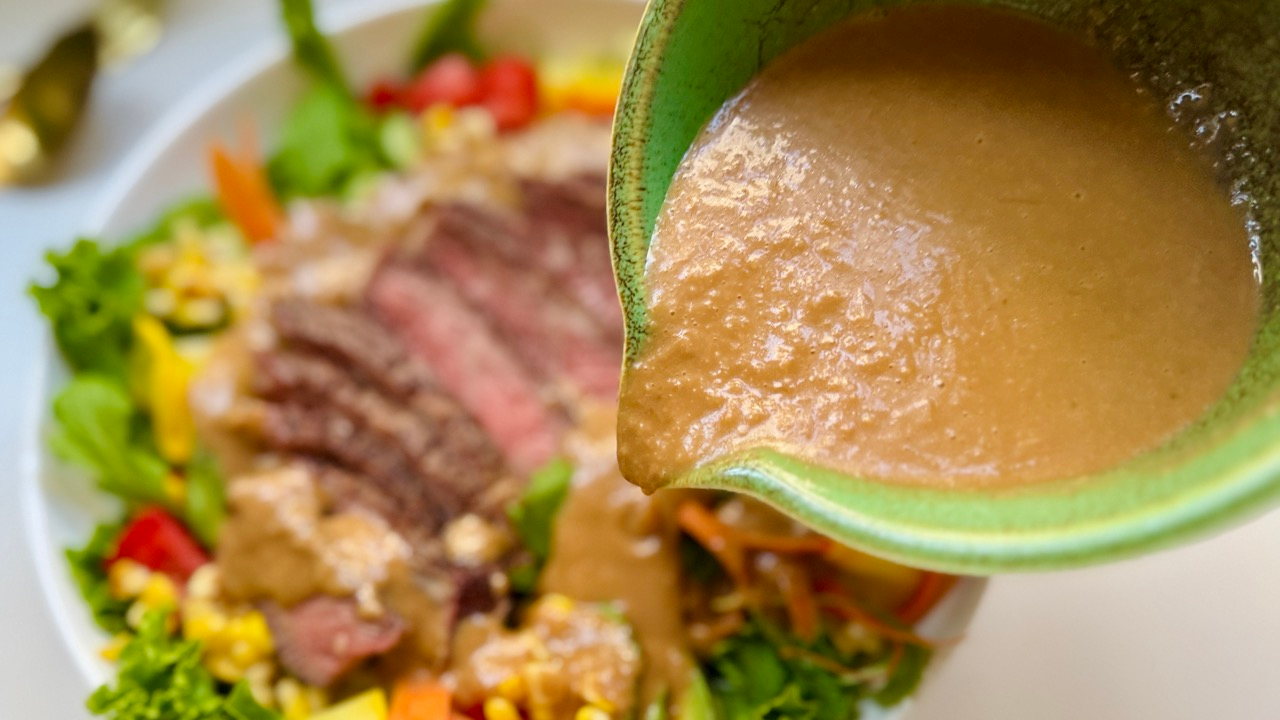
Serving Suggestion: Summer Steak Salad with Japanese onion koji dressing

While this dressing is incredible on simple shredded cabbage, chilled tofu, or grilled salmon, my absolute favorite way to serve it in the warm months is on a Summer Steak Salad.
Arrange thinly sliced, medium-rare grilled steak over a bed of crisp butter lettuce, juicy heirloom tomato wedges, grilled corn, and thinly sliced radishes. Drizzle this velvety onion koji dressing generously over the top—the deep umami of the shoyu koji pairs effortlessly with the seared beef and sweet summer produce.
Storage & Shelf Life

- Store in an airtight glass jar in the refrigerator for up to 3 to 4 weeks.
- Because it contains active ferments, the flavor actually continues to smooth out and mature over the first 24 to 48 hours. Give it a gentle shake before each use.

Japanese Onion Koji Dressing (Wafu Dressing)
Equipment
- High-speed blender or food processor
Ingredients
- 150 g Sweet onion (approx. ½ large, roughly chopped)
- 105 g Shoyu koji
- 50 g Amakoji (sweet rice koji paste)
- 90 g Rice vinegar (or apple cider vinegar)
- 100 g Taihaku sesame oil (unroasted sesame oil)
- 1 g Fine sea salt (2 pinches)
Instructions
- Combine the Base: In a high-speed blender or food processor, combine the chopped sweet onion, shoyu koji, amakoji, rice vinegar, and fine sea salt. Puree on medium-high speed until completely smooth.

- Rest & Mellow (Crucial Step): Turn off the blender and let the puree rest undisturbed inside the blender container for 15 minutes. (This allows the vinegar and acidic koji paste to break down raw onion sulfur compounds, removing the harsh raw onion burn.)

- Emulsify: Set the blender to medium-low speed. With the motor running, slowly stream in the Taihaku sesame oil in a steady drizzle until fully blended into a smooth, creamy emulsion.

- Jar & Chill: Pour the dressing into a clean 16 oz glass jar, seal tightly, and store in the refrigerator.
Notes
- Amakoji Substitutions: If amakoji is unavailable, substitute with 20g–30g of agave syrup, raw honey, or organic cane sugar. Avoid using raw mirin as a substitute, as its uncooked alcohol content creates a harsh bite in cold dressings.
- Oil Choice: Taihaku sesame oil is cold-pressed and unroasted, providing a silky texture without heavy roasted notes. Light neutral oils like grape seed or rice bran oil make great substitutes.
- Onion Variety: Sweet onions (Vidalia, Walla Walla) yield the mildest flavor. If using standard yellow onions, do not skip the 15-minute resting step.
- Storage: Keep refrigerated in an airtight glass jar for up to 3 to 4 weeks. Shake well before each use. Flavors peak after 24–48 hours as the onion further mellows.
