
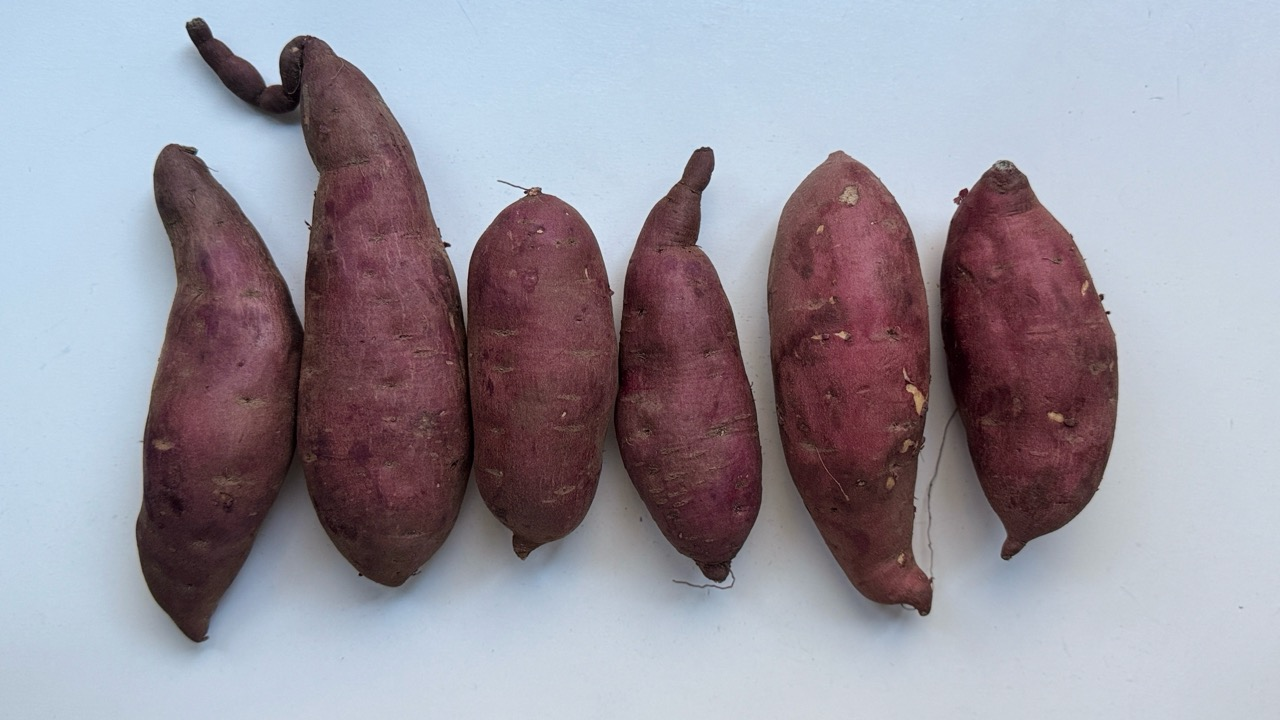
Every autumn in Japan, elementary school children head out to local fields for Imo Hori (いもほり)—harvesting the classic Japanese sweet potato. Even though my grandfather owned a tea and vegetable farm, doing Imo Hori with my classmates was one of my favorite school events. We would dig through the cool dirt with our gloved hands, pulling out plump, purple-skinned tubers like hidden treasures. Afterwards, we’d gather in the schoolyard to rake up fallen autumn leaves and roast freshly dug sweet potatoes directly over the smoldering embers. Breaking open a piping-hot yaki-imo to reveal its steaming, golden flesh remains one of my fondest childhood food memories.
Whether you are preparing traditional Yaki-Imo (slow-roasted sweet potatoes), silky Suito Poteto (sweet potato pastry), or glossy Daigaku Imo (candied sweet potatoes), understanding the unique characteristics of satsumaimo (さつまいも) is the key to culinary success.
In this guide, we’ll explore what makes satsumaimo special, how to navigate confusing produce labels at Western grocery stores, essential cooking techniques to unlock maximum sweetness, and the best ways to freeze whole roasted potatoes or paste for future desserts.
What Makes Satsumaimo Special?

Unlike standard American sweet potatoes (such as Garnet or Jewel varieties), which feature copper skin and moist, orange flesh, Japanese satsumaimo has distinct red-purple skin and dense, cream-to-pale-yellow flesh.
When cooked, satsumaimo develops a dense, chestnut-like flavor and a rich, natural sweetness without needing added sugars.
- Skin Color: Deep red-purple (vs. copper/orange on American sweet potatoes)
- Flesh Color: Cream or pale yellow that turns golden when cooked (vs. deep orange)
- Texture: Starchy, dense, fluffy, or velvety (vs. watery, stringy, or fibrous)
- Flavor Profile: Sweet and chestnut-like (kuri-ano)
- Best Uses: Roasting, wagashi, pastries, tempura, and purées
Pastry Tip: Do not substitute orange Garnet or Jewel sweet potatoes when making Japanese recipes like Suito Poteto. Their high water content will make fillings soggy and prevent dough from holding its shape.
Understanding Satsumaimo Textures: Fluffy vs. Moist

In Japan, sweet potatoes are generally appreciated for two main texture profiles:
- Moist & Creamy (Nettori): Varieties (like Beni Haruka) that become dense, glossy, and intensely sweet as their starches convert to syrup during slow roasting. These are ideal for Yaki-Imo, cheesecakes, and smooth dessert purées.
- Fluffy & Starchy (Hokuhoku): Varieties (like Naruto Kintoki) with a drier, chestnut-like texture that flake apart delightfully. These are traditional for Daigaku Imo (candied sweet potatoes), tempura, and simmered dishes.
Shopping Rule of Thumb: In North American supermarkets, most purple-skinned, yellow-fleshed sweet potatoes will fall somewhere in between these two styles—giving you a wonderful balance of chestnut-like flavor and creamy texture!
How to Buy Satsumaimo in Western & Asian Markets

Finding satsumaimo in North America can be confusing because produce labeling and naming conventions vary widely from store to store.
1. Local Regular Grocery Stores
When shopping at your local mainstream supermarket, look for sweet potatoes with deep reddish-purple skin and tapered ends.
- What to Look For: Reddish-purple skin with crisp, cream-to-pale-yellow flesh inside (avoid copper-skinned potatoes with bright orange flesh, like Garnet or Jewel, as these are too watery for Japanese desserts).
- Common Label Names: You may see them sold as Japanese Sweet Potatoes, Murasaki Sweet Potatoes, or Oriental Sweet Potatoes / Yams.
Trader Joe’s & Whole Foods Examples:
- Trader Joe’s: Sells them labeled specifically as Japanese Sweet Potatoes (bags or individual) or Murasaki Sweet Potatoes (dark purple skin with off-white flesh—a slightly drier texture that still works wonderfully for purées and baking).
- Whole Foods Market: Look for organic purple-skinned sweet potatoes often labeled as Organic Japanese Sweet Potatoes or Organic Oriental Sweet Potatoes / Yams (look for organic PLU 94818 on the sticker). Despite the word “yam” on some signs, these feature the classic purple skin and dense, golden-yellow interior.
2. Asian Supermarkets, Online Grocery & Specialty Farms

- Asian Supermarkets (H Mart, Mitsuwa, Sunrise Mart) & Weee!: Brick-and-mortar stores and online platforms like Weee! routinely carry fresh Japanese sweet potatoes, mini sweet potatoes, or California-grown satsumaimo. At stores like H-Mart, you will often see them labeled as “Korean Sweet Potato” (goguma). These share the exact same reddish-purple skin, golden yellow interior, and chestnut-like flavor, making them a perfect 1-to-1 substitute for all your dessert and pastry recipes!
- Pre-Baked Frozen Yaki-Imo (e.g., Kaitsuka Benitenshi): Online platforms like Weee! and specialty Japanese markets also sell imported, fully pre-baked frozen yaki-imo. These are slow-roasted before freezing, making them incredibly sweet, moist, and sticky. You can thaw them in the fridge to eat cold like sorbet or microwave them for a quick hot treat.
- Suzuki Farm USA: For authentic Japanese vegetables grown domestically, Suzuki Farm is a fantastic online source for fresh satsumaimo. Their produce is grown specifically to match traditional Japanese flavor profiles, making them a wonderful option if your local grocery selection is limited.
The Cooking Science: How to Unlock Maximum Sweetness

The secret to ultra-sweet satsumaimo lies in an enzyme called alpha-amylase.
When sweet potatoes are heated slowly within the temperature range of 140°F to 170°F (60°C to 75°C), alpha-amylase breaks down the raw starches into maltose (malt sugar).
How to Apply This at Home:
- Unwrapped Low-and-Slow Roasting: Bake unwrapped whole sweet potatoes at 325°F (165°C) for 1 hour 45 minutes. This slow heating window allows maximum starch-to-sugar conversion, yielding a caramelized, sticky skin and sweet interior.
- Gentle Simmering: When boiling potatoes for purées or pastries, simmer gently over low heat for ~30 minutes rather than rapidly boiling them.
Storage & Freezing Tips: Whole Yaki-Imo & Roasted Paste
1. Raw Storage
Store raw sweet potatoes in a cool, dark, well-ventilated spot (ideal temperature: 55°F–60°F / 13°C–15°C). Never put raw satsumaimo in the refrigerator, as cold temperatures cause cold injury, changing their texture and creating a bitter core.
2. Freezing Whole Baked Yaki-Imo
- Method: Bake a large batch of whole satsumaimo unwrapped at 325°F (165°C) for 1 hour 45 minutes. Allow them to cool completely at room temperature. Wrap each potato tightly in plastic wrap, place them in a freezer bag, and freeze for up to 1 month.
- Chilled (Hiyashi Yaki-Imo): Thaw overnight in the refrigerator. Eat cold with a spoon for a natural, ice-cream-like autumn treat.
- Hot: Reheat from frozen in the microwave for 2–3 minutes for an instant warm snack.
3. Freezing Roasted Sweet Potato Paste (Satsumaimo Puree)
Passing freshly roasted yaki-imo through a fine-mesh sieve (uragoshi) while warm creates a rich, velvety paste that concentrates natural sugars and caramel notes.
- Preparation: Peel the warm yaki-imo skin and press the flesh through an uragoshi (fine strainer).
- Portion & Freeze: Divide the paste into 100g or 200g portions, flatten them into airtight freezer bags (or wrap tightly in plastic wrap), and press out any air. Flat sheets freeze quickly and thaw evenly.
- Culinary Uses: Use as a base for Suito Poteto, mont blanc cream, wagashi fillings (like nerikiri or tsukimi dango), or whisk straight into dashi, soy milk, or cream for a velvety potage soup.
