
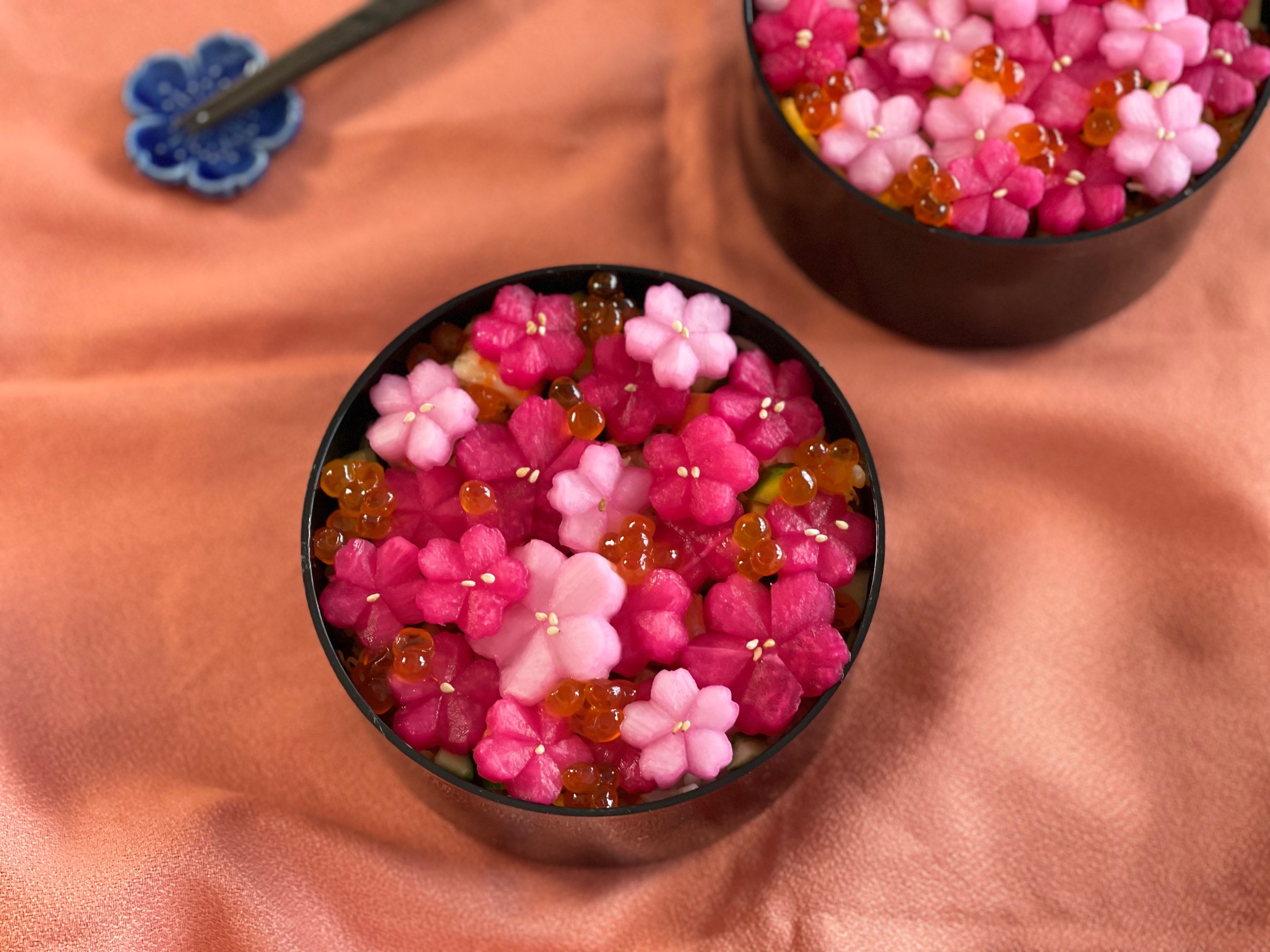
Edible flowers, microgreens, and vibrant heirloom vegetables are incredible tools for elevating a dish. However, they aren’t always in season or easily found at your local grocery store.
These vibrant pink flower daikon pickles are the perfect solution for adding a pop of color and a touch of elegance to your meals year-round. Not only are they visually stunning, but they also offer a crisp, refreshing crunch and a well-balanced sweet-and-sour flavor. They make a beautiful addition to bento boxes, grain bowls, sandwiches, and sushi platters.

What is Kazarigiri? (The Art of Decorative Vegetable Cutting)

In traditional Japanese cuisine, chefs practice kazarigiri (飾り切り), which means “decorative cutting.” This technique transforms everyday vegetables into elegant shapes like flowers, leaves, and fans to celebrate the seasons.

While traditional master-level kazarigiri requires a specialized knife and years of practice, you can easily shortcut the process at home! By using a Sakura (cherry blossom) vegetable cutter, anyone can achieve professional-looking results in seconds. In Japan, these handy stainless steel cutters are a staple for making everyday home cooking and bento boxes look incredibly festive.
Step 1: Use a Sakura cutter to punch out the basic flower shape from your sliced daikon.

Step 2: Use a small paring knife to make shallow, curved decorative scores along the petals for a beautiful, dimensional finish.

Ingredients for Flower Daikon Pickle

For the Sweet Pickle Brine:
- 300 ml Rice vinegar (white wine vinegar or apple cider vinegar can also be used)
- 8 tbsp Granulated sugar
- 2 tsp Sea salt
The Vegetables:
- ½ Large Daikon radish
- ¼ Head of Red cabbage, shredded
How to Dye Daikon Pink Naturally

To achieve this brilliant pink hue without artificial food coloring, the secret ingredient is red cabbage.
When the natural pigments (anthocyanins) in red cabbage mix with the acidity of the rice vinegar brine, a magical chemical reaction happens, turning the liquid into a vibrant magenta.
Controlling the Color:

You can easily customize the shade of your pickles by adjusting the marinating time:
- Light Pastel Pink: Marinate for 1 to 2 hours.
- Vibrant Cherry Blossom Pink: Marinate for 12 to 24 hours.
- Deep Magenta: Marinate for 48 to 72 hours.
Bonus: The shredded red cabbage pickles right alongside the daikon, so you get two beautiful pickles in one jar!
How to Use Flower Daikon Pickles
These versatile pickles pull double duty as a palate cleanser and a stunning garnish. Here are a few favorite ways to serve them:
- Sushi & Rice Bowls: They are the perfect topping for Gomoku Chirashi Sushi or traditional Inari sushi.

- Bento Boxes: A simple way to add a bright pop of color next to rice and proteins.
- Sandwiches & Burgers: Layer them onto smoked salmon open-faced sandwiches or use them to add acidity to rich burgers.

Flower Daikon Pickle (Pink Japanese Radish Tsukemono)
Ingredients
For the Sweet Pickle Brine
- 300 ml Rice vinegar Alternatives: white wine vinegar or apple cider vinegar
- 8 tbsp Granulated sugar
- 2 tsp Sea salt
The Vegetables
- 0.5 pc Daikon radish large
- 0.25 pc Red cabbage finely shredded
Instructions
- Make the Pickle Brine: In a small saucepan, combine the rice vinegar, granulated sugar, and sea salt. Place over medium heat and let the liquid simmer gently, stirring occasionally, just until the sugar and salt are completely dissolved. Turn off the heat and let the brine cool down completely to room temperature.

- Shape the Daikon (Kazarigiri) :Peel the daikon radish and slice it crosswise into rounds roughly ½ to ¾ inch thick. Use a Sakura (cherry blossom) vegetable cutter to punch out the flower shapes. For an authentic touch, use a small paring knife to carve gentle, shallow curves along the petal faces for a dimensional 3D look.

- Shred the Cabbage :Finely shred the quarter head of red cabbage to maximize the release of its natural purple dye.
- Pack and Refrigerate Layer and pack the daikon flowers and shredded red cabbage into a clean glass jar. Pour the cooled pickle brine over the top until all the vegetables are completely submerged. Seal the lid tightly and store in the refrigerator. The pickles will be beautifully pink and ready to eat within 12 to 72 hours.

Notes
- Color Customization: The longer the daikon sits with the cabbage, the darker it gets. For light pastel pink, pull them out after 1-2 hours. For deep magenta, leave them for 24-72 hours.
- Two-in-One Pickle: Don’t throw away the red cabbage! It pickles beautifully alongside the daikon and makes a wonderful tangy addition to salads.
- Storage: Keep stored in an airtight glass jar in the refrigerator for up to 2–3 weeks.
- Bento Assembly Suggestion: Arrange a bed of Gomoku sushi in a bento box. Garnish elegantly with cucumber ribbons, shredded egg crepes (kinshi tamago), your pink flower daikon pickles, salmon caviar (ikura), and a sprinkle of toasted sesame seeds.
