
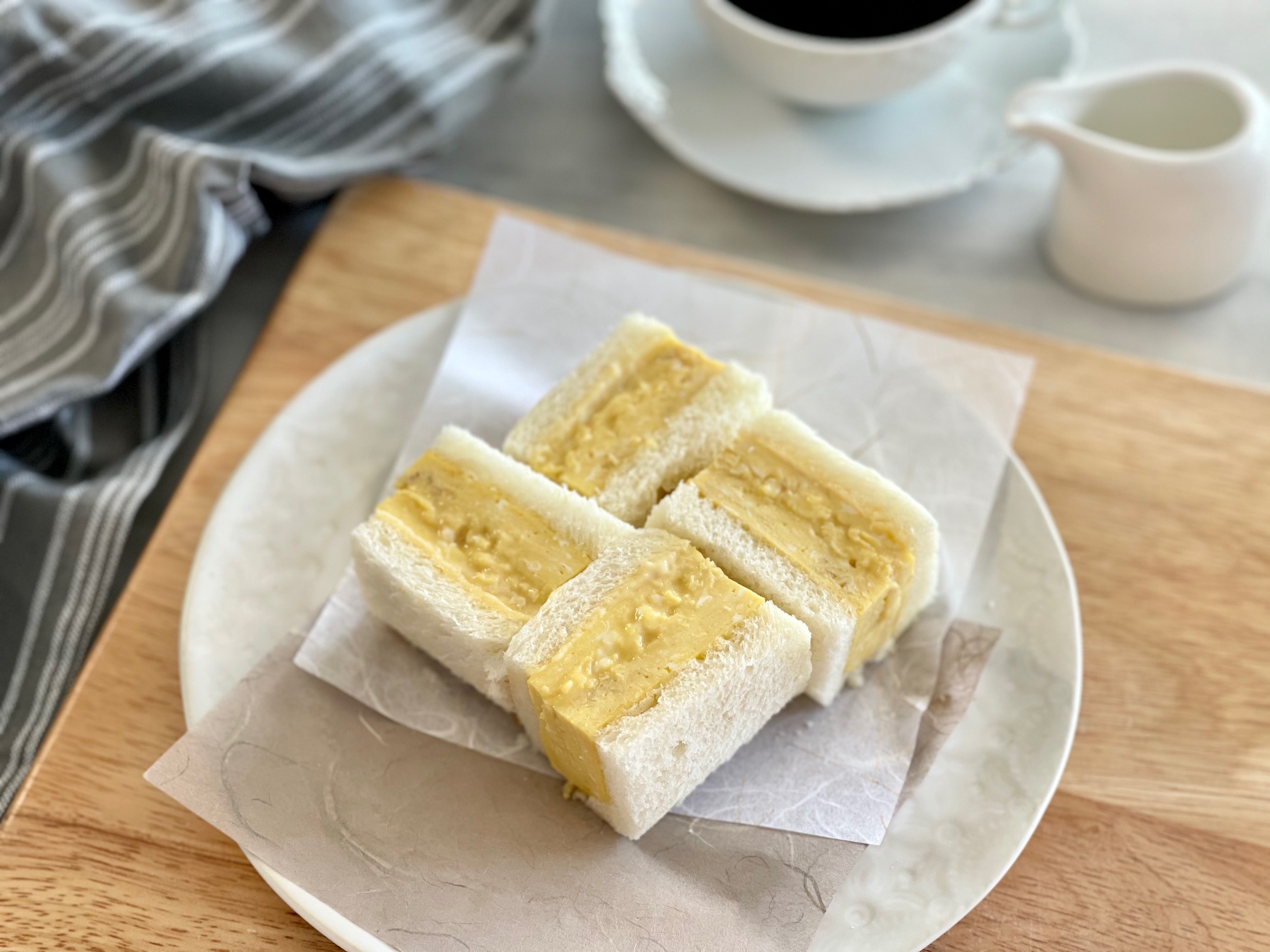
A traditional Tamagoyaki Sando might sound unusual if you have never tried a Japanese omelet sandwich before! Traditionally enjoyed alongside rice for breakfast or tucked into a bento box, this sweet and savory Japanese rolled omelet undergoes a magical transformation when paired with pillowy soft bread. The contrast between the warm, incredibly fluffy tamagoyaki and cloud-like milk bread is an absolute game-changer. Here is how to make a classic Japanese café-style Tamagoyaki Sando at home—with an easy, foolproof technique.

The History: A Kyoto Tamagoyaki Sando Classic

While many people are familiar with the mashed egg salad Tamago Sando found in Japanese convenience stores, the Tamagoyaki Sando belongs to a different tradition.
This warm omelet sandwich originated in the Kansai region, specifically around Kyoto. It has long been a signature staple in century-old Kissaten (traditional, Western-influenced Japanese teahouses). Today, this comforting comfort food has spread far beyond Kyoto, becoming a must-try menu item across Tokyo and global modern cafes alike.
How to Choose Ingredients for Your Tamagoyaki Sando

To capture that authentic Kissaten flavor and texture, a few key ingredients make all the difference:
The Condiment Duo: A layer of rich mayonnaise paired with room-temperature butter creates a moisture barrier, ensuring your bread stays perfectly soft without getting soggy.
Shokupan (Japanese Milk Bread): This is essential. Shokupan is incredibly fluffy, slightly sweet, and sliced thick. Its soft texture molds perfectly around the warm omelet.
Instant Dashi Powder: Dashi adds that crucial savory, umami-rich undertone characteristic of Japanese cuisine. Using instant dashi powder gives you that deep flavor without the hours of simmering.
Smart Kitchen Tools to Use

Do I Need a Square Tamagoyaki Pan?
While professional chefs use heavy copper pans, a standard non-stick pan works beautifully. Most Japanese households own a small rectangular tamagoyaki pan, but if you don’t have one, you can easily use a small circular non-stick skillet and fold the edges to fit your bread.
Pro-Tips for Success

The Easy Flip Technique: Traditional tamagoyaki requires rolling the egg layer by layer. This recipe simplifies the process by cooking the mixture to a soft scramble, steaming it, and folding it just once.
The Rest is Best: Don’t skip wrapping the finished sandwich in plastic wrap for 5 minutes before slicing. This compresses the layers, allowing the bread to fuse with the warm egg for a clean, beautiful cut.
Keep it Bubble-Free: When beating your eggs with the dashi and milk mixture, use a cutting motion with your chopsticks or fork instead of vigorously whisking. This prevents excess air bubbles, yielding a denser, silkier omelet.

Love Japanese cafe-style sandwiches? If you enjoyed this warm omelet version, don’t miss my foolproof recipe for the legendary, pillowy soft Classic Japanese Tamago Sando made with rich Kewpie mayonnaise!

Japanese Tamagoyaki Sando (Omelet Sandwich)
Ingredients
For the Omelet:
- 3 large eggs
- 3 tbsp milk
- ½ tsp instant dashi powder
- 1 tsp soy sauce
- 1 tsp sugar
- 2 tbsp vegetable oil for frying
For Assembly:
- 2 slices Shokupan Japanese milk bread, sliced thick
- 1 tbsp unsalted butter room temperature
- 1 tbsp Japanese mayonnaise
Instructions
- Mix the Egg Base: In a small bowl, stir together the milk, instant dashi powder, soy sauce, and sugar until the granules are completely dissolved. Add the eggs and mix gently using chopsticks or a fork. Use a cutting motion to combine without whipping excess air bubbles into the mixture.

- Heat the Pan: Place a tamagoyaki pan (or a small circular non-stick skillet) over medium heat. Add the vegetable oil and use a crumpled paper towel to wipe away the excess, leaving a thin, glossy coating on the surface.

- Scramble and Steam: Once hot, pour in the entire egg mixture. Immediately begin stirring the cooking egg from the outer edges inward to form soft curds. When the egg is roughly 70% cooked and still glossy/wet on top, remove the pan from the heat. Cover tightly with a lid or aluminum foil and let it steam for 1 minute.

- Fold and Set: Remove the cover and fold the omelet cleanly in half to form a thick rectangle.

- Cover again with the lid or foil, turn off the heat, and let it sit for 3 minutes to finish cooking through.

- Shape the Omelet: Transfer the warm omelet onto a sheet of paper towel. Gently wrap and pat it to shape the edges so they evenly match the size of your bread slices.

- Assemble the Sando: Spread a smooth layer of room-temperature butter across one slice of shokupan, and a layer of Japanese mayonnaise across the other. Place the warm omelet between the slices.

- Rest and Slice: Wrap the assembled sandwich snugly in plastic wrap and let it rest on the counter for 5 minutes.

- Use a sharp serrated knife to trim away the crusts if desired, then slice the sandwich cleanly down the middle into halves or thirds. Serve warm.

Notes
- No Tamagoyaki Pan? A standard small, round non-stick skillet works perfectly. Simply use your spatula to fold the outer left and right edges of the egg inward to form a square shape before folding it in half.
- Bubble Prevention: Keeping the egg smooth and bubble-free is the secret to a silky, kissaten-style texture. Don’t use a wire whisk—stick to chopsticks or a fork kept low in the bowl.
- Why the Rest Step Matters: Wrapping the sando in plastic wrap molds the soft bread to the warm omelet, ensuring it doesn’t slide apart or separate when sliced or eaten.

1 comment
[…] Tamagoyaki Sandwich […]