
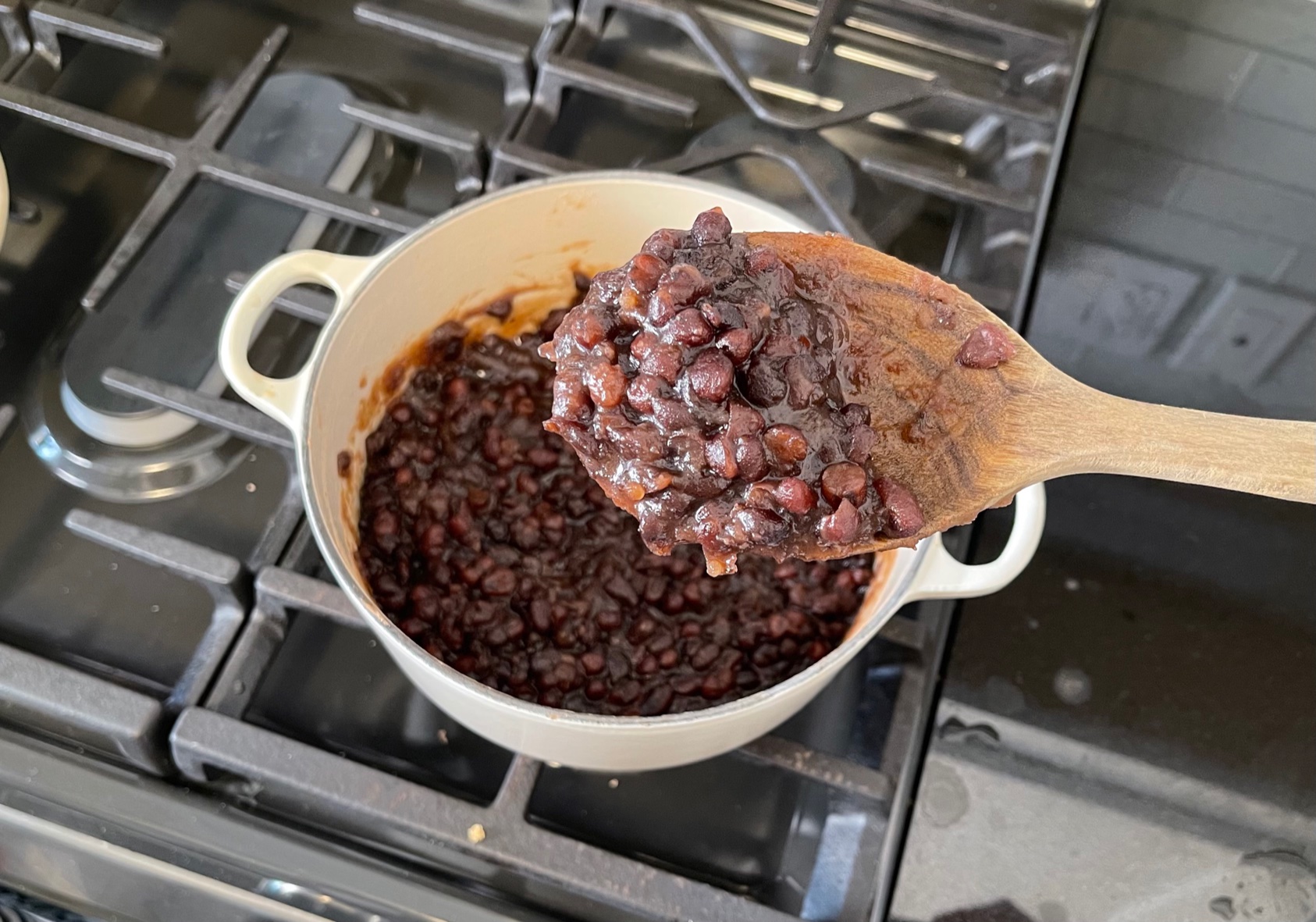
Tsubu An (つぶあん) is the foundational sweet bean paste used in Japanese confectionery. Whether it’s acting as a rich filling for Dorayaki, Taiyaki, Anpan, and Daifuku, or utilized as an elegant garnish, mastering this paste elevates any dessert.
In traditional Japanese sweets, there are two primary types of red bean paste: Tsubu An (a chunky, textured paste) and Koshi An (a fine, smooth, strained paste). Tsubu An is highly versatile and incredibly rewarding to make from scratch.

Ingredients for Tsubu An

Azuki Beans (小豆): These small red beans are the star of the show. They can easily be found at Japanese grocery stores, Asian markets, or online.
Sugar: Jyohakuto (上白糖), a slightly moist white sugar, is the traditional standard in Japan. However, regular granulated sugar, light brown sugar, or even coconut sugar all work beautifully. Many professionals also utilize Shiro Zarame (coarse white sugar) for a cleaner sweetness, occasionally adding a touch of Mizu Ame (malt syrup) to improve texture and shelf life.
The Bean-to-Sugar Ratio

Traditionally, Tsubu An utilizes a 1:1 or even a 1:1.4 ratio of beans to sugar by weight. While a higher sugar ratio extends the shelf life and makes the paste freezer-friendly, utilizing a 1:1 ratio—or adapting the sweetness with alternatives like coconut sugar—often aligns better with a wellness-focused approach.
Steps to make Tsubu An
Cooking Tsubu An is an exercise in patience and technique. Here is the most effective method for achieving the perfect texture.

Step 1: Rinse the Beans
Rinse the dried beans thoroughly in cold water. Because commercially available Azuki beans are generally fresh, pre-soaking them overnight is no longer strictly necessary.

Step 2: Shibukiri (渋切り): Removing the Astringency
When you first boil the beans, the water will turn cloudy and red. The technique of draining this initial boiling water is called Shibukiri (literally “cutting the bitterness”). Doing this removes the astringency from the beans. Repeating this process twice yields a cleaner flavor, though the exact number of times can be adjusted based on preference.

Step 3: Simmering
Cook the beans until they are completely tender. Unlike the blanching step, the water level here should sit just above the beans. You want a gentle simmer; if the beans dance around too rapidly in the water, their skins will tear. Keep the heat low and add small amounts of water as it evaporates, repeating this 4 to 5 times until the beans are cooked through.


Step 4 : Neri (Kneading & Reducing)
Once the beans are soft enough to crush easily between your fingers, add the sugar and gently fold or “knead” the mixture over the heat. Add a pinch of salt right at the end to balance the sweetness. Note: The paste will become incredibly hot once the sugar is added and reduces, so stir carefully to avoid burns.

Step 5: Cool Down
Once the paste reaches your desired thickness, immediately remove it from the heat. Transfer it to a large, flat plate or sheet pan to cool down as rapidly as possible. Leaving the paste in the hot pot will alter its final flavor and overcook the beans.
Store-Bought vs. Homemade Tsubu An

While store-bought Tsubu An is easily found in cans or pouches at most Asian grocery stores, taking the time to make your own is incredibly rewarding. Commercially produced bean pastes are often heavily sweetened for preservation. Crafting it from scratch allows you to control the exact amount and type of sugar used, perfectly aligning with a wellness-focused approach to baking without sacrificing authentic flavor.
How to Use Tsubu An
Think of Tsubu An as a highly versatile, textured preserve or compote. It is traditionally used as a rich filling for mochi and sweet breads, but its applications go far beyond that. It makes a beautiful, elegant garnish for both traditional and modern desserts—try spooning it over green tea ice cream, traditional shaved ice, or even your weekend waffles for an approachable touch of Japanese pastry right in your own kitchen.

Tsubu An (Chunky Red Bean Paste)
Ingredients
- 1 ⅓ cup Azuki (Red Beans)
- 2 ½ cups Water (plus extra for blanching and simmering)
- 1 ⅓ cup Light Brown Sugar (or preferred alternative)
- 1 pinch Sea Salt
Instructions
- Rinse: Wash the red beans thoroughly with cold water.

- First Blanch (Shibukiri): Combine the washed beans in a large pot with about 800ml of water. Cook over medium heat until boiling. Turn the heat off, cover with a lid, and let steam for 5 to 10 minutes. Drain the water completely.

- Second Blanch: Return the beans to the pot with another 800ml of fresh water. Bring to a boil over medium heat, boil for 2 to 3 minutes, then cover with a lid and let sit for 5 to 10 minutes. Drain the water and rinse the beans briefly with cold water.

- Simmer: Place the beans back into a clean pot. Add fresh water so it sits just above the level of the beans. Bring to a boil over medium heat, then immediately reduce the heat to a very gentle simmer. Cook for 30 to 40 minutes until soft. Ensure the beans remain fully submerged, adding splashes of water as it evaporates.

- Test for Doneness: Take a single bean and pinch it; it should crush effortlessly between your fingers. Once soft, pour the beans into a fine-mesh sieve to drain excess liquid.

- Reduce (Neri): Transfer the cooked beans back into a clean pot. Add the sugar and cook over medium heat. Gently fold the mixture with a heat-proof spatula as the water evaporates.

- Finish & Cool: Once the paste thickens to your liking, stir in a pinch of salt and remove from the heat.

- Immediately transfer the paste onto a large plate or sheet pan, spreading it out to cool quickly.

- Store: Once completely cool, store in an airtight container. It will keep for 3 to 4 days in the refrigerator or up to 2 months in the freezer.

Notes
- Equipment: The beans will expand to roughly 2.4 times their original size as they absorb water, so be sure to use a sufficiently large pot.
- Texture: Keep in mind that the paste will continue to thicken slightly as it cools on the sheet pan.
