
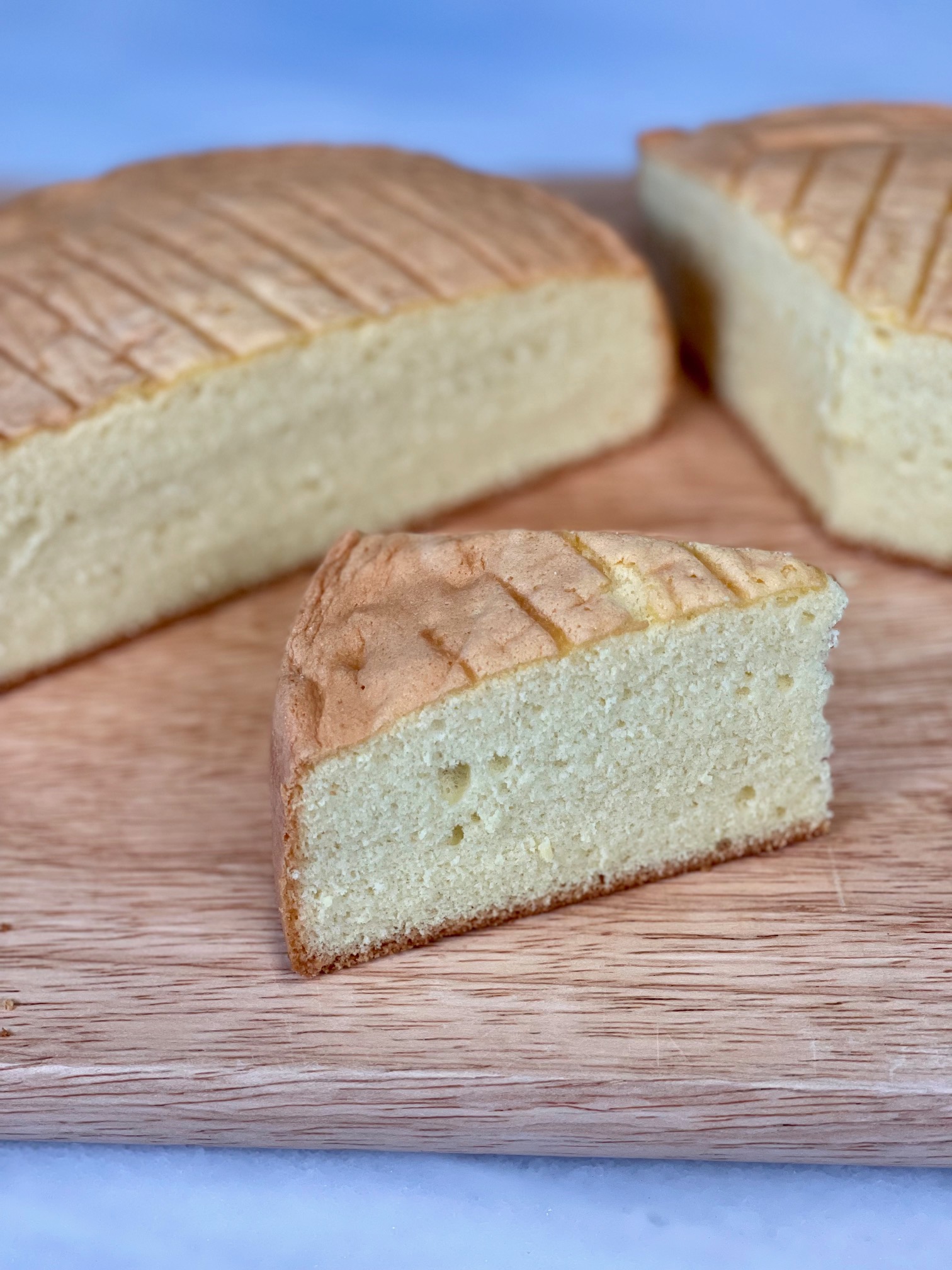
Sponge cake is an absolute staple of classic pastry making. It is light, airy, remarkably spongy, and made from incredibly simple ingredients. It is also the crucial foundation for Japanese strawberry shortcake, a beloved dessert known for its melt-in-your-mouth texture. Once you master this traditional method, you unlock the ability to make dozens of different professional-tier pastries.
What is Sponge Cake?


Sponge cake, known in French pastry as pâte à génoise, is a light, aerated cake made primarily from eggs, sugar, and flour. Unlike American sponge cakes that rely on baking soda or baking powder, a true génoise is leavened entirely by the air whipped into the whole eggs. Originating during the Renaissance (most likely in Spain), a standard génoise includes a small amount of melted butter folded in at the very end to give the crumb a moist, tender mouthfeel.
Endless Pastry Possibilities


Because it is sturdy yet light, it is an incredibly versatile base. You can use it for:
- Traditional Japanese Strawberry Shortcake
- Layered Birthday and Celebration Cakes
- The structural base for mousse cakes and charlottes
- High-quality cake pops (crumbled and mixed with frosting)
Ingredients for Sponge Cake

- Whole Eggs: 3 large eggs (approx. 150g). Use the freshest eggs possible. While some sponge cake recipes separate the yolks and whites, a traditional génoise whips the whole eggs together over a warm water bath.
- Sugar: ½ cup (90g). Sugar is vital. Granulated sugar works best for a clean taste and pale color. While you can substitute light brown or coconut sugar, they will turn the cake brown and alter the flavor.
- Flour: ¾ cup (90g) of cake flour or pastry flour. Low-protein flour is essential here because we want to minimize gluten development, keeping the cake tender rather than chewy. You can also substitute fine rice flour for a gluten-free alternative.
- Unsalted Butter: 2 ⅛ tablespoons (30g). Melted and kept warm.
Optional Additions:
- Milk or Heavy Cream: Can be melted along with the butter to add extra richness and moisture.
- Mizuame (Japanese Rice Syrup): A tablespoon keeps the cake exceptionally moist. Trimolin or invert sugar syrup can be used as a substitute.
- Flavorings: Cocoa powder, instant coffee, or almond flour can be introduced to change the flavor profile. Note: Because cocoa and almond flour contain natural fats, fold them in gently so they don’t deflate your egg foam.
Pro Tips & Common Mistakes
If a sponge cake fails to rise or turns out dense, it is almost always due to under-whipping the eggs or improper folding technique. Keep these scientific principles in mind:
The Golden Rule of Sugar: Do not reduce the sugar! Sugar doesn’t just add sweetness; it acts as a structural stabilizer. It binds with the water in the eggs, creating an elastic foam that expands in the oven without collapsing. As a baseline rule, your sugar should always weigh at least 50% of your total egg weight.
–Control the Temperature of Your Eggs

Eggs whip beautifully when warmed. Bringing your egg and sugar mixture to roughly 95°F–100°F (35°C–38°C) over a water bath lowers the surface tension of the eggs, allowing them to expand rapidly to maximum volume. However, by the time you are ready to fold in the flour, the batter should have cooled slightly to a stable room temperature of around 75°F–80°F (24°C–27°C).
–Smooth Out the Bubble Texture

Once your egg mixture has reached maximum volume at high speed, drop your mixer down to its lowest speed for the final 2 to 3 minutes. This crucial step pops the large, unstable air pockets and divides them into millions of microscopic, uniform bubbles. A fine-bubbled foam is much sturdier when you add the flour, ensuring a velvety, professional crumb structure.
–Lightly Coat, Don’t Crush

Flour needs to be evenly dispersed so it can coat and lock in the air bubbles. Use an intentional, gentle folding motion with a rubber spatula, turning the bowl as you go. Mix thoroughly until no dry pockets remain, but stop as soon as it is cohesive to avoid deflating the air you just whipped in.
-Protect the Foam from Fat

Fat is the natural enemy of whipped egg whites. If you pour heavy, hot melted butter straight into your delicate batter, it will sink to the bottom and instantly pop your air bubbles. To prevent this, use the sacrificial batter method: stir a small scoop of your whipped batter directly into the warm butter bowl first. Once that mixture is smooth and lightened, quickly fold it back into the main batch.
How to Store and Prep Your Sponge Cake

Once the cake has cooled completely to room temperature, wrap it snugly in two layers of plastic wrap to lock in the moisture.
- The Overnight Rest (Pro Tip): For the absolute best texture, wrap the cake and let it sit in the refrigerator or at room temperature for 24 hours before slicing. This redistributes the moisture, making the sponge incredibly soft and much easier to handle.
- Room Temperature: Stores well for 2 to 3 days (provided your kitchen isn’t too hot or humid).
- Refrigerator: Stores for 3 to 4 days.
- Freezer: Wrap the plastic-wrapped cake in a layer of aluminum foil and freeze for up to 1 month.
- The Perfect Slice: Want perfectly even layers for a show-stopping shortcake? Pop the cake in the freezer for 45 minutes before slicing. Cutting a semi-frozen sponge yields flawlessly clean layers with zero tearing or crumbling!

Sponge Cake (Pâte à Génoise)
Ingredients
- 3 pc large whole eggs
- 90 g granulated sugar
- 90 g cake flour or pastry flour sifted twice
- 30 g unsalted butter melted and kept warm
Instructions
Prep & Mixing
- Line a 6-inch round cake pan with parchment paper on both the bottom and the sides. Preheat your oven to 330°F (165°C). Sift your cake flour twice to ensure there are absolutely no lumps.

- Melt the unsalted butter completely (either in a small bowl placed over hot water or in the microwave). Keep it warm to the touch, but not scalding hot.
- In a large, heatproof mixing bowl, combine the whole eggs and granulated sugar. Immediately give them a brief whisk by hand so the sugar doesn’t sit and “burn” the egg yolks.

- Place your mixing bowl over a wide pot of gently simmering water (around 150°F / 65°C), ensuring the bottom of the bowl does not touch the water. Using an electric hand mixer or stand mixer on high speed, whip the eggs and sugar. Once the mixture warms up to 95°F–100°F (35°C–38°C), remove the bowl from the heat and continue whipping on high.

- Whip for roughly 10 minutes until the batter becomes thick, pale white, and voluminous. When you lift your beaters, the batter should fall back into the bowl in a thick ribbon that holds its shape in a visible “figure 8” for several seconds before slowly melting away.

- Turn your mixer down to its lowest speed and gently whisk the batter for an additional 2 to 3 minutes. This stabilizes the foam and pops large air pockets, evening out the bubble sizes for a perfectly smooth cake texture. Switch to a rubber spatula.

Folding & Baking
- Add your sifted flour in 2 to 3 separate additions, sprinkling it lightly across the surface. Use a gentle folding motion—cutting down through the center, sweeping across the bottom of the bowl, and folding up over the top. Repeat until the flour is completely incorporated.

- Take a large spatula-full of your main batter and stir it directly into the warm melted butter. Mix quickly until smooth, then immediately pour this lightened mixture back into the main bowl. Fold everything together with quick, decisive strokes until completely uniform.

- Pour the smooth batter into your prepared 6-inch pan. Lift the pan about 5 inches above your counter and drop it flat against the surface once or twice to release large air pockets. Bake for 30 to 35 minutes.

- Check for doneness by pressing lightly on the center; it should spring back resiliently.

- Immediately upon removing the cake from the oven, drop the pan from 5 inches high onto your counter to release trapped steam. Remove the cake from the pan and let it cool completely on a wire rack with the parchment paper still attached.

