
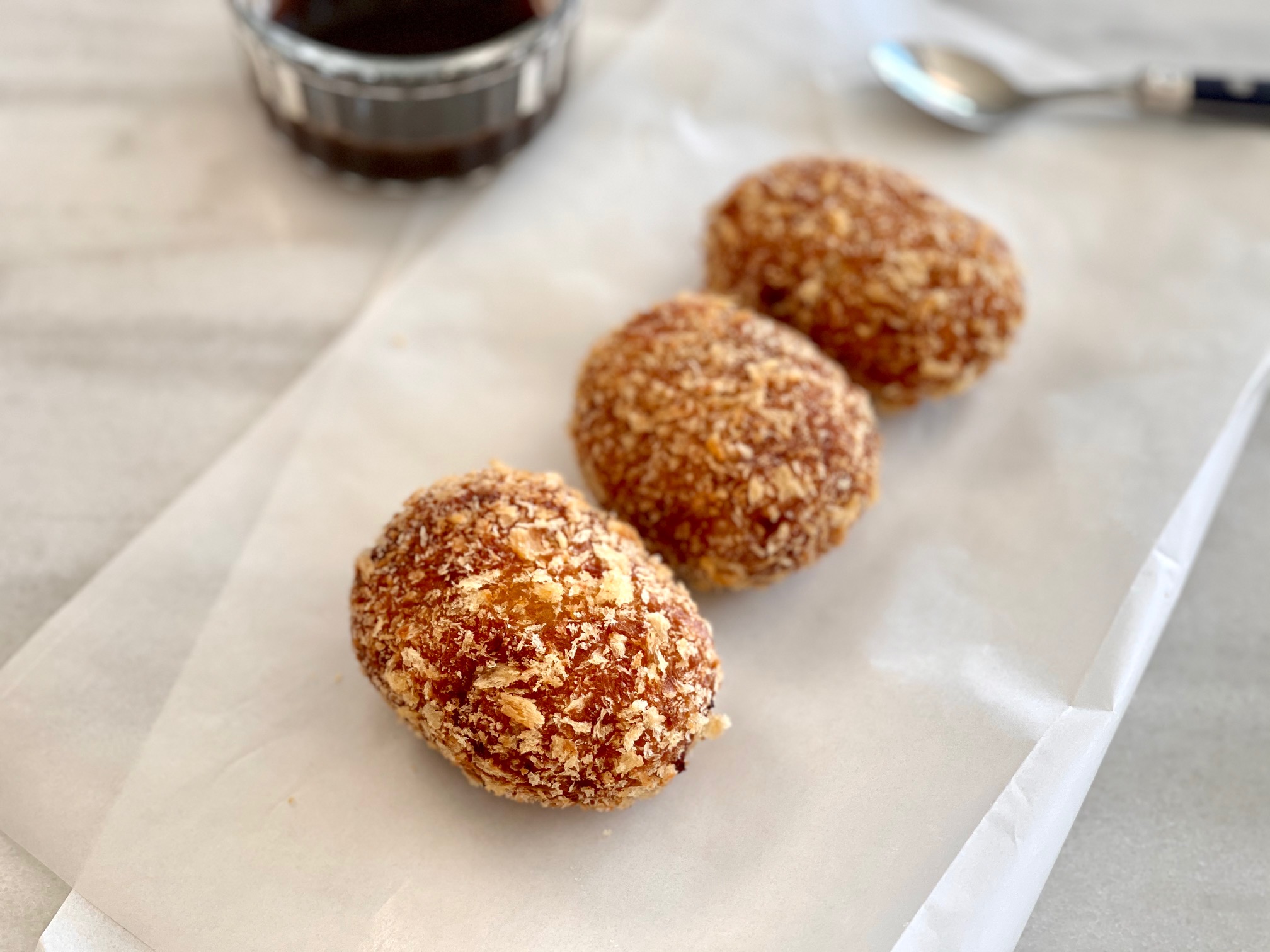

My Childhood “Forbidden Fruit”
In my elementary school days in Japan, spending money on snacks on the way home was strictly prohibited. But to a curious 10-year-old, the aroma wafting from the local neighborhood butcher shop was an impossible temptation to resist. I broke the rules more than a few times—not for candies or sweets, but for a freshly fried, piping-hot korokke wrapped in butcher paper.
To this day, I can’t forget the comforting, savory taste of a traditional butcher-style croquette. It’s a nostalgic flavor that defines Japanese comfort food.
What is Korokke?

Korokke (コロッケ) is the Japanese adaptation of the classic French croquette (or Dutch kroket). Introduced to Japan in the late 19th century, it has evolved into a beloved staple found in home kitchens, bento boxes, convenience stores, and neighborhood butcher shops alike.
While there are countless modern variations—including sweet pumpkin (kabocha) korokke, luxurious creamy crab croquettes (kani cream korokke), and even korokke sandwiches (korokke pan)—this recipe focuses on the timeless classic: a smooth, savory potato base studded with seasoned ground meat. This recipe uses ground pork, but ground beef, a mix of both, or a completely vegetarian alternative works beautifully.
The Secret to the Perfect Korokke Texture
1. The Best Potatoes to Use

For a melt-in-your-mouth interior, high-starch potatoes are essential. In the U.S., opt for Russet or Idaho potatoes, which mash into a beautifully light and dry texture. If you are baking in Australia, Sebago potatoes are an excellent choice. Avoid waxy potatoes like Red Bliss or Fingerlings, as they can make the filling gummy.
The Panko Choice: Fluffy vs. Creamy

While some recipes favor a chunky potato filling, this specific technique yields a filling that is incredibly smooth, creamy, and velvety. To create the ultimate textural contrast against this delicate interior, use large-flake Japanese panko breadcrumbs. The oversized flakes fry up into a shattering, crispy shell that beautifully complements the silky potato paste inside.
The Great Korokke Sauce Debate
Step into any Japanese household, and you will likely find a dedicated shelf in the refrigerator for savory brown sauces. When it comes to dressing your korokke, everyone has a favorite:
- Bull-Dog Worcestershire Sauce: The thinnest and most tangy option, offering a sharp, savory bite.
- Bull-Dog Tonkatsu Sauce: Thick, rich, and distinctly sweet—deeply caramelized fruits and vegetables give it a body that clings perfectly to fried foods.
- Bull-Dog Chuno Sauce: The ultimate middle ground. It is semi-sweet and medium-thick, balancing the tang of Worcestershire with the sweetness of Tonkatsu.
While the choice of sauce always sparks a friendly debate at the dinner table, Tonkatsu sauce remains a favorite for its ability to balance the rich, savory meat filling. Feel free to experiment—even ketchup and Japanese mustard have their loyal defenders!


Classic Japanese Potato Korokke
Ingredients
The Filling & Seasoning
- 3 to 4 medium Russet or Idaho potatoes (500g)
- ½ lb ground pork (226g )(or ground beef/blend)
- 1 large or 2 small onions (120g)( finely chopped)
- 1 tbsp cooking oil (for sautéing)
- Salt and freshly ground black pepper (to taste)
The Binding Slurry
- ¼ cup water (50ml)
- 1 ⅓ tbsp potato starch (or cornstarch)
- 1 tsp Worcestershire sauce
The Breading & Frying
- ½ cup all-purpose flour (70g)
- 2 large eggs
- 3 tbsp whole milk (40ml)
- 2 cups large-flake Japanese panko (300g)
- Neutral oil (for deep-frying) (such as canola, vegetable, or corn oil)
To Serve
- Bull-Dog Tonkatsu sauce (or Chuno sauce)
- Finely shredded green cabbage
Instructions
Prep the Base
- Prepare the Slurry: In a small bowl, whisk together the water, potato starch, and 1 teaspoon of Worcestershire sauce until smooth. Set aside.
- Cook the Potatoes: Steam the whole potatoes until completely tender using a steamer basket or your microwave. They are ready when a bamboo skewer slides effortlessly through the center.

- Mash: While the potatoes are still hot, carefully peel off the skins and mash them thoroughly in a large bowl until uniform and smooth.

Sauté & Bind
- Sauté Aromatics: Heat 1 tablespoon of oil in a medium skillet over low-medium heat. Add the finely chopped onions and sauté until translucent and softened (about 3 minutes).

- Cook the Meat: Add the ground pork. Increase the heat to medium and cook, breaking up the meat with a spoon, until fully browned (about 7 minutes). Season generously with salt and pepper.

- Activate Starch: Stir the starch slurry quickly to recombine, then pour it into the hot meat. Turn the heat to high and stir vigorously for 1 minute until the mixture thickens into a glossy, sticky paste. Remove from heat.

Chill, Shape & Fry
- Combine and Chill: Fold the warm mashed potatoes into the meat paste until completely incorporated. Transfer to a shallow dish, press plastic wrap directly onto the surface, and refrigerate for at least 4 hours or overnight until completely firm.

- Shape: Divide the chilled filling into 12 equal portions. Shape each into a smooth, flat oval patty, roughly 1 inch thick. Ensure there are no cracks.

- Breading Station: Set up three shallow bowls: (1) flour, (2) eggs and milk whisked together, (3) panko breadcrumbs. Coat each patty lightly in flour, dip completely in the egg wash, and press gently into the panko.

- Deep Fry: Heat 4 inches of neutral oil in a deep pot to 330°F (165°C). Fry the patties in small batches for 3–4 minutes, gently turning them, until they reach a beautiful, uniform Kitsune-iro (fox-golden-brown). Drain on a wire mesh rack and serve hot with Tonkatsu sauce.

Notes
- For Maximum Crispiness: If you prefer an extra-shattering exterior, bump the oil temperature up slightly to 350°F (175°C) during the last 30 seconds of frying to flash-crisp the panko just before removing them from the oil.
- Preventing Bursts: Make sure the filling is completely cold before frying, and ensure there are no air pockets or cracks when shaping your patties.
- Make-Ahead Tip: You can freeze the breaded, uncooked korokke on a baking sheet until solid, then transfer them to a freezer bag. Fry directly from frozen at 330°F (165°C), adding an extra 1–2 minutes to the cooking time.

1 comment
Thanks for sharing this amazing recipe.my family loved it.will be sharing this recipe with my friends.they will like it.