
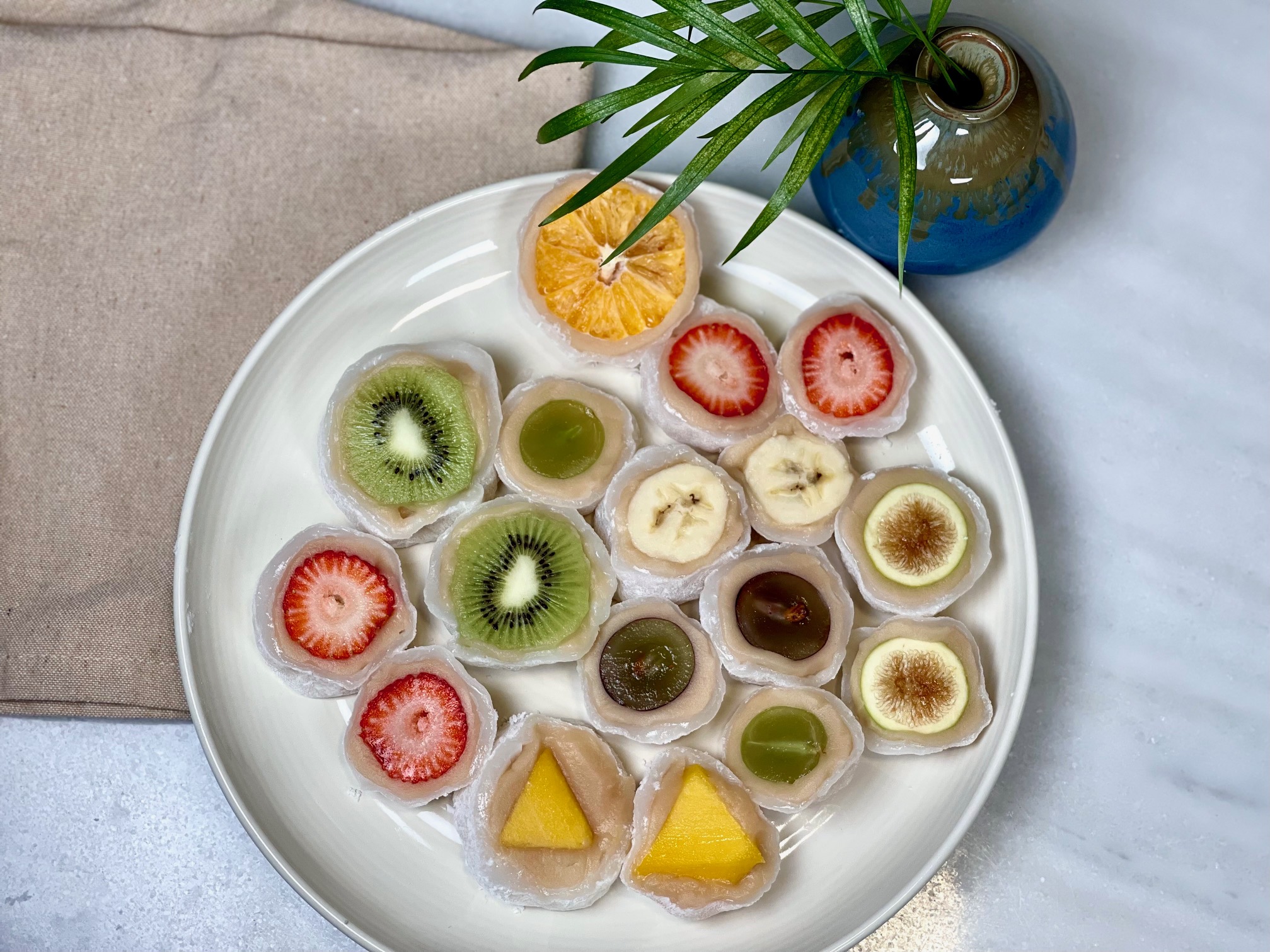
If you love mochi ice cream, you are in for a treat. These vibrant, colorful fruit daifuku bring together juicy fresh fruit, sweet bean paste, and a pillowy layer of soft, thin gyuhi mochi. They are incredibly satisfying, refreshing, and naturally vegan.
What is Daifuku?

Daifuku (大福) is a classic Japanese wagashi (traditional confection) consisting of a soft mochi shell wrapped around a sweet filling. While traditional versions are stuffed with sweet red bean paste (anko), there are countless regional and modern varieties enjoyed throughout Japan.
What is Fruit Daifuku?

Fruit daifuku (フルーツ大福) elevates the classic treat by wrapping a whole piece of fresh fruit inside the bean paste layer. While Ichigo Daifuku (strawberry) has been a beloved staple for a few decades, social media has sparked a massive trend in Japan for using a rainbow of different fruits. The gorgeous, bright interiors make them as beautiful to look at as they are to eat.
Other Popular Types of Daifuku
Mame Daifuku (豆大福): The mochi dough is studded with whole cooked black soybeans or azuki beans, adding a lovely texture and slight saltiness to balance the sweet red bean paste inside.
Kusa Daifuku (草大福): “Kusa” means grass. This dough gets its earthy flavor and beautiful green hue from mixing fresh mugwort (yomogi) into the mochi.
Shio Daifuku (塩大福): A savory-sweet variation where the red bean filling or the mochi dough is seasoned with salt to cut through the sweetness.
Ichigo Daifuku (イチゴ大福): A whole juicy strawberry enveloped in sweet bean paste and soft mochi. Invented in the late 1980s, it sparked the entire fruit-filled mochi movement.
Yukimi Daifuku (雪見大福): Translating to “snow-viewing mochi,” this famous ice-cream-filled version was popularized by Lotte in 1981 and became the blueprint for global mochi ice cream.
Ingredient Notes & Substitutions

The Fruit: Berries, seedless grapes, kiwi, pineapple, and citrus work beautifully.
White Bean Paste (Shiroan): Shiroan provides a clean, neutral sweetness and a pale canvas that makes the vibrant colors of the fruit pop. While you can sometimes find it pre-made at Asian grocery stores, it can be tough to track down. I highly recommend making your own using my step-by-step Homemade Shiroan (White Bean Paste) Recipe.
Gyuhi Mochi: This is the specific style of sweet, incredibly soft mochi used for traditional confections. It relies on shiratamako (Japanese glutinous rice flour) to stay perfectly soft and elastic at room temperature. If you want a deep dive into mastering the microwave or stove-top techniques for this dough, check out my complete guide on How to Make Gyuhi (Sweet Soft Mochi).
How to Make Fruit Daifuku Step-by-Step


1. Prep and dry the fruit: Crucial Step.
Wash your fruit thoroughly and remove any stems or skins. The absolute key to success is drying the fruit completely with paper towels. Any surface moisture will cause the bean paste to slip off and make your mochi soggy.
2. Portion the Shiroan: 20g – 25g per piece.
Divide your white bean paste into small portions, rolling them into neat balls weighing roughly 20g to 25g (0.7 to 0.9 oz) each.
3. Wrap the fruit in bean paste: Chill before wrapping.
Flatten a bean paste ball in your palm. Place a piece of fruit in the center and gently work the paste up and around it until fully enclosed. Roll it smooth, place on a tray, and refrigerate for 15-20 minutes to firm up.
4. Cook and cool the Gyuhi: Mochi base.
Whisk your shiratamako, sugar, and water in a microwave-safe bowl until completely smooth. Microwave in short bursts, stirring frequently, until the mixture transforms from a white liquid into a translucent, sticky, elastic dough. Let it cool slightly until safe to handle.
5. Divide the Mochi: Dust generously.
Dust your work surface and your hands heavily with potato starch (katakuriko) to prevent sticking. Divide the warm gyuhi into 12 equal pieces. Flatten each piece into a round disc that is roughly double the diameter of your fruit balls.
6. The Final Wrap: Pinch to seal.
Place a chilled fruit-and-paste ball in the center of a mochi disc. Gently stretch the edges of the gyuhi up and over the ball, gathering them at the top. Pinch the seams tightly together to seal completely.
7. Shape and Serve: Final touch.
Flip the daifuku seam-side down. Gently rotate it between your palms to form a perfect, smooth sphere. Brush off any excess potato starch before serving.
The Secret to the Perfect “Moedan” (萌断)

In Japan, you will frequently hear the trendy phrase “Moedan” (萌断). It combines moeru (meaning bursting with cuteness or affection) and danmen (cross-section). It refers to that pure visual joy when you slice open a dish to reveal a spectacular, artistic interior layout. Fruit daifuku is the quintessential moedan food!
Chef’s Tip for Slicing: Never use a dull knife, or you will squish the soft mochi and smear the bean paste. Instead, wrap a clean piece of unflavored dental floss or sewing thread around the center of the daifuku, cross the ends, and pull tightly to slice clean through. It delivers a flawlessly sharp, photo-ready cross-section every single time!
If you love the thrill of beautiful fruit cross-sections, be sure to also check out my classic Japanese Fruit Sandwich (Fruit Sando) Recipe!

FRUIT SANDO, JAPANESE FRUIT SANDWICH

Fruit Daifuku / Fresh Fruit Mochi
Ingredients
- 300 g Shiroan White Bean Paste
- 12-15 pc Assorted Fresh Fruit Strawberries, kiwi, mandarin oranges, pineapple, or grapes
- 125 g Shiratamako Glutinous rice flour
- 145 g Granulated sugar
- 237 ml Water
- Potato starch as needed for dusting
Instructions
- Prepare the fruit: Peel kiwi or citrus, hull strawberries, or chop larger fruit like mango into bite-sized pieces. Pat thoroughly dry with paper towels.

- Shape the paste: Roll the white bean paste into 12 small balls (20g–25g each).

- Flatten each ball in your palm, place the fruit in the center, and wrap the paste smoothly around it. Keep these in the fridge to set.

- Cook the mochi: In a bowl, whisk together shiratamako, sugar, and water. Cover and microwave on high for 2 minutes. Stir well with a wet spatula. Microwave for another 1 to 2 minutes until the dough looks translucent and glossy.

- Stir well with a wet spatula. Microwave for another 1 to 2 minutes until the dough looks translucent and glossy.

- Turn the hot dough out onto a surface heavily dusted with potato starch.

- Cut into 12 equal pieces. Stretch a piece of mochi over a chilled fruit ball, bringing the edges together and pinching the bottom seam firmly shut.

- Finish: Roll gently between your hands to round it out, dust away excess starch, and slice using the thread trick to reveal your beautiful moedan!


1 comment
DziHfibsQVFeURPdkob