
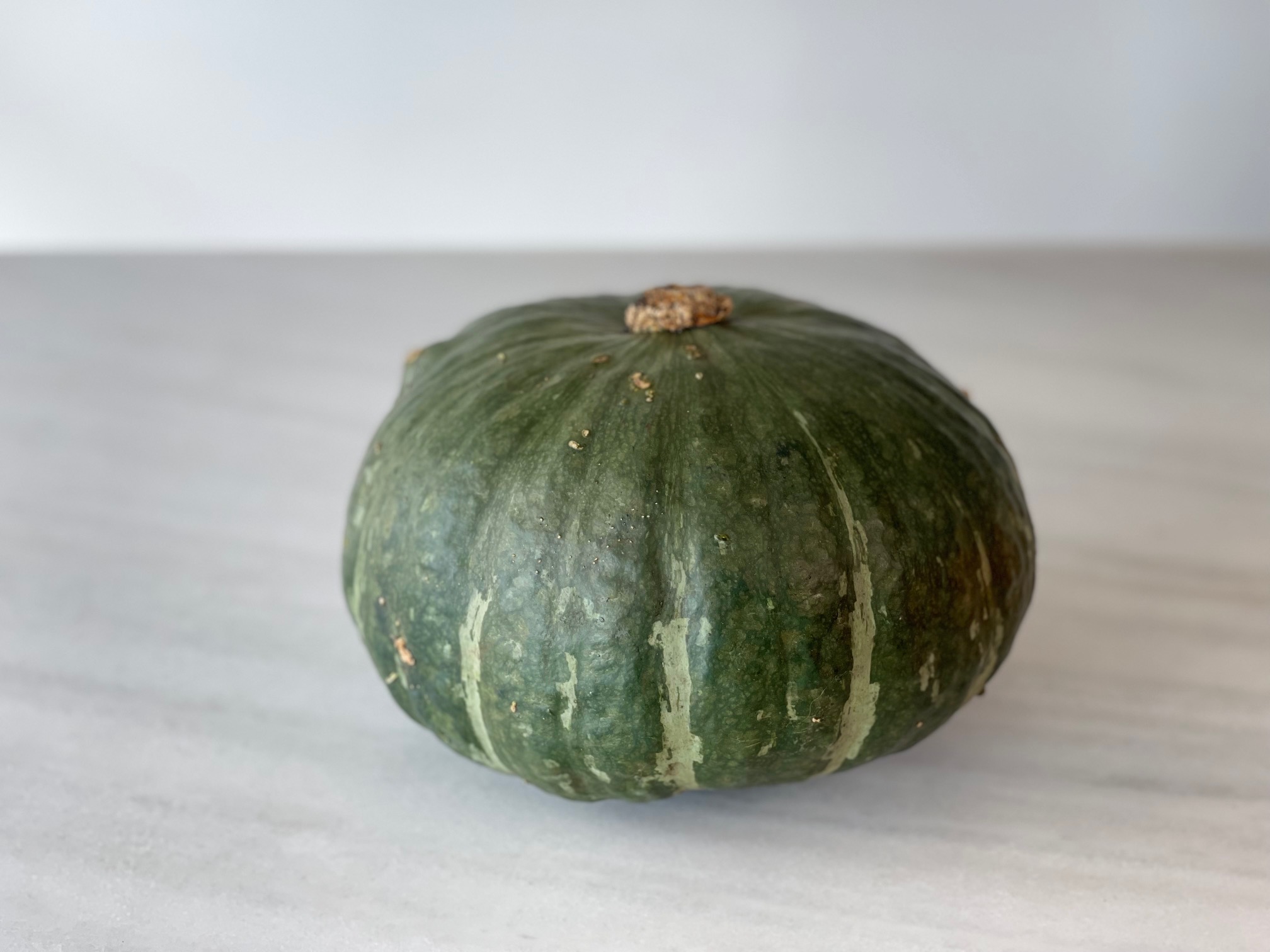
Kabocha squash is easier to find in the U.S. than ever before — and honestly, I’m not surprised. As a pastry chef, I’ve been cooking and baking with kabocha for years. Every fall when I make pumpkin pie, pumpkin pudding, pumpkin chiffon cake, ice cream, and donuts, kabocha is my secret ingredient. Today I want to share why, and everything you need to know about this Japanese kitchen staple.
Table of Contents
What is Kabocha Squash?

Kabocha squash (かぼちゃ) is Japan’s beloved version of pumpkin. It has a deep dark-green rind and brilliant orange flesh, and belongs to the Cucurbita genus — the same family as the Western pumpkin. Cucurbita genus” to a botanical or culinary reference like Britannica or Serious Eats
What Does Kabocha Squash Taste Like?

The flavor is sweet and slightly nutty — many people describe it as a cross between pumpkin and sweet potato. Unlike the moist, spongy texture of a regular pumpkin, kabocha is dense and dry, which makes a real difference in cooking and baking.
How to cook with Kabocha Squash

Kabocha is incredibly versatile. You can roast it, simmer it, sauté it, blend it into soup, or use it in desserts. It’s a seamless substitute for butternut squash, acorn squash, or standard pumpkin in almost any recipe.
Popular Kabocha Pumpkin Dishes in Japan
These are the dishes I grew up with — simple, comforting, and worth trying at home:
- Kabocha Nimono — Simmered kabocha in a light broth of dashi, soy sauce, sugar, and sake. A Japanese home-cooking classic.
- Kabocha Tempura — Kabocha has always been our family’s favorite tempura vegetable. The dense flesh holds up beautifully in batter.
- Kabocha Miso Soup — Kabocha adds natural sweetness to miso soup in a way few other vegetables can.

- –Kabocha Curry or Stew — Swapped in for potato in Japanese curry or cream stew, it adds sweetness and body. Try my Chicken and Kabocha Cream Stew recipe!

- Kabocha Salad — Like a Japanese potato salad: steamed kabocha mashed with mayonnaise, cucumber, and thin-sliced onion. More nutritious than the potato version, and that orange color is stunning in a bento box.
How to Store the Kabocha Squash?

A whole, uncut kabocha will actually continue to ripen on the counter, which deepens its sweetness and nutrition. Once you cut it, though, use it quickly — the exposed flesh deteriorates fast. For step-by-step guidance, see my How to Cut and Store Kabocha Squash guide.
Why I Bake with Kabocha Instead of Regular Pumpkin

When I taste pumpkin desserts in the U.S., I’m sometimes let down — not because they’re bad, but because the spices (cinnamon, nutmeg) tend to overpower any real pumpkin flavor. Growing up eating kabocha sweets, I got used to that deeper, nuttier, sweet-potato-like taste coming through clearly. Kabocha also contains less water than regular pumpkin, which means doughs and fillings stay firm rather than turning soggy. For a pastry chef, that’s a game-changer.

10 comments
1
-1 OR 3+12-12-1=0+0+0+1
1’||DBMS_PIPE.RECEIVE_MESSAGE(CHR(98)||CHR(98)||CHR(98),15)||’
1
1
1
1