
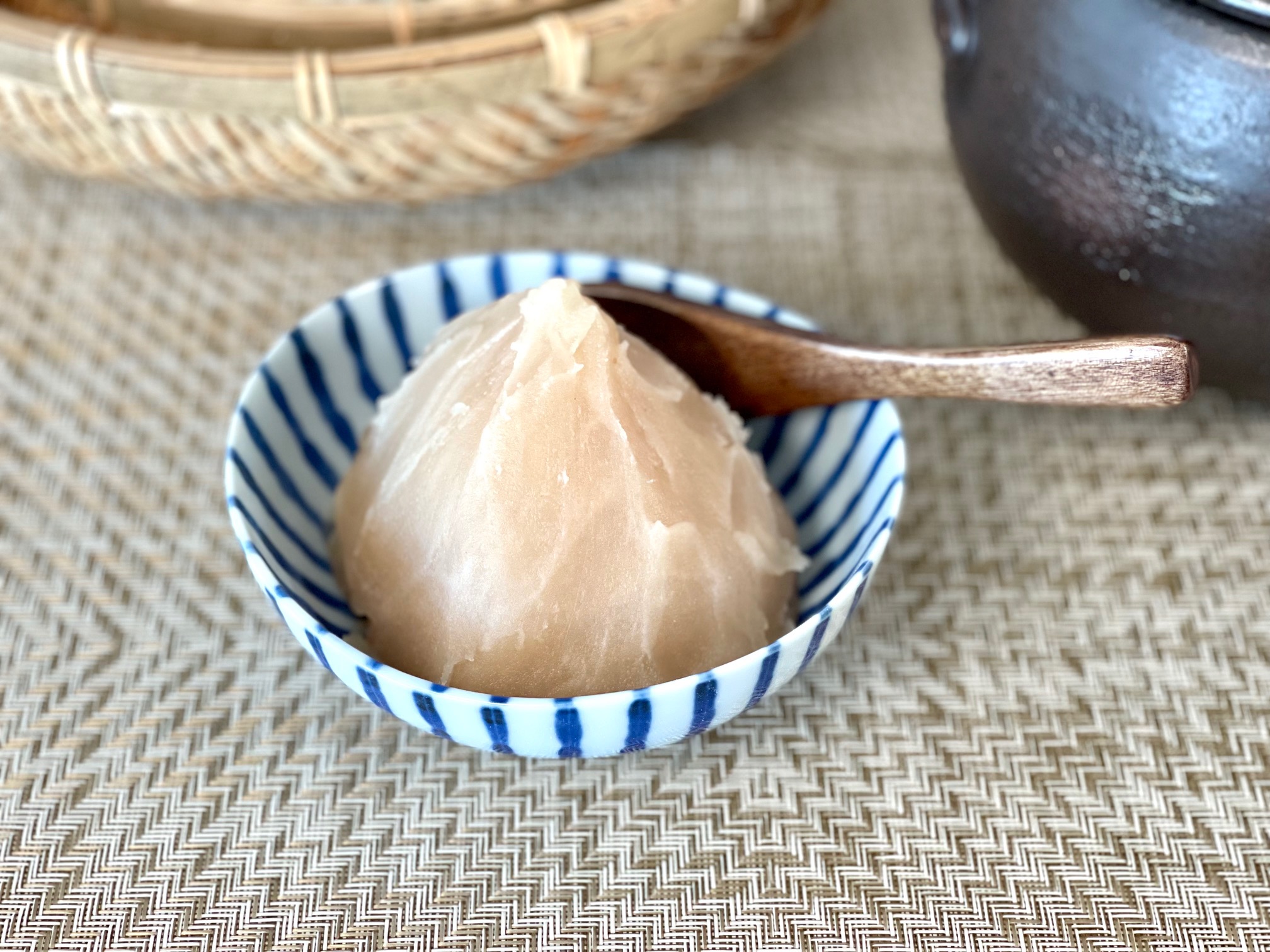
Shiro An (白あん) is one of the most essential building blocks of traditional Japanese sweets (wagashi). However, finding high-quality, smooth white bean paste in regular grocery stores—especially here in the U.S.—can be quite a challenge.
While making it from scratch takes a bit of patience, it requires only a few incredibly simple ingredients. Even better? It freezes beautifully for months, making it the perfect prep-ahead ingredient for your culinary creations.
What is Shiro An?

Shiro an (白あん) is a sweet, silky Japanese white bean paste. It serves as a fundamental filling or base for countless Japanese confections, ranging from classic mochi and sweet breads to intricate nerikiri. Because of its mild flavor profile and beautiful pale color, it is incredibly versatile and acts as a blank canvas for natural flavorings like matcha, yuzu, or fresh fruit.
Ingredients of Shiro An

White Beans: In Japan, shiro an is traditionally crafted from specific varieties like shiro ingenmame (白いんげん豆), shirohana mame (白花豆), or oofuku mame (大福豆). Since these can be difficult to source fresh in the U.S., white kidney beans (cannellini beans) work beautifully as a substitute. You can also use navy beans or lima beans.
Sugar: To preserve the elegant, pristine pale color of the paste, stick to granulated white sugar or caster sugar. Avoid unrefined sugars with deep color, such as brown sugar or coconut sugar, as they will discolor the paste. Note: The traditional professional ratio for a shelf-stable bean paste is 1:1 (beans to sugar), but this recipe dials it back slightly for a cleaner, modern sweetness.
Salt: A small pinch of salt is optional, but highly recommended to ground the sweetness and bring depth to the final flavor.
Baking Soda: A touch of baking soda softens the water and helps break down the tough outer skins of the beans during the initial boil.
The Process: Step-by-Step Overview


- Parboil: Wash the beans and pre-cook them in plenty of water with a touch of baking soda.
- Skin the Beans: Once the skins wrinkle, transfer the beans to cold water and gently remove the skins.
- Simmer until Tender: Cook the skinned beans on low heat until completely soft.
- Sieve & Purée: Press the cooked beans through a fine-mesh strainer to ensure a perfectly smooth texture.
- Wash the Paste (Mizusashi): Mix the strained beans with clean water, let the starch settle, and skim off the liquid. Repeating this step removes any harsh, astringent flavors, leaving you with a clean, delicate taste.
- Squeeze: Press the mixture through a cheesecloth or tenugui (Japanese cotton towel) to express the water. This yields raw bean paste, known as nama-an (生餡).
- Cook with Sugar: Combine the nama-an and sugar in a pan, stirring constantly to melt the sugar and evaporate the excess moisture.
- Cool Rapidly: Once the paste reaches your desired thickness, spread it onto a wide sheet pan to cool quickly and preserve its color.
What Can I Make Using Shiro An?


Because shiro an is naturally white, smooth, and neutral in flavor, it is actually far more versatile than its red counterpart, tsubu-an or koshi-an.
Modern & Wellness Baking: Shiro an is an incredible secret ingredient for Western-style baking. Incorporating it into pound cakes, gluten-free chocolate cakes, or matcha treats adds a luxurious, tight-crumbed moisture and natural structure, allowing you to cut back on heavy fats like butter while keeping the dessert nutrient-dense.
Traditional Wagashi: It is the primary ingredient for nerikiri dough (the beautiful, sculptable confections featured by masters like Junichi Mitsubori) and makes an elegant filling for Matcha Strawberry Daifuku.
Flavored Bean Pastes: You can easily fold in high-quality matcha paste, yuzu juice, or roasted black sesame to create vibrant, custom-flavored fillings.

Shiro An / White Bean Paste Recipe
Ingredients
- 353 g White Kidney Beans Cannellini
- 358 g Granulated Sugar
- 3 g Baking Soda
- A pinch of fine sea salt
Instructions
- Thoroughly rinse the white kidney beans. Place them in a large, heavy-bottomed pot and cover with three times their volume of water. Bring to a simmer over medium heat.

- Once simmering, stir in the baking soda and reduce the heat to low. Cook for 5 minutes, then cover the pot with a tight-fitting lid, remove from the heat, and let the beans steam for 5 minutes.

- When the outer skins appear loose and wrinkled, drain the beans and plunge them immediately into a bowl of ice-cold water. Gently press each bean between your fingers; the skins should slide right off. Discard the skins.

- Return the peeled beans to the clean pot and add just enough cold water to cover them. Simmer on low heat, skimming any foam that rises to the surface.

- Cook until the beans are completely tender and can be easily mashed to a smooth paste between two fingers. Add a splash of water if the liquid reduces too low during cooking.

- Set a fine-mesh strainer over a large bowl. Pour the beans and their cooking liquid into the strainer. Using a wooden spoon or silicone spatula, patiently press the beans through the mesh to remove any remaining fibers, creating a perfectly silky purée. You can rinse the strainer with a little extra cold water to help the paste pass through.

- Wash the Paste (Mizusashi): Fill the bowl containing your sieved bean mixture with plenty of clean, cold water and stir well.

- Let the mixture sit undisturbed for 15 to 20 minutes. The heavy bean starch will settle to the bottom, and the cloudy, bitter-tasting water will rise to the top. Carefully pour off (skim) the top layer of water. Repeat this rinsing process 2 to 3 times until the water is clear. This guarantees a pure, elegant flavor.

- Line a colander with a clean cheesecloth or a traditional Japanese tenugui. Pour the settled bean paste into the cloth, gather the edges.

- Squeeze firmly to express as much water as possible. The firm, crumbly mass left in the cloth is your raw bean paste, or nama-an.

- Cook with Sugar: Transfer the nama-an into a clean, wide non-stick pan (traditionally, a copper pan is used). Add the granulated sugar and place over medium-low heat.

- Stir constantly with a heat-resistant spatula, ensuring you scrape the bottom of the pan continuously so the sugar doesn't scorch. The mixture will initially liquefy as the sugar melts, and then begin to thicken as the moisture evaporates.

- Cook until the paste holds its shape and a spatula drawn through the center leaves a clean trail. Keep in mind it will firm up significantly as it cools.

- Stir in a tiny pinch of salt, then immediately remove from the heat. Spread the hot shiro-an in a thin layer across a wide plate or a parchment-lined baking sheet to cool it down rapidly (leaving it in the hot pot will discolor the paste).

- Once completely cooled, transfer the paste to an airtight container. It will keep beautifully in the refrigerator for up to 4 to 5 days, or can be portioned and frozen for up to 2 to 3 months.


1 comment
Very good explanation . Thank you