
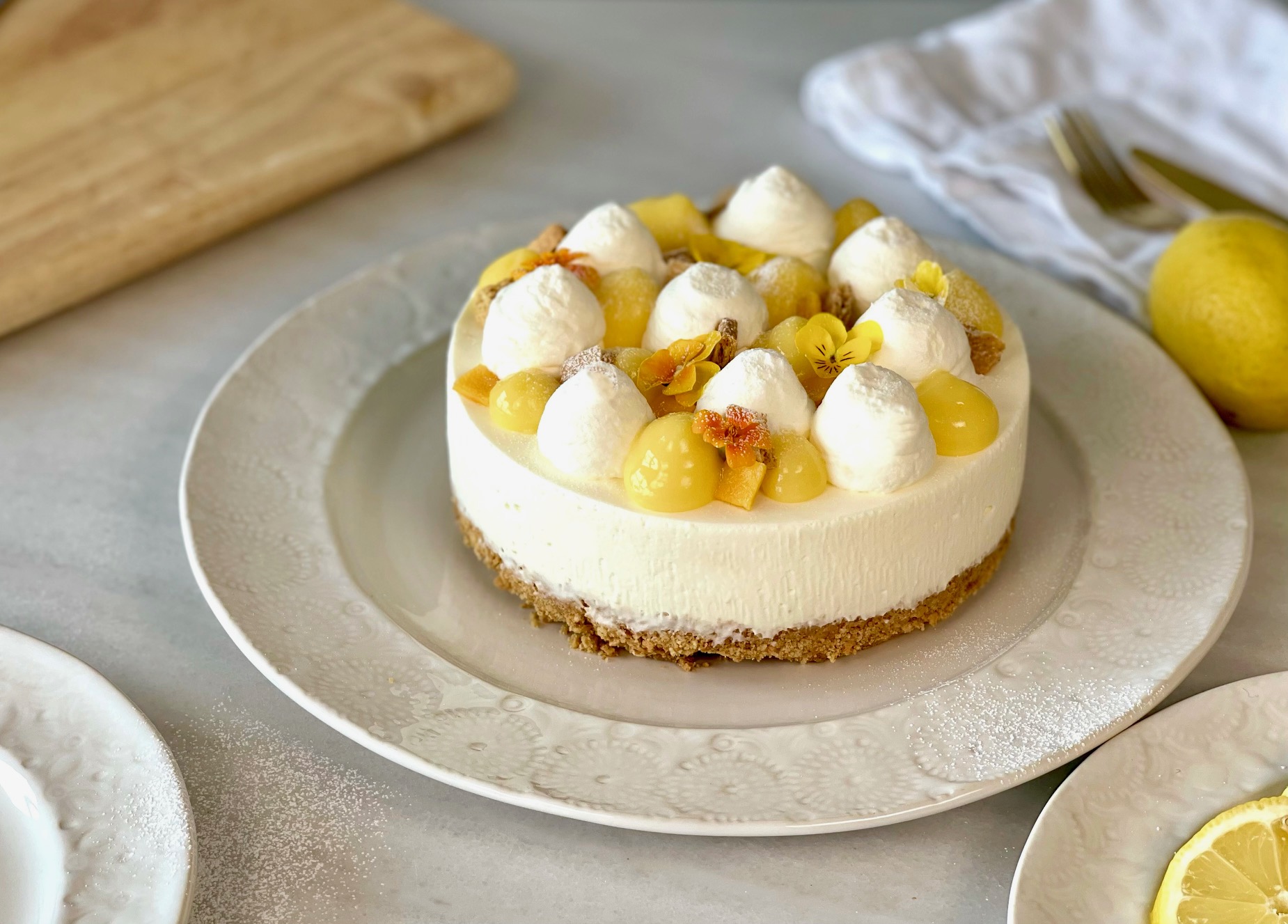
There is a distinct elegance in simplicity. Long before running professional pastry programs in New York City or training at the Tsuji Culinary Institute, my foundation in dessert began in a standard Japanese kitchen with no oven. At age nine, this no-bake “Rare Cheesecake” became my first signature dessert, teaching me the fundamentals of texture and balance. Today, I am revisiting this childhood favorite to share the professional techniques that elevate a simple home recipe into a flawless, bakery-quality dessert.

What is a Rare Cheesecake?

Unlike a baked New York cheesecake or a cotton-soft Japanese soufflé cheesecake, a rare cheesecake is set entirely with gelatin. It typically features cream cheese lightened with heavy cream, sour cream, or yogurt, resulting in a dessert that is tangy, incredibly smooth, and light on the palate. It is the perfect conclusion to a rich meal and an ideal technique to master for warmer seasons.
The Chef’s Guide: Perfecting the Technique

Creating a perfectly smooth no-bake cheesecake comes down to temperature control and emulsion. Here are the professional guidelines for this recipe:
| The Element | The Common Mistake | The Executive Pastry Chef Technique |
| Cream Cheese | Using it straight from the fridge, resulting in stubborn lumps. | Bring it to absolute room temperature. A smooth emulsion is impossible with cold cheese. |
| Gelatin | Dumping dry powder directly into the batter, causing rubbery streaks. | Blooming is non-negotiable. Hydrate the gelatin in cold water for 5 minutes, then gently melt it before incorporating. |
| Folding | Deflating the heavy cream by stirring aggressively. | Use a flexible rubber spatula. Cut down the center and fold from the bottom up to retain an airy texture. |
Ingredients for Rare Cheesecake with Lemon Curd

The Crust
- Graham Crackers: 8 full sheets (finely crushed)
- Unsalted Butter: 28g (2 tablespoons), melted
The Cheesecake Filling
- Cream Cheese: 226g (8 oz), at room temperature
- Sour Cream: 162g (⅔ cup), room temperature
- Heavy Cream: 160g (⅔ cup), cold
- Granulated Sugar: 45g (¼ cup)
- Fresh Lemon Juice: 7g (½ tablespoon)
- Powdered Gelatin: 5g
- Cold Water: 30g (2 tablespoons)

The Lemon Curd
- Whole Egg: 1 large
- Egg Yolk: 1 large
- Granulated Sugar: 90g (½ cup)
- Fresh Lemon Juice: 118ml (½ cup)
- Unsalted Butter: 43g (3 tablespoons), cubed
- Powdered Gelatin: 2g
- Cold Water: 15g (1 tablespoon)
Step-by-Step Instructions
Phase 1: Preparing the Base


First, line the bottom of a 6-inch springform pan with parchment paper. Meanwhile, in a bowl, combine the finely crushed graham crackers and melted butter until the mixture resembles wet sand. Next, press the mixture firmly and evenly into the bottom of the prepared pan. Finally, chill in the refrigerator while you prepare the filling.
Phase 2: Blooming and Whipping


To begin the filling, place 30g of cold water into a small, heatproof cup. Then, sprinkle the 5g of gelatin powder evenly over the surface. Do not stir; instead, let it sit for 5 minutes to hydrate (bloom). While the gelatin blooms, whip the heavy cream in a medium bowl until it reaches soft-to-medium peaks. Do not overwhip; importantly, it should hold its shape but remain luscious and smooth. Set this aside.
Phase 3: Building the Cheese Emulsion

Next, in a large mixing bowl, whisk the room-temperature cream cheese until completely smooth. Afterward, add the sugar and whisk until dissolved. Then, pour in the lemon juice and room-temperature sour cream, whisking until the mixture is entirely unified and free of lumps.


Crucially, you must temper the gelatin. Gently warm the bloomed gelatin in the microwave (about 10–15 seconds) until fully melted into a clear liquid. Because warm gelatin can seize when it hits the cooler batter, scoop 3 tablespoons of your cream cheese mixture into the melted gelatin. First, whisk this small amount together, and then pour the entire gelatin mixture back into the main batch of cream cheese batter. Whisk thoroughly.
Phase 4: Folding and Chilling


Now, add one-third of the whipped cream to the cheese mixture to lighten the base. Next, switch to a rubber spatula and gently fold in the remaining whipped cream in two additions, taking care not to deflate the air. Finally, pour the filling over the chilled crust, smooth the top with a small offset spatula, and refrigerate for at least 4 hours.
Phase 5: Crafting the Lemon Curd


First, bloom the remaining 2g of gelatin in 15g of cold water for 5 minutes. Meanwhile, in a small stainless steel saucepan (off the heat), whisk together the whole egg, egg yolk, sugar, and lemon juice. Next, place the pan over medium-low heat. Continually stir with a rubber spatula, scraping the bottom and sides, for 3–5 minutes until the mixture thickens and just begins to simmer.

Immediately remove from the heat. Then, stir in the cubed butter and the bloomed gelatin until completely melted and smooth. To ensure a silky texture, pass the curd through a fine-mesh strainer. Lastly, place plastic wrap directly on the surface of the curd to prevent a skin from forming, and chill in the refrigerator.
Phase 6: Assembly


Once the cheesecake is fully set, carefully release it from the springform pan. Next, pipe or gently spread the chilled lemon curd over the top. Finally, garnish as desired—with fresh berries or edible flowers—or simply serve it pure and unadorned to let the classic flavors shine.
Frequently Asked Questions (Mastering Rare Cheesecake)

What is a good substitute for graham crackers?
While graham crackers provide a classic base, this crust is highly adaptable. Digestive biscuits are a wonderful, slightly less sweet alternative that I highly recommend. If you prefer a richer contrast, crushed Oreos are actually one of my favorite substitutions for this cheesecake. For a more wellness-focused approach, a baked crumble made from toasted oats, almond flour, and a touch of coconut oil works beautifully.
Can we freeze this cake?
Yes, beautifully! Rare cheesecake freezes exceptionally well for up to 2 to 3 months. To protect the delicate texture, wrap the fully set, un-garnished cake tightly in plastic wrap (while still in the ring or pan, if possible) and place it in an airtight container. When you are ready to serve, you must let it defrost slowly in the refrigerator for at least 6 hours. Never rush the thawing process at room temperature, or the structure will weep.
Why did my cheesecake batter turn out lumpy?
In professional kitchens, we know this is almost always a temperature issue. If your cream cheese is even slightly cold, it will resist mixing and leave tiny lumps throughout your batter. Always ensure your cream cheese and sour cream are at absolute room temperature before you begin whisking.
Do I have to make the lemon curd?
Not at all! While the homemade curd adds a beautiful, bright finish and uses up the remaining gelatin from your packet, a classic rare cheesecake stands perfectly on its own. You can serve it completely unadorned, or simply top it with fresh berries, a quick passionfruit coulis, or a light dusting of matcha right before serving.

Japanese Rare Cheesecake (No-Bak Cheesecake)
Ingredients
The Crust
- 8 sheets Graham Crackers finely crushed
- 28 g Unsalted Butter 2 tablespoons, melted
The Cheesecake Filling
- 226 g Cream Cheese 8 oz, must be room temperature
- 162 g Sour Cream room temperature
- 160 g Heavy Cream cold
- 45 g Granulated Sugar
- 7 g Fresh Lemon Juice
- 5 g Powdered Gelatin
- 30 g Cold Water for blooming
The Lemon Curd
- 1 large Whole Egg
- 1 large Egg Yolk
- 90 g Granulated Sugar
- 118 ml Fresh Lemon Juice
- 43 g Unsalted Butter cubed
- 2 g Powdered Gelatin
- 15 g Cold Water for blooming
Garnish (Optional)]
- Edible flowers
- Fresh berries
- Whipped cream
Instructions
The Crust
- First, line the bottom of a 6-inch springform pan with parchment paper.Meanwhile, in a bowl, combine the finely crushed graham crackers and melted butter until the mixture resembles wet sand.

- Next, press the mixture firmly and evenly into the bottom of the prepared pan.

- Finally, chill in the refrigerator while you prepare the filling.

The Cheesecake Filling
- To begin the filling, place 30g of cold water into a small, heatproof cup.Then, sprinkle the 5g of gelatin powder evenly over the surface. Do not stir; instead, let it sit for 5 minutes to hydrate (bloom).

- While the gelatin blooms, whip the heavy cream in a medium bowl until it reaches soft-to-medium peaks. Do not overwhip; importantly, it should hold its shape but remain luscious and smooth. Set this aside.

- Next, in a large mixing bowl, whisk the room-temperature cream cheese until completely smooth.

- Afterward, add the sugar and whisk until dissolved.Then, pour in the lemon juice and room-temperature sour cream, whisking until the mixture is entirely unified and free of lumps.

- Crucially, you must temper the gelatin. Gently warm the bloomed gelatin in the microwave (about 10–15 seconds) until fully melted into a clear liquid. Because warm gelatin can seize when it hits the cooler batter, scoop 3 tablespoons of your cream cheese mixture into the melted gelatin. First, whisk this small amount together, and then pour the entire gelatin mixture back into the main batch of cream cheese batter. Whisk thoroughly.

- Now, add one-third of the whipped cream to the cheese mixture to lighten the base.

- Next, switch to a rubber spatula and gently fold in the remaining whipped cream in two additions, taking care not to deflate the air.

- Finally, pour the filling over the chilled crust, smooth the top with a small offset spatula, and refrigerate for at least 4 hours.

Lemon Curd
- First, bloom the remaining 2g of gelatin in 15g of cold water for 5 minutes.

- Meanwhile, in a small stainless steel saucepan (off the heat), whisk together the whole egg, egg yolk, sugar, and lemon juice.

- Next, place the pan over medium-low heat. Continually stir with a rubber spatula, scraping the bottom and sides, for 3–5 minutes until the mixture thickens and just begins to simmer.

- Immediately remove from the heat. Then, stir in the cubed butter and the bloomed gelatin until completely melted and smooth. To ensure a silky texture, pass the curd through a fine-mesh strainer. Lastly, place plastic wrap directly on the surface of the curd to prevent a skin from forming, and chill in the refrigerator.

Assembly
- Once the cheesecake is fully set, carefully release it from the springform pan.

- Next, pipe or gently spread the chilled lemon curd over the top.

- Finally, garnish as desired—with fresh berries or edible flowers—or simply serve it pure and unadorned to let the classic flavors shine.


2 comments
It look so great.
So delicious
Thank you!! I wish I can deliver it to your house.