
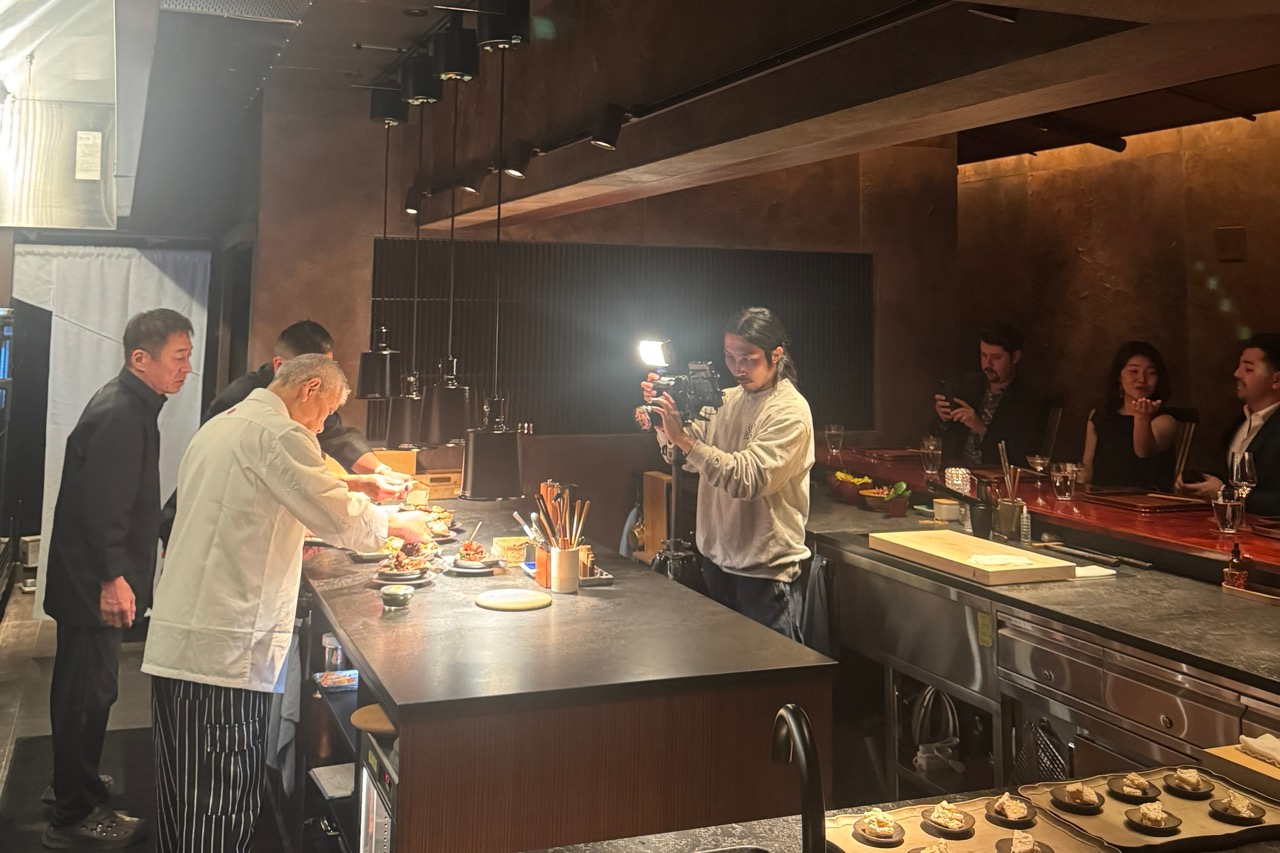
Last week, Kappo Sono finally reopened its doors in Midtown Manhattan. It is one of our restaurant group’s most anticipated projects.
Moving a beloved 10-seat kaiseki counter is no small feat. However, the excitement around the city has been incredible. Even before opening night, Kappo Sono earned major press. For example, it was featured in The New York Times and named one of the best new NYC restaurants by Observer. Additionally, What Now New York highlighted the space and gave my pastry program a shout-out.
A couple of days before opening, I sat at the counter to taste the entire November menu. I joined Chef Chikara Sono and our team for this full run-through. As the Executive Pastry Chef, tasting the savory courses from start to finish is essential. In fact, it helps me understand the pacing and richness of the meal before my desserts arrive.
Below is a behind-the-scenes look at the November kaiseki lineup. Here is what stood out to me most, along with the autumn desserts I created to close the meal.
1. Sakizuke (First Course)

We started with a warm porridge enriched with butter and soy sauce, topped with caviar and crispy onion chips. The depth of the butter-soy flavor was deeply comforting, and the contrast between the salty pop of the caviar and the crunch of the onion chips made every bite addicting. Honestly, I could have happily eaten an entire bowl of it on its own.
2. Otsukuri (Sashimi)


- Fugu (Pufferfish): Fugu sashimi is one of my absolute favorites, so seeing it on the November menu was a thrill. Presented alongside nikogori (savory fish aspic) garnished with chrysanthemum petals, scallions, sudachi, and grated radish, it is a true celebration of late-autumn Japanese cuisine. I love wrapping the delicate slices of fugu with momiji oroshi (spicy grated daikon) and scallions before dipping—it’s a classic technique that balances the clean, firm texture of the fish.
- Assorted Sashimi: Every piece was pristine, accompanied by a house soy sauce with wonderful depth, though the uni (sea urchin) completely stole the show. It was so sweet, clean, and creamy that I genuinely wish anyone who thinks they dislike uni could taste this exact piece—it would change their mind instantly.
3. Owan (Soup Course)


Next came a mushroom surinagashi (a traditional, silky Japanese puréed soup). Even without a drop of dairy, the texture was remarkably creamy and luxurious, letting the earthy umami of the mushrooms and the clarity of the dashi shine through. It was served alongside warm matsutake bread—and I was secretly relieved to hear we didn’t need to use a spoon to enjoy every last drop of the soup!
4. Hassun (Seasonal Platter)

The hassun sets the seasonal mood of a kaiseki meal, served here on a striking leaf-shaped plate. While every bite was memorable, the scallop and ankimo (monkfish liver) stood out. Having tasted a small piece of the ankimo during prep the day before without garnish, I was amazed at how much the addition of fresh orange zest elevated the final dish—that bright citrus aroma cut right through the richness of the liver.
5. Yakimono (Grilled Course)

For the grilled course, we had Roasted Wagyu Tenderloin paired with a savory onion sauce, a smoky grilled liver skewer, and apple shira-ae (a traditional dressed salad with mashed tofu). The wagyu was melt-in-your-mouth tender, and the crisp, subtly sweet apple shira-ae acted as a refreshing palate cleanser between rich bites of beef and skewer.
6. Aizakana (Intermezzo)

Before moving into the rice course, we were served shirako (cod milt) tempura alongside charcoal-grilled kazunoko (herring roe), ginkgo nuts, and sweet chestnuts. The shirako tempura was pure luxury—crisp on the outside and impossibly rich and creamy inside. I had never experienced kazunoko grilled over charcoal before; the smoky salinity of the roe and ginkgo nuts paired effortlessly with the natural sweetness of the chestnuts.
7. Shokuji (Rice Course) & 8. Soba

As the savory courses wound down, the aroma of the truffle rice filled the counter from the very first lid lift—fragrant, earthy, and comforting enough that I could have finished the whole donabe pot. (If you want to master the foundation of fluffy, glossy short-grain rice at home—whether in a rice cooker or a traditional earthenware donabe—check out my step-by-step guide on how to cook Japanese rice.) We followed that with chilled zaru soba, which was as crisp, nutty, and refreshing as ever. Even after seven courses, I could easily have gone back for three more servings.
The Finale: Kumamoto Chestnut Mont Blanc & Petit Fours

After such a rich, umami-forward progression of autumn seafood, wagyu, and truffles, my goal for the dessert course is to bring a sense of lightness, warmth, and seasonal nostalgia without weighing down the palate.
- Kumamoto Japanese Chestnut Mont Blanc: Because Mont Blanc is the most requested autumn dessert and pastry in Japan this time of year, I created a special version for Kappo Sono as well. Every year I change up the components and cream—for this menu, I layered a hojicha sponge cake at the base with mascarpone mousse and chestnut kanroni (candied chestnuts), topped with Japanese chestnut paste (waguri) from Kumamoto Prefecture. To finish the plate, I paired it with a refreshing pear vanilla sorbet and edible momiji (Japanese maple) leaves. (If you love the roasted, nutty pairing of hojicha and mascarpone as much as I do, you can also make my Hojicha Tiramisu at home!)
- Petit Fours (Wagashi & Confectionery): To accompany the final tea service, I wanted to bridge traditional Japanese confectionery with French pastry technique—serving a bright, chewy Pomelo Grapefruit Uiro (a traditional steamed rice flour confection) to refresh the palate, alongside a rich Fig Banana Truffle for a subtle, fruity finish.
Visiting Kappo Sono

Experience the new 10-seat counter and seasonal kaiseki menu in Midtown Manhattan. Reservations and seasonal menu updates are available directly on the Kappo Sono website.
