
A couple of years ago, when our Japanese restaurant team catered a Shiseido event in New York, Anne Hathaway had a very specific request: she asked if there was any way we could make her Japanese yaki imo (roasted sweet potato). It wasn’t even on our restaurant’s menu, but we gladly made it for her. She had fallen in love with yaki imo during a visit to Japan and remembered both how incredible it tasted and how naturally healthy it was.
Anyone who has spent autumn in Japan understands that craving. For generations, fall meant gathering fallen leaves (ochiba) and tucking sweet potatoes into the warm embers to roast—a tradition now banned in most cities because of the smoke. Even without leaf bonfires, yaki imo is everywhere once the air turns crisp. You can hear the nostalgic, slow-chanting melody of ishi yaki imo (stone-roasted sweet potato) trucks cruising through neighborhoods, and every local grocery store sets up a heated display box right near the entrance stocked with warm, honey-sweet potatoes.
If you have only ever baked regular American orange sweet potatoes, authentic Japanese yaki imo is a completely different experience. Made with dense, cream-fleshed Japanese satsumaimo, slow roasting transforms the natural starches into rich, caramel-like sweetness with zero added sugar—and with one simple oven trick, you can recreate that exact street-truck magic at home without even using foil.
One Quick Shopping Tip Before You Start

To get that dense, chestnut-sweet result, make sure you pick up true Japanese sweet potatoes (satsumaimo)—look for purplish-red skin with pale cream or yellow flesh inside (labeled PLU 94818 at Whole Foods or sold as Murasaki sweet potatoes at Trader Joe’s). Watch out for look-alike California “Organic Red Sweet Potatoes” (Garnet), which have similar reddish skin on the outside but watery orange flesh inside.
Want to learn more about Japanese cultivars (Beni Haruka vs. Naruto Kintoki), sourcing at Asian markets, or pre-baked frozen yaki imo? Check out my Ultimate Guide to Japanese Sweet Potatoes (Satsumaimo).
Why No-Foil Baking Tastes Like a Real Ishi Yaki Imo Truck

The secret to transforming starchy satsumaimo into honey-sweet yaki imo is slow heat. Starting in a cold, un-preheated oven warms the potatoes gradually so their natural enzymes have plenty of time to break down starches into maltose (malt sugar) before the oven reaches full temperature.
During recipe testing, I baked Japanese sweet potatoes at 325°F (160°C) for 1 hour and 45 minutes both wrapped in aluminum foil and completely unwrapped. While foil traps steam for a softer peel, baking without foil is my favorite method—it recreates the toasted aroma and flavor of a stone-roasted ishi yaki imo truck, and the thin, caramelized skin is delicious enough to eat whole.

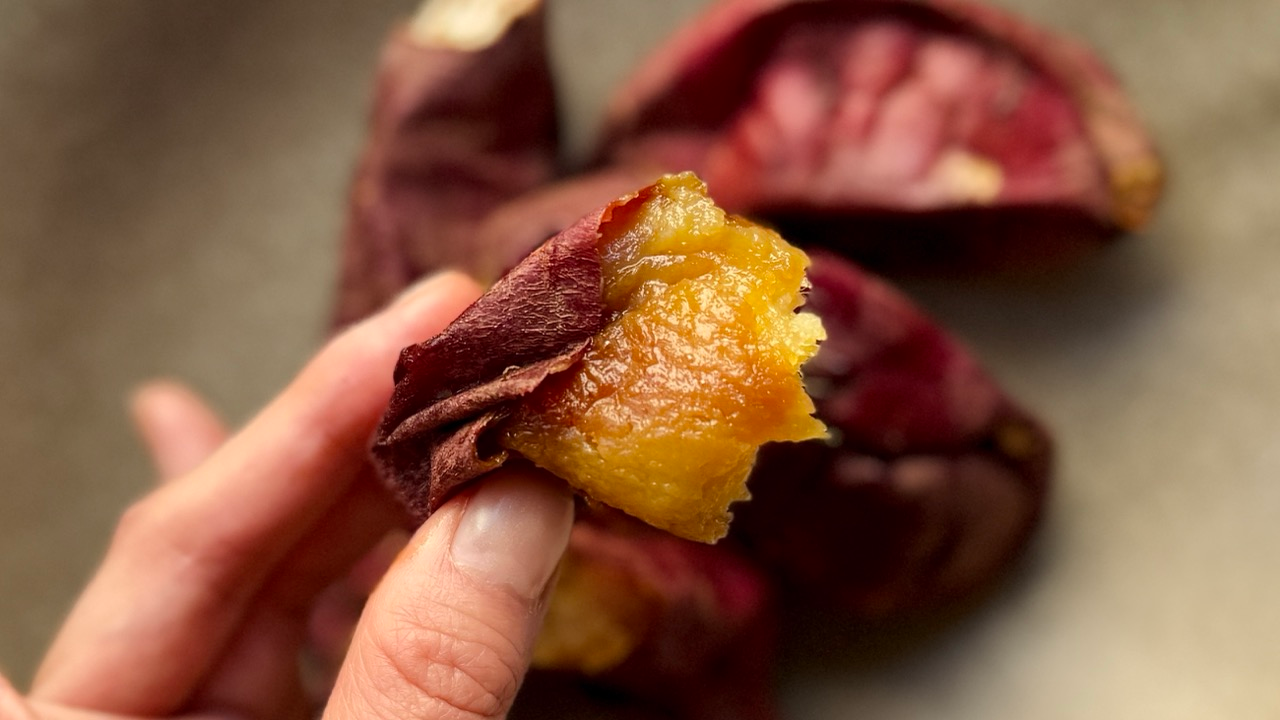
In Japan, we describe this ultimate roasted sweet potato texture as nettori (ねっとり)—dense, fudgy, and velvety like warm custard, glistening with natural honey-like syrup. That is very different from hoku hoku (ほくほく), another classic Japanese texture term used for foods like roasted chestnuts, kabocha squash, or traditional baked potatoes that are fluffy, tender, and delicately crumbly, steaming softly when you break them open. While plenty of people love a classic hoku hoku sweet potato, slow-roasting unlocks that deeply concentrated nettori richness—which is my personal favorite way to enjoy yaki imo.
This minimal-effort method comes down to four simple habits:


- Prep Is Just Washing: Scrub the sweet potatoes clean and place them on a parchment-lined baking sheet while the skins are still slightly damp. That thin film of surface water conducts heat gently at the start without drying out the flesh.
- Skip the Aluminum Foil: Baking naked lets moisture evaporate gradually so natural amber syrup (mitsu) bubbles through the skin and caramelizes.
- One Steady Temperature: Start in a cold oven set to 325°F (160°C) with zero mid-bake temperature changes.
- Space Them Out: Leave 1 to 2 inches between each potato so hot air circulates evenly around every side.
- Prick at the 45-Minute Mark: After 45 minutes of baking, briefly pull the tray out and prick each potato 2 or 3 times with a fork to release built-up steam (so they don’t burst) and let the sweet mitsu syrup ooze out. Return them to the oven for 30 to 60 minutes depending on their thickness.
How to Tell When Yaki Imo Is Done (Without Cutting It Open)

Avoid slicing your sweet potatoes open in the oven, which releases internal steam and can dry out the center. Instead, look for two cues right on the pan:
- Overflowing Amber Syrup (Mitsu): Sticky, golden-brown sugar syrup seeping through the skin onto the parchment paper means starch-to-sugar conversion is complete.
- The Gentle Squeeze Test: Put on an oven mitt and gently squeeze the thickest part of the potato. It should feel uniformly soft and yielding all the way to the core with no firm resistance.
Ways to Use Leftover Yaki Imo

If you bake a full tray of yaki imo, you can easily turn the leftovers into classic Japanese sweets. See my Satsumaimo Guide for tips on freezing whole roasted potatoes or pressing the warm flesh through an uragoshi sieve into a smooth paste for these recipes:
- Suito Poteto (Japanese Sweet Potato Treats): Bite-sized, buttery baked sweet potato pastries with a glossy golden finish.
- Yaki Imo Basque Cheesecake: A triple-layer Basque cheesecake layered with rich roasted sweet potato paste.
- Rabbit Tsukimi Dango with Sweet Potato Filling: Soft, chewy autumn mochi dumplings filled with naturally sweet satsumaimo paste.

Authentic Japanese Yaki Imo (No-Foil Slow-Roasted Sweet Potato)
Ingredients
- 4 pc Japanese Sweet Potatoes
Instructions
- Scrub the sweet potatoes thoroughly under cold water to remove all dirt. Shake off excess droplets, leaving the skins slightly wet (do not towel-dry or wrap in foil).

- Line a rimmed baking sheet with parchment paper to catch sticky sugar drips. Arrange the damp sweet potatoes spaced 1 to 2 inches apart.

- Place the baking sheet on the center rack of a cold, un-preheated oven. Set the temperature to 325°F (160°C) and bake uninterrupted for 1 hour 45 minutes (105 minutes) without changing the temperature.

- Carefully slide out the rack and prick each sweet potato 2 or 3 times with a fork to prevent bursting and help syrup caramelize on the skin. Continue baking at 325°F (160°C) for 30 to 60 minutes more (75 to 105 minutes total), depending on the thickness of your potatoes.

- Without cutting the potatoes open, look for golden syrup (mitsu) oozing from the fork holes and skin. Wearing an oven mitt, gently squeeze the thickest center—it should feel completely soft and yielding.

- For an even deeper, custard-like nettori texture, turn off the oven and leave the potatoes inside with the door closed for 30 minutes before serving.
- Enjoy hot with the caramelized skin intact, split open as-is or topped with a pinch of flaky sea salt or a small pat of cultured butter.

Notes
- Choosing the Best Size: Evenly shaped small-to-medium tubers (200g–250g) cook through to the center in 1 hour 45 minutes without the edges drying out.
- Make-Ahead & Storage: Store leftover yaki imo in an airtight container in the refrigerator for up to 4 days, or wrap individually and freeze for up to 1 month (full freezing and hiyashi yaki-imo thawing instructions are in my Japanese Sweet Potato Guide).
