
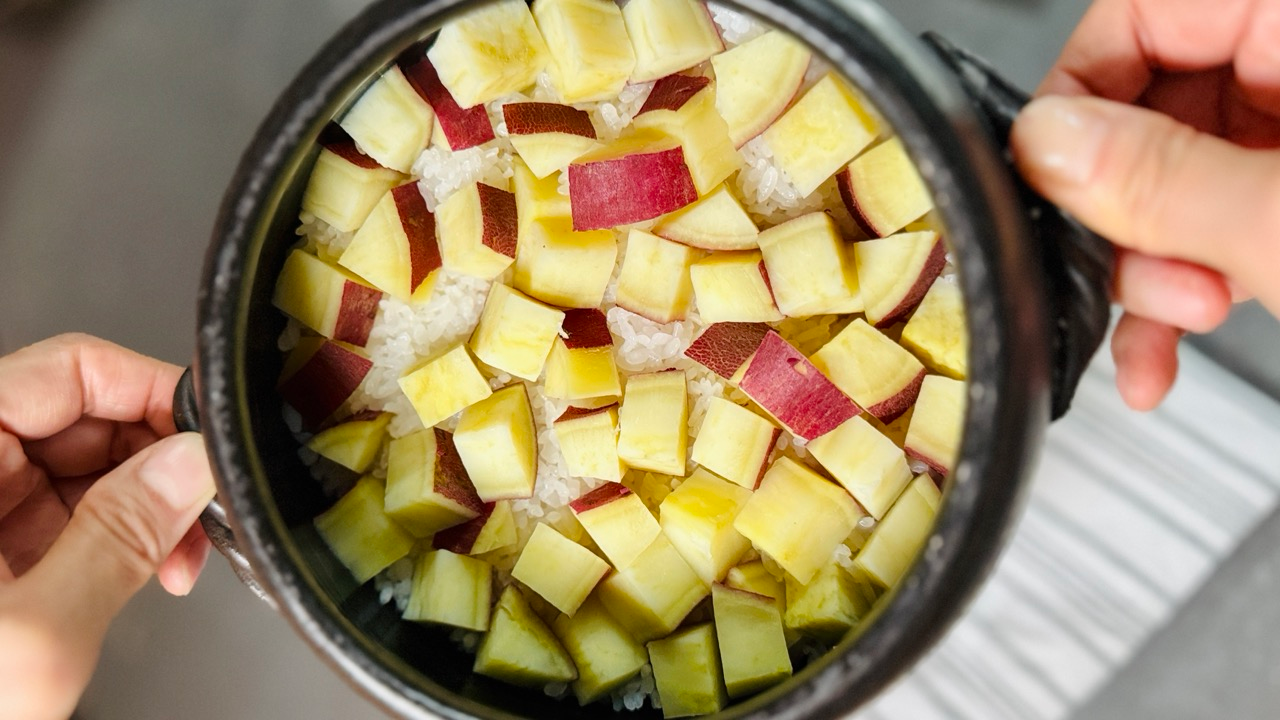
Every autumn, the air turns crisp and my kitchen shifts toward warm, comforting bowls of rice. One of my favorite seasonal traditions is Japanese Sweet Potato Rice (Satsumaimo Gohan / さつまいもご飯). In this classic dish, fluffy short-grain rice cooks directly with sweet, buttery Japanese sweet potatoes and a touch of salt.
The beauty of this recipe lies in its minimalism. First, a precise touch of salt draws out the chestnut-like sweetness of the satsumaimo. Meanwhile, the tender potato pieces steam to perfection right on top of the rice. Using my go-to rice method, every grain turns out distinct, tender, and lightly seasoned. Best of all, this works seamlessly whether you use a rice donabe or an electric rice cooker on the Quick Cook setting.
Watch the step-by-step technique for steaming seasonal sweet potato rice in a rice donabe below:
Why You’ll Love This Recipe

Authentic Japanese Home Cooking: First, this classic washoku staple highlights the natural sweetness of autumn.
Precision Rice Technique: Additionally, the 15-minute soak and 15-minute colander drain create flawless grain structure.
Flexible Cooking Methods: You can easily use a rice donabe (13-minute gas stovetop cook) or an electric rice cooker (Quick Cook setting).
Minimal Ingredients: Furthermore, you only need short-grain rice, Japanese sweet potato, water, and salt.
Naturally Vegan & Gluten-Free: Finally, this simple, plant-based dish suits almost any seasonal meal.
Ingredients You’ll Need
- Japanese Short-Grain White Rice: 300g (2 Japanese rice cups / 360ml).
- Water: 300g to 310g (weighed for precision).
- Japanese Sweet Potato (Satsumaimo): 150g (about 1 small or ½ medium potato). Look for varieties with deep reddish-purple skin and golden yellow interior (such as Beni Haruka—read more about varieties in my Authentic Japanese Yaki Imo Guide).
- Salt: 1 tsp fine table salt (approx. 5g) OR 1 ⅓ tsp coarse sea salt (approx. 7g).
- Sake (Optional): ½ tbsp Japanese cooking sake drizzled over the cooked rice for added aroma and sheen.
Step-by-Step Instructions
1. Prep the Rice


Rinse 300g of short-grain rice in cold water until the liquid runs almost clear.
- Soak (15 mins): Submerge the washed rice in cold water and allow it to soak for 15 minutes.
- Drain (15 mins): Transfer the rice into a fine-mesh colander or strainer and let it drain completely for 15 minutes to remove excess surface water.
Pro Tip: For a detailed look at why this two-step soaking and draining method creates perfectly translucent, non-mushy rice, check out our master guide on How to Cook Japanese Rice.
2. Prep the Sweet Potato


While the rice is draining, wash the sweet potato thoroughly under running water and trim off both ends. Leaving the nutrient-rich purple skin intact for vibrant color and structural integrity, cut the potato into 1 to 1.5 cm (½ inch) cubes.
Submerge the cut cubes in a bowl of cold water for 5 to 10 minutes to drain off excess starch and prevent discoloration, then drain thoroughly.
3. Season and Layer

Place your drained rice into your rice cooker inner pot or earthenware donabe. Add 300g to 310g of water directly by weight.
Add 1 tsp of fine salt (or 1 ⅓ tsp coarse salt) into the water and stir gently until completely dissolved.
Flavor Adjustment: This amount of salt produces a traditional, well-seasoned takikomi gohan base that contrasts beautifully with the sweet potato. For a lower-sodium version, reduce the salt to ½ or ⅔ tsp.
Scatter the drained sweet potato cubes in an even layer directly over the rice. Do not mix the sweet potatoes into the rice, as keeping them on top ensures even heat distribution across the grains.
Choose Your Cooking Method
Method A: Rice Donabe (Gas Stovetop) — 13 Minutes

Unlike a standard hot-pot donabe, a rice donabe (such as the Iga Banko rice donabe I use in my kitchen) is engineered with thick earthenware walls and a heavy or double-lid design to retain heat, build internal steam pressure, and prevent boil-over.
- Cover the Pot: Place the lid(s) securely onto the rice donabe. (If using a double-lid pot like an Iga Banko, align the outer steam vent perpendicular to the inner lid holes).
- Gas Stovetop Cook: Place the covered rice donabe over a gas burner set to medium-high heat and cook for 13 minutes. Because of the thick earthenware construction, you do not need to adjust or turn down the heat midway.
- Off-Heat Steaming (10–15 mins): Turn off the burner completely. Leave the rice donabe undisturbed on the stove to steam in its rich residual heat for 10 to 15 minutes before removing the lid.
Method B: Electric Rice Cooker (Hayadaki / Quick Cook)
- Close the lid and select the Hayadaki (早炊き / Quick Cook) setting on your rice cooker.
- Because the rice was pre-hydrated during the 15-minute soak step, the quick cycle cooks the rice and sweet potatoes quickly to perfection without breaking down the grains.
4. Fluff and Finish

When cooking and steaming are complete, open the lid.
(Optional Finishing Touch) Drizzle ½ tbsp of sake over the hot rice, close the lid, and let it steam for 2 to 3 minutes to evaporate the alcohol while leaving a gentle umami shine.
Using a rice paddle, gently fold the rice from the bottom up using a slicing motion, taking care around the sweet potato cubes so they stay intact. Serve warm in individual rice bowls.
Chef’s Tips for Success

- Weigh Your Water: Measuring water by weight (300g–310g for 300g of dry rice) guarantees a consistent grain texture every time, eliminating guesswork regardless of your cooking vessel.
- Why the 13-Minute Rice Donabe Method Works: The heavy clay body of a rice donabe (like my Iga Banko pot) absorbs gas heat gradually, bringing the pot to a controlled boil and maintaining ideal pressure for 13 minutes without scorching. It also creates a delicate layer of aromatic okoge (lightly toasted bottom rice). (Note: Cooking times may vary slightly by a minute or two depending on your specific rice donabe brand and stove BTU).
- Keep the Potato Skin On: The deep purple skin provides a striking visual contrast against the yellow potato flesh and white rice, while maintaining the structural shape of the sweet potato cubes during fluffing.
- Scaling to 3 Cups (3合 / 450g Rice): For a 3-cup rice donabe or electric rice cooker, scale up to 450g rice, 450g–465g water, 220g–250g sweet potato, and 1 ½ tsp fine salt (or 2 tsp coarse sea salt).
Related Recipes & Guides

How to Cook Japanese Rice
First, master the exact water ratios, soaking steps, and timings for glossy, plump short-grain rice every time.

Authentic Japanese Yaki Imo Guide
Next, explore satsumaimo varieties, where to buy them, and how to slow-roast them for maximum sweetness.

Japanese Sweet Potato Basque Cheesecake
Additionally, blend caramelized yaki imo with velvety cream cheese beneath a deeply toasted, burnt-sugar top.

Japanese Sweet Potato Rice (Satsumaimo Gohan)
Ingredients
- 300 g Japanese short-grain white rice 2 Japanese rice cups
- 300 g to 310 g water weighed
- 150 g Japanese sweet potato satsumaimo, cut into 1.5cm cubes
- 1 tsp fine table salt or 1 1/3 tsp coarse sea salt
- 1/2 tbsp Japanese cooking sake optional, for finishing
Instructions
- Rinse 300g short-grain rice in cold water until clear. Soak in water for 15 minutes, then drain in a fine colander for 15 minutes.

- Cut unpeeled sweet potato into 1–1.5 cm cubes and soak in cold water for 10 minutes; drain well.

- Transfer drained rice to a rice donabe or electric rice cooker inner pot and add 300g–310g water. Add salt to the water and stir gently until dissolved. Spread sweet potato cubes evenly on top of the rice. Do not stir into the rice.

- COOKING METHOD 1 (Rice Donabe): Cover with lid(s). Place over a gas stovetop on medium-high heat and cook for 13 minutes (tested with an Iga Banko rice donabe). Remove from heat and let steam off-heat for 10–15 minutes.

- COOKING METHOD 2 (Electric Rice Cooker): Select the Quick Cook setting and start.
- Once finished, optionally drizzle sake over top and steam for 2-3 minutes. Fluff gently from the bottom with a rice paddle and serve warm.

Notes
- Weighing Water: Measuring water by weight (300g–310g for 300g dry rice) guarantees consistent, non-mushy rice texture whether you use a stovetop pot or an electric machine.
- Keep the Skin On: Leaving the purple skin intact on the Japanese sweet potato adds vibrant color contrast and keeps the cubes from falling apart when you fluff the rice.
- Rice Donabe Tip: This recipe was tested using a 3-cup Iga Banko rice donabe over medium-high gas heat for 13 minutes, followed by 10–15 minutes of off-heat steaming. Adjust by 1–2 minutes if needed based on your stove’s BTU output and pot brand.
- Sodium Adjustment: Using 1 tsp fine salt (or 1 ⅓ tsp coarse salt) gives a classic, savory takikomi gohan balance. For a milder, lower-sodium dish, reduce the salt to ½ or ⅔ tsp.
- Scaling to 3 Rice Cups (3合 / 450g Rice): Use 450g rice, 450g–465g water, 220g–250g sweet potato, and 1 ½ tsp fine salt (or 2 tsp coarse sea salt).
- Storage: Store leftover rice in an airtight container in the refrigerator for up to 3 days, or wrap individual portions tightly in plastic wrap and freeze for up to 1 month. Reheat in the microwave with a splash of water to restore moisture.
