
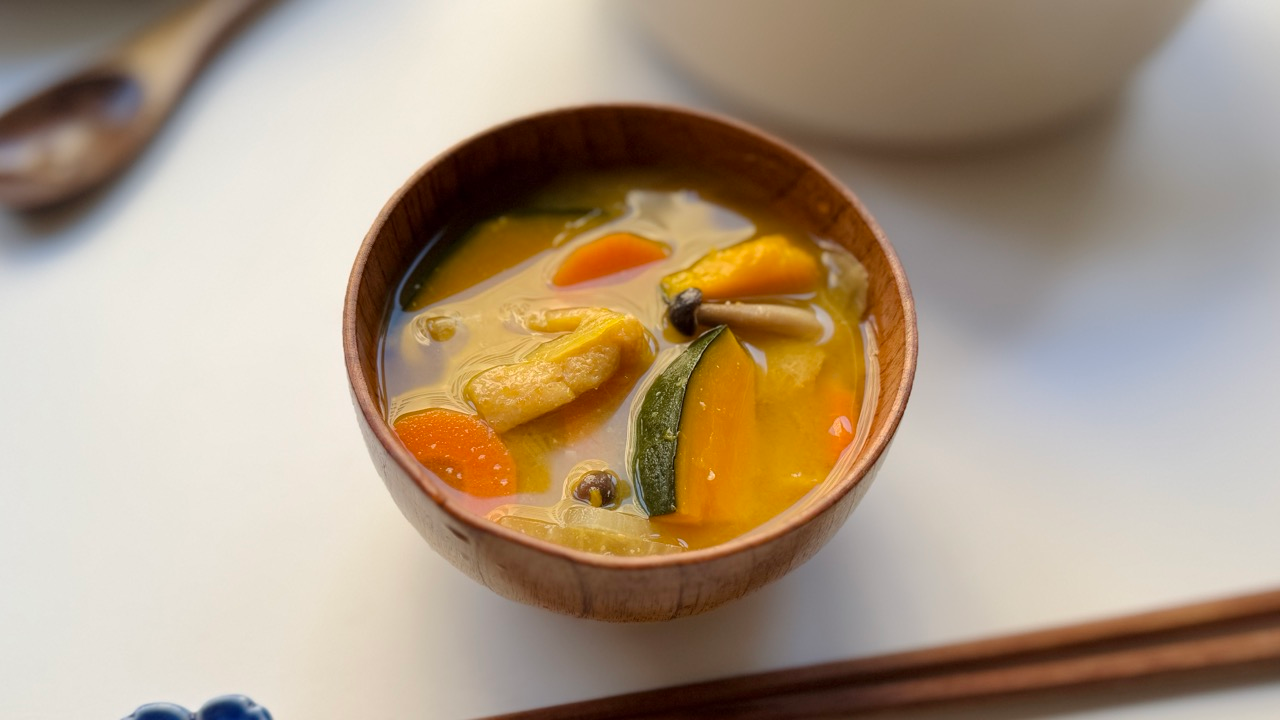
A proper bowl of Japanese kabocha miso soup is all about building layers of clean, authentic umami that highlight the natural sweetness of autumn root vegetables. In this recipe, cold-steeped kombu is gently heated directly with dense root vegetables to extract a natural broth, followed by a brief simmer with a bonito dashi pack. Loaded with 1 cm-thick kabocha slices, earthy gobo, shimeji mushrooms, daikon, and aburaage, this vegetable-packed kabocha miso soup stays crystal clear thanks to a gentle miso-dilution technique that protects tender ingredients from breaking apart.
Prep Time & Yield

- Prep Time: 20 minutes (plus 30–60 min for kombu steeping)
- Cook Time: 15 minutes
- Servings: 4 to 5 generous bowls
Ingredients for Kabocha Miso Soup

- Cold-Brew Dashi Base:
- 4 cups (1,000 ml) Water
- 1 piece Kombu (dried kelp, approx. 5-inch / 12 cm piece)
- 1 Dashi pack (Bonito-based, such as Kayanoya or Dashi Okume)
- Vegetables & Proteins:
- 200g (approx. 7 oz) Kabocha squash, seeds removed, cut into thick crescent slices (approx. 1 cm / 3/8-inch thick)
- ~100g Gobo (burdock root), scrubbed, sliced diagonally (naname-giri), and soaked in cold water for aku-nuki
- 80g (approx. 3 oz) Carrot, peeled and sliced into thin half-moons (hangetsu-giri)
- 120g (approx. 4 oz) Daikon radish, peeled and cut into quarter-rounds (ichogiri)
- 1/2 cluster Shimeji mushrooms, roots removed and separated into small clumps
- 1 Scallion, cut into thick diagonal pieces (naname-giri) for simmering
- 1 sheet Aburaage (fried bean curd), scalded in hot water to remove excess oil and sliced into strips
- Seasoning & Finishing:
- 3 to 3.5 tbsp Awase Miso (or your favorite white, red, or regional miso paste; adjust quantity to taste)
- 1 Scallion, finely sliced (optional garnish)
- Shichimi Togarashi (seven-spice blend) or Yuzu Kosho (citrus chili paste) (optional finishing condiments)
Instructions
1. Cold-Steep the Kombu Base

Pour 4 cups of cold water into your pot and add the 5-inch piece of kombu. Let it sit at room temperature for 30 minutes to 1 hour.
2. Prep the Gobo (Aku-nuki)

Slice the gobo diagonally (naname-giri). Submerge immediately in a bowl of cold water for 5 to 10 minutes to drain the raw astringency (aku-nuki). Drain completely.
3. Start the Root Vegetable Extraction

Add the drained gobo, carrot, and daikon radish directly into the pot with the cold-steeped kombu water. Place over medium heat and bring to a gentle simmer.
4. Extract the Bonito Dashi


Just as small bubbles begin to form and the water starts simmering, remove and discard the kombu. Add your bonito dashi pack, reduce heat slightly, and simmer for 2 to 3 minutes. Remove the dashi pack gently without squeezing it (squeezing releases unwanted bitterness and harsh astringency, known as egumi).
5. Simmer Aromatic Vegetables & Aburaage


Add the shimeji mushrooms, sliced scallion, and aburaage strips into the pot. Continue simmering over medium-low heat until the daikon and carrots are cooked through.
6. Add the Kabocha

Add the 1 cm thick kabocha slices. Simmer gently for 4 to 5 minutes until tender when tested with a toothpick, taking care not to overcook.
7. Dilute and Add the Miso


Turn off the heat completely. Scoop a tiny ladleful of hot broth into a small bowl or ladle, mix in the awase miso until fully dissolved and smooth, then gently pour it back into the pot. This prevents excessive stirring in the pot, preserving the shape of the tender kabocha.
8. Warm & Serve

Turn the heat back to low just to warm the soup through (do not let it come to a boil, which ruins the delicate miso aroma). Ladle into bowls and serve immediately.
Chef’s Notes & Dashi Flexibility

- Dashi Options (No Strainer Hassle!): While brewing traditional dashi from scratch by straining raw bonito flakes is wonderfully authentic, it can be a pain to clean up on busy weekdays. Quality dashi packs offer a luxurious, high-flavor compromise. However, you don’t have to use premium dashi packs:
- Powdered Dashi (Funmatsu Dashi / Hondashi): A fast, convenient budget option that adds quick umami directly to the pot.
- Dashi-Iri Miso: If your miso paste already contains dashi (dashi-iri), you can skip the dashi pack altogether and rely on the kombu steep plus the dashi in your miso.
- Why Dashi Matters: Dashi is the heart of miso soup—without a solid umami baseline, miso soup can taste flat or overly salty rather than round and satisfying.
- Never Squeeze the Dashi Pack: Squeezing the dashi bag forces out concentrated bitterness and muddy flavors (egumi). Simply lift it out with tongs and let it drain naturally for a clean broth.
- Preserving Kabocha Integrity: Kabocha becomes tender quickly. Slicing it 1 cm thick and pre-dissolving your miso in a separate ladle prevents the need to agitate the broth with chopsticks inside the pot, keeping the soup clear and intact.
Miso Selection: Awase & Beyond

H-Mart Japanese miso aisle showing different types of white, red, and awase miso paste tubsWhile this recipe calls for Awase Miso (a balanced blend of red and white miso that works as a versatile everyday staple), you can use any miso paste you prefer or have on hand:
- White Miso (Shiro Miso): Lighter, sweeter, and milder—great if you want the natural sweetness of the kabocha and carrots to shine.
- Red Miso (Aka Miso): Darker, richer, and more intensely savory with a higher salt content—adds a deeper, woodsy backbone that pairs exceptionally well with root vegetables and mushroom broth.
- Barley Miso (Mugi Miso): Popular in Kyushu and Chugoku, offering a slightly sweet, earthy grain profile.
Chef’s Note: Miso is one of the most expressive ingredients in Japanese cuisine! Across Japan, every region—and virtually every household—prefers its own distinct type of miso depending on local climate, fermentation styles, and traditional regional soup preparations. (Stay tuned for an upcoming deep dive on the blog exploring Japan’s regional miso varieties and how to use them!)
FAQ: Kabocha Miso Soup
Q: Do I have to use a dashi pack for this soup?
No. While premium dashi packs (like Kayanoya or Dashi Okume) offer a rich, restaurant-quality flavor compromise without the fuss of straining raw bonito flakes, you can easily adapt this recipe:
- Instant Powder (Funmatsu Dashi): Use 1 tsp of instant dashi granules added directly to the pot.
- Dashi-Iri Miso: If your miso paste already contains dashi (dashi-iri miso), rely on the cold-steeped kombu base and skip the extra dashi pack altogether.
Q: Why do my kabocha pieces dissolve into the soup?
Kabocha has a dense, starchy texture that breaks down quickly when overcooked. Slicing the squash to a uniform 1 cm (3/8-inch) thickness ensures it cooks through evenly in 4 to 5 minutes without disintegrating. Additionally, pre-dissolving your miso in a separate ladle prevents you from having to stir vigorously inside the pot, keeping the kabocha chunks fully intact and the broth clear.
Q: Can I make this soup vegan/vegetarian?
Yes! Simply use a kombu-only dashi base or a mushroom/kombu vegetable dashi pack instead of a bonito (fish) dashi pack.
Related Kabocha Recipes on Kitsune Golden


If you love cooking with Japanese squash, explore more cozy kabocha dishes from the blog:
- Chicken and Kabocha Cream Stew – A rich, velvety Japanese Yoshoku classic featuring tender chicken and sweet kabocha in a homemade white sauce.
- How to Cut and Store Kabocha Squash – Essential knife tips for safely breaking down tough winter squash and prepping it for storage or baking.

Hearty Kabocha & Root Vegetable Miso Soup (具だくさん かぼちゃとごぼうのみそ汁)
Ingredients
Dashi Base
- 4 cups 1000 ml water
- 1 piece kombu (dried kelp, approx. 5-inch / 12 cm)
- 1 piece bonito dashi pack (such as Kayanoya or Dashi Okume)
Vegetables & Protein
- 200 g kabocha squash (approx. 7 oz), seeds removed and sliced into 1 cm (3/8-inch) thick crescents
- 100 g gobo (burdock root) (approx. 3.5 oz), scrubbed, sliced diagonally (naname-giri), and soaked in cold water
- 80 g carrot (approx. 3 oz) peeled and sliced into thin half-moons (hangetsu-giri)
- 120 g daikon radish (approx. 4 oz) peeled and cut into quarter-rounds (ichogiri)
- 1/2 shimeji mushrooms root end trimmed and separated into small clumps
- 1 sheet aburaage fried bean curd, scalded in hot water and cut into thin strips
- 2 scallions (1 sliced into thick diagonal pieces (naname-giri) for simmering; 1 finely sliced for garnish)
Seasoning & Toppings
- 3 to 3.5 tbsp awase miso or your preferred red, white, or regional miso paste
- Shichimi togarashi or yuzu kosho optional finishing condiments
Instructions
- Combine 4 cups of cold water and the 5-inch kombu piece in a medium pot. Let steep at room temperature for 30 to 60 minutes.

- Submerge the sliced gobo in a bowl of cold water for 5 to 10 minutes to draw out raw astringency. Drain thoroughly.
- Add the drained gobo, carrot, and daikon radish directly into the pot with the cold-steeped kombu water. Place over medium heat.

- As small bubbles form along the edge of the pot (just before boiling), remove and discard the kombu.

- Add the dashi pack, reduce heat slightly, and simmer gently for 2 to 3 minutes. Remove the dashi pack with tongs without squeezing to prevent astringency (egumi).

- Add the shimeji mushrooms, thick diagonal scallion slices (naname-giri), and aburaage strips to the pot. Simmer until the daikon and carrots are tender.

- Add the 1 cm thick kabocha slices. Simmer gently for 4 to 5 minutes until tender when tested with a toothpick.

- Turn off the heat completely. Scoop a small ladleful of hot broth into a separate cup or ladle, whisk in the miso until smooth, then pour it back into the pot.

- Return the heat to low just until heated through (do not boil). Ladle into bowls and finish with finely sliced scallions, shichimi togarashi, or a dab of yuzu kosho if desired.

Notes
- Dual-Cut Scallions: Using thick diagonal cuts (naname-giri) inside the soup lets the scallions absorb the rich broth and become tender during simmering, while finely sliced raw scallions on top add a crisp, fresh finish.
- Dashi Flexibility: If you don’t have a bonito dashi pack, use 1 tsp of instant dashi granules (funmatsu dashi). If using dashi-iri miso, rely on the cold-steeped kombu base and omit the extra dashi pack.
- Why 1 cm Kabocha Slices? Slicing kabocha 1 cm (3/8-inch) thick keeps it from disintegrating into the broth while cooking.
- Miso Selection: Awase miso offers a balanced everyday profile, but red miso (aka miso) adds extra woodsy depth to root vegetables, while white miso (shiro miso) yields a sweeter bowl.
- Tonjiru Variation: Sauté thinly sliced pork belly in a drop of sesame oil at the start before adding the kombu water and root vegetables.
