
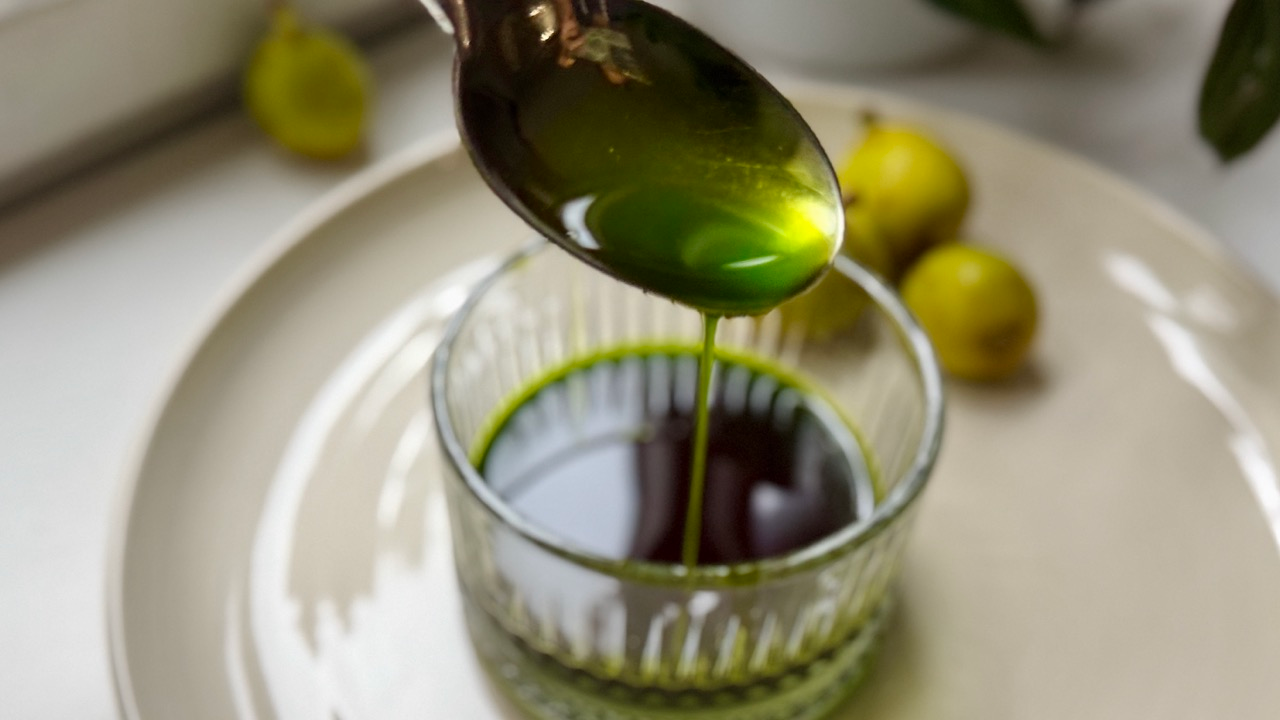
Fresh fig leaves offer a unique aroma—a blend of sweet coconut, warm vanilla, and green herbaceous notes that outperforms the fruit itself. Traditional cold-blend or low-yield recipes often struggle in high-powered blenders like a Vitamix due to insufficient volume or prolonged friction heating that dulls top notes.
By pre-heating neutral sunflower oil to 60°C (140°F) and utilizing a full 100 g to 300 g ratio, extraction occurs rapidly. Capping the final friction temperature at 90°C (194°F) breaks down cell walls to fully release chlorophyll and coumarin aromatics while avoiding the cooked, scorched notes that can occur at 100°C.

Ingredients

- 100 g Fresh Fig Leaves (stems removed, washed, and thoroughly spin-dried)
- 300 g Neutral Sunflower Oil (or high-grade grapeseed oil)
Step-by-Step Instructions
Step 1: Prep and Dry the Leaves


Tear or cut away the tough center ribs and stems from the fig leaves. Wash the leaf blades thoroughly under cold running water, then transfer them to a salad spinner to remove excess moisture. Spread the leaves on paper towels and pat them completely dry. Any residual surface water will steam inside the blender, causing the oil to turn cloudy and significantly shortening its shelf life. Once completely dry, coarsely chop the leaves into manageable pieces.
Step 2: Pre-Heat the Neutral Oil

Measure 300 g of neutral sunflower oil into a small saucepan and place it over medium-low heat. Warm the oil until it reaches 60°C (140°F) on an instant-read digital thermometer. Remove the saucepan from the stove immediately once it hits the temperature. Starting with warm oil reduces the required blending time in high-shear blenders, preserving the top aromatic notes of the fig leaf.
Step 3: High-Shear Vitamix Extraction

Place the coarsely chopped fig leaves into the Vitamix container and pour the 60°C sunflower oil directly over them. Secure the lid tightly. Start the blender on speed 1, then rapidly ramp up to maximum speed (Variable 10 / High). Blend at full power for approximately 3 to 4 minutes as the high-shear friction breaks down the leaf tissues and transfers chlorophyll and aromatics into the oil.
Step 4: Monitor Temperature to Cap at 90°C


Pause the blender after 3 minutes to insert an instant-read thermometer into the mixture. Resume blending briefly until the friction brings the oil temperature to 85°C–90°C (185°F–194°F). Stopping at this temperature threshold extracts deep color and aroma without scorching the delicate green flavor compounds or driving the oil up to 100°C.
Step 5: Strain the Infused Oil

Pour the hot, deep-green oil mixture through a fine-mesh sieve lined with cheesecloth, a nut milk bag, or a specialized oil-filtering cloth set over a clean stainless steel bowl. Allow the liquid to pass through naturally under gravity without pressing down on the leaf pulp, as pressing forces micro-particles through the cloth and compromises clarity.
Step 6: Rapid Ice-Bath Shock

Place the metal bowl containing the filtered oil into a larger basin filled with ice water. Stir the oil continuously for 2 to 3 minutes until it drops to room temperature. This rapid cooling process locks in the brilliant emerald green color by setting the chlorophyll structure and halting thermal breakdown.
Step 7: Package and Preserve

Transfer the chilled fig leaf oil into airtight dark glass dropper bottles or vacuum-seal freezer bags. Store the oil in the refrigerator if using within a few days, or freeze in 50 g portions for 3 to 6 months without losing color or fragrance.
Culinary Applications & Pairings

- Sweet Applications: Drizzle over Madagascar vanilla ice cream, panna cotta, fresh fig tarts, or yuzu sorbet.
- Savory Pairings: Pairs with charcoal-roasted eggplant, steamed abalone, seared sea scallops, or fresh burrata with sea salt.
- Emulsions: Use as a base to whip an aromatic Fig Leaf Mayonnaise (substitute 1:1 for standard oil in a whole-yolk emulsion).
Chef’s Note: The Science of Oil Temperature (60°C vs. 90°C vs. 100°C)
When researching fig leaf oil, you will find recipes ranging from gentle 60°C blends to full 100°C extractions. Here is why the target temperature matters:
- 60°C (Raw & Fragile): Preserves delicate grassy top-notes, but leaves residual cellular water suspended in the oil. This moisture causes cloudiness and shortens refrigerated shelf life to under a week due to hydrolytic rancidity.
- 100°C (Anhydrous & Long-Lasting): Completely evaporates all cellular moisture, yielding a crystal-clear oil with a longer shelf life (4–6 weeks in the fridge). However, holding oil at 100°C risks scorching delicate green aromatics and dulling the bright chlorophyll color to brown.
- The 85°C–90°C Sweet Spot: Stopping blending right at 85°C–90°C (185°F–194°F) inactivates chlorophyllase enzymes and evaporates trace moisture while protecting the vibrant emerald color and sweet, raw coconut-vanilla aromatics.

Vibrant Emerald Fig Leaf Oil
Ingredients
- 100 g Fresh Fig Leaves (stems removed, washed, and dried completely)
- 300 g Neutral Sunflower Oil (or high-grade grapeseed oil)
Instructions
- Wash the leaf blades thoroughly under cold running water. Spread the leaves on paper towels and pat them completely dry. Any residual surface water will steam inside the blender, causing the oil to turn cloudy and significantly shortening its shelf life.

- Tear or cut away the tough center ribs and stems from the fig leaves.

- Once completely dry, coarsely chop the leaves into manageable pieces.

- Measure 300 g of neutral sunflower oil into a small saucepan and place it over medium-low heat. Warm the oil until it reaches 60°C (140°F) on an instant-read digital thermometer. Remove the saucepan from the stove immediately once it hits temperature. Starting with warm oil reduces the required blending time in high-shear blenders, preserving the top aromatic notes of the fig leaf.

- Place the coarsely chopped fig leaves into the Vitamix container and pour the 60°C sunflower oil directly over them. Secure the lid tightly. Start the blender on speed 1, then rapidly ramp up to maximum speed (Variable 10 / High). Blend at full power for approximately 3 to 4 minutes as the high-shear friction breaks down the leaf tissues and transfers chlorophyll and aromatics into the oil.

- Pause the blender after 3 minutes to insert an instant-read thermometer into the mixture. Resume blending briefly until the friction brings the oil temperature to 85°C–90°C (185°F–194°F). Stopping at this temperature threshold extracts deep color and aroma without scorching the delicate green flavor compounds or driving the oil up to 100°C.

- Pour the hot, deep-green oil mixture through a fine-mesh sieve lined with cheesecloth, a nut milk bag, or a specialized oil-filtering cloth set over a clean stainless steel bowl. Allow the liquid to pass through naturally under gravity without pressing down on the leaf pulp, as pressing forces micro-particles through the cloth and compromises clarity.

- Place the metal bowl containing the filtered oil into a larger basin filled with ice water. Stir the oil continuously for 2 to 3 minutes until it drops to room temperature. This rapid cooling process locks in the brilliant emerald green color by setting the chlorophyll structure and halting thermal breakdown.

- Transfer the chilled fig leaf oil into airtight dark glass dropper bottles or vacuum-seal freezer bags. Store the oil in the refrigerator if using within a few days, or freeze in 50 g portions for 3 to 6 months without losing color or fragrance.

Notes
- Thermal Control (85°C–90°C vs. 100°C): Capping friction heating at 85°C–90°C extracts peak aromatics and deep chlorophyll without developing the cooked, scorched notes that occur when reaching 100°C.
- Moisture Management: Ensure leaves are 100% dry before blending; even trace droplets of water cause oxidation, cloudiness, and reduced shelf stability.
- Storage & Freezing: Vacuum-sealing into 50 g portions and flash-freezing at -18°C maintains color and fragrance for 3 to 6 months.
- Pairings & Applications: Drizzle over Madagascar vanilla ice cream, panna cotta, yuzu sorbet, charcoal-roasted eggplant, steamed abalone, seared scallops, or substitute 1:1 for standard oil to whip a Fig Leaf Mayonnaise.
