
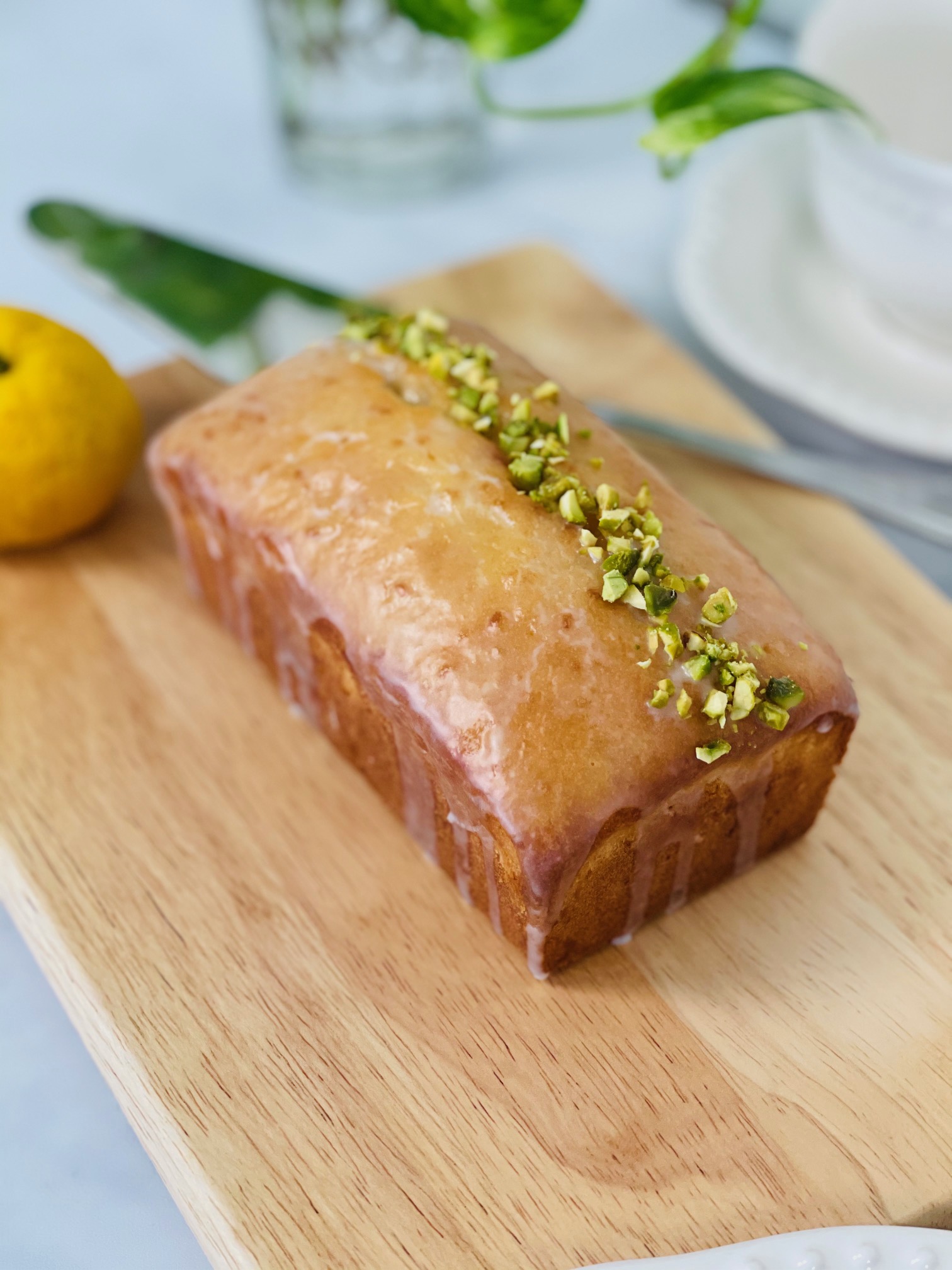
There is nothing quite like a perfectly executed Yuzu Pound Cake to capture the essence of a Japanese winter. While yuzu is often compared to lemon, this Yuzu Pound Cake is far more complex—sharper, floral, and incredibly aromatic. As an Executive Pastry Chef in New York City, I’ve refined this recipe over the years to ensure a professional crumb that balances tradition with modern technique.

Why This is the Best Yuzu Pound Cake

Yuzu is a cornerstone of Japanese culinary identity. While often compared to lemon in the West, yuzu is far more complex—sharper, yet possessing an incredibly elegant, floral aroma.
As an Executive Pastry Chef here in New York, I’ve spent years bridging the gap between traditional Japanese ingredients and modern techniques. This recipe is the culmination of that journey: a cake that is dense yet tender, vibrating with the bright, unmistakable fragrance of fresh citrus.
Sourcing Your Yuzu

In Japan, yuzu was a constant winter companion. I grew up with the tradition of Yuzu-yu, where whole fruits were tossed into steaming hot baths to celebrate the winter solstice. Today, I treat the fruit with a bit more professional reverence.
Every January, I source fresh citrus from Suzuki Farm. If you can’t find fresh fruit, you can still make a world-class Yuzu Pound Cake using:
Bottled Yuzu Juice: 100% pure and unsweetened.
Frozen Yuzu Peel: Found in premium Asian grocers.
No fresh yuzu? No problem

If you can’t find fresh fruit at your local Japanese grocery store, you can still achieve a professional result using:
Yuja-cha: This Korean citron marmalade adds a lovely texture and sweetness to batters.
Bottled Yuzu Juice: Look for 100% pure juice (not sweetened).
Frozen Yuzu Peel: Often found in the freezer aisle of Asian markets.
The Recipe: Double Yuzu Pound Cake

This recipe features yuzu in three layers—the cake, the syrup, and the icing—ensuring a bright, aromatic experience in every bite.
Ingredients & Equipment
Mold: Loaf mold I used, Non-Stick mini loaf pan, 5.7 x 3 x 2 inches (8cm x 14.5 cm x 5cm)
The Batter:
- ¾ cup (171g) Unsalted butter, softened to 18°C (64°F)
- ¾ cup (150g) Granulated sugar
- 1 pinch Fine sea salt
- 1 (20g) Egg yolk, room temperature
- 3 (150g) Whole eggs, room temperature
- 1 ¼ cup (142g) Cake flour
- ¼ cup (32g) Almond flour (essential for moisture)
- ½ tsp (2g) Baking powder
- 2 tbsp (30g) Yuzu peel, finely minced
- 2 tbsp (30g) Yuzu juice
The Soaking Syrup (Microwave Method):
- 2 tbsp (30g) Water
- ¼ cup (60g) Yuzu juice
- ½ cup (100g) Sugar (Note: You will have plenty of syrup left over—save it for a Yuzu Soda!)
The Sharp Yuzu Glaze:
- 1 ¼ cup (150g) Powdered sugar, sifted
- 2–3 tbsp (45-50g) Yuzu juice (add gradually)
- Garnish: Chopped pistachios or candied yuzu peel
Professional Instructions
- Mise en Place: Preheat oven to 350°F (175°C). Line both molds with parchment. Sift cake flour, almond flour, and baking powder together twice.
- The Quick Syrup: In a microwave-safe bowl, combine water, juice, and sugar. Microwave for 60–90 seconds, stirring once, until sugar is dissolved. Set aside.
- Creaming & Emulsion: Cream butter, sugar, and salt until pale and voluminous (3–5 mins). Slowly add room-temperature eggs in 4–5 additions. Chef’s Tip: If the batter looks like it’s breaking, fold in 1 tbsp of your flour mixture to help it re-emulsify.
- Folding & Baking: Gently fold in dry ingredients, then the yuzu peel and juice. Divide the batter evenly between the two molds. Immediately drop the oven to 325°F (160°C). Bake for 35–45 mins. You are looking for a clean toothpick and a beautiful kitsune-iro (golden-brown) top.
- The “Double-Pass” Soak: While the cakes are still hot from the oven, use a skewer to poke small holes across the top and sides. Instead of pouring, apply the syrup with intention using a pastry brush:
- First Pass: Brush a light, even layer over the entire surface of both cakes.
- Second Pass: Focus specifically on the edges and the darker, kitsune-iro (golden-brown) parts of the crust. These areas are naturally drier and will “drink” the syrup more readily to achieve a perfectly uniform texture.
- The Goal: You only need about 30–40g of syrup total for both cakes. They should look shimmering and glazed, but never saturated or waterlogged.
- The Overnight Rest: Wrap the warm cakes tightly in plastic wrap and refrigerate overnight. This traps the steam and is the secret to a professional crumb.
- The “Glass” Glaze: Whisk powdered sugar and yuzu juice into a thick, slow-ribbon consistency. Pour over the chilled cakes. By omitting butter, the glaze sets into a crisp, translucent shell.
Troubleshooting & Tips
- Avoid the “Soggy Bottom”: This recipe makes a generous amount of syrup so it doesn’t burn in the microwave. Do not use all of it on the cakes! You should have about 140g left over.
- The Baker’s Reward: Strain any crumbs from your leftover syrup and stir it into chilled club soda. It’s a refreshing Yuzu Spritz to enjoy while your cakes set.
- Why Two Molds? Smaller molds allow for more even heat distribution, ensuring the center is perfectly baked before the edges dry out.
Watch how I make this on my TikTok!

Double Yuzu Pound Cake
Ingredients
The Batter
- 171 g Unsalted butter (softened)
- 150 g Granulated sugar
- 1 pinch Fine sea salt
- 20 g Egg yolk (room temperature) (one egg)
- 150 g Whole eggs (room temperature)(3 eggs)
- 142 g Cake flour
- 32 g Almond flour
- 2 g Baking powder
- 30 g Yuzu peel (finely minced)
- 30 g Yuzu juice
The Soaking Syrup
- 30 g Water
- 60 g Yuzu juice
- 100 g Sugar
Yuzu Glaze & Garnish
- 150 g Powdered sugar sifted
- 45 g Yuzu juice add gradually
- Chopped pistachios or candied yuzu peel
Instructions
- Mise en Place: Preheat oven to 350°F (175°C). Line two mini loaf pans (approx. 5.7 x 3 x 2 inches / 8 x 14.5 x 5 cm) with parchment paper. Sift cake flour, almond flour, and baking powder together twice.
- Make the Quick Syrup: In a microwave-safe bowl, combine water, yuzu juice, and sugar. Microwave for 60–90 seconds, stirring once, until sugar is fully dissolved. Set aside to cool.
- Cream the Base: In a stand mixer fitted with the paddle attachment, beat the softened butter, sugar, and salt until pale, light, and voluminous (3–5 minutes).
- Emulsify: Lightly whisk your room-temperature eggs together and slowly add them to the creamed butter in 4–5 small additions. (Pro-Tip: If the batter breaks, fold in 1 tbsp of your sifted dry ingredients to bring the emulsion back together).
- Fold & Bake: Gently fold in the dry ingredients in two batches, followed by the minced yuzu peel and juice. Divide batter evenly between the two pans. Immediately drop the oven temperature to 325°F (160°C) and bake for 35–45 minutes until the top is a beautiful kitsune-iro (golden-brown) and a toothpick comes out clean.
- The "Double-Pass" Soak: While the cakes are hot, poke small holes across the surface with a skewer. First, brush a light, even layer of syrup over the entire surface of both cakes. Second, focus specifically on the edges and drier golden-brown crusts. (Goal: Use about 30–40g of syrup total for both cakes; they should shimmer, not be waterlogged).
- Overnight Rest: Wrap the warm cakes tightly in plastic wrap and refrigerate overnight to set the professional crumb.
- Glaze & Serve: Whisk the powdered sugar and yuzu juice into a thick, slow-ribbon consistency. Pour over the chilled cakes, allowing it to set into a translucent, crackly shell. Top with chopped pistachios.
Notes
- Avoid the “Soggy Bottom”: This recipe makes a generous amount of syrup so it doesn’t burn in the microwave. Do not use all of it on the cakes! You should have about 140g left over.
- The Baker’s Reward: Strain any crumbs from your leftover syrup and stir it into chilled club soda. It’s a refreshing Yuzu Spritz to enjoy while your cakes set.
- Why Two Molds? Smaller molds allow for more even heat distribution, ensuring the center is perfectly baked before the edges dr

8 comments
[…] Yuzu Pound Cake […]
[…] They’re super easy to make and to share. Recipe from Mochi Mommy. Get the recipe here Yuzu Pound Cake Yuzu is used for 3 parts, dough, syrup, and icing. So you really can taste a beautiful yuzu flavor […]
Thank you so much for making it and sharing! I’m so happy you enjoyed the yuzu flavor—that’s exactly what I was hoping to highlight 😊
Is this syrup amount right? Wondering if this too much as I putting over, then as I guessed my pound cake turned into soggy thing, and I’m so disappointed…
I’m so sorry that happened—that’s really disappointing. Thank you for pointing it out.
The syrup amount in the recipe is more than what you actually need to use. I usually brush a generous amount, but I don’t use all of it. It really depends on how dry the pound cake is after baking and your personal preference.
I realize now that my instructions weren’t clear enough, and I’ll update the recipe to make this easier to understand. Thank you again for your feedback 🙏
[…] Yuzu Pound Cake […]
If you don’t have fresh or frozen yuzu and only yuzu juice, do you add more yuzu juice to the batter? How much more?
Thank you so much for asking!
If you are using only bottled yuzu juice (without the minced peel), you do not need to add more juice to the batter. Changing the liquid ratio can throw off the emulsion and make the batter too wet, which interferes with that lovely pound cake crumb.
Instead, you can rely entirely on the 2 tablespoons of bottled yuzu juice specified in the recipe—it still packs a wonderful, bright punch! If you are missing that little bit of texture and aromatic punch that the minced peel provides, you can add just ½ teaspoon of finely grated fresh lemon zest or yuzu zest (if you have a lemon on hand) just to boost the aromatics, but keeping the juice amount the same is the safest bet for the structure of the cake.
Happy baking, and let me know how it turns out!