
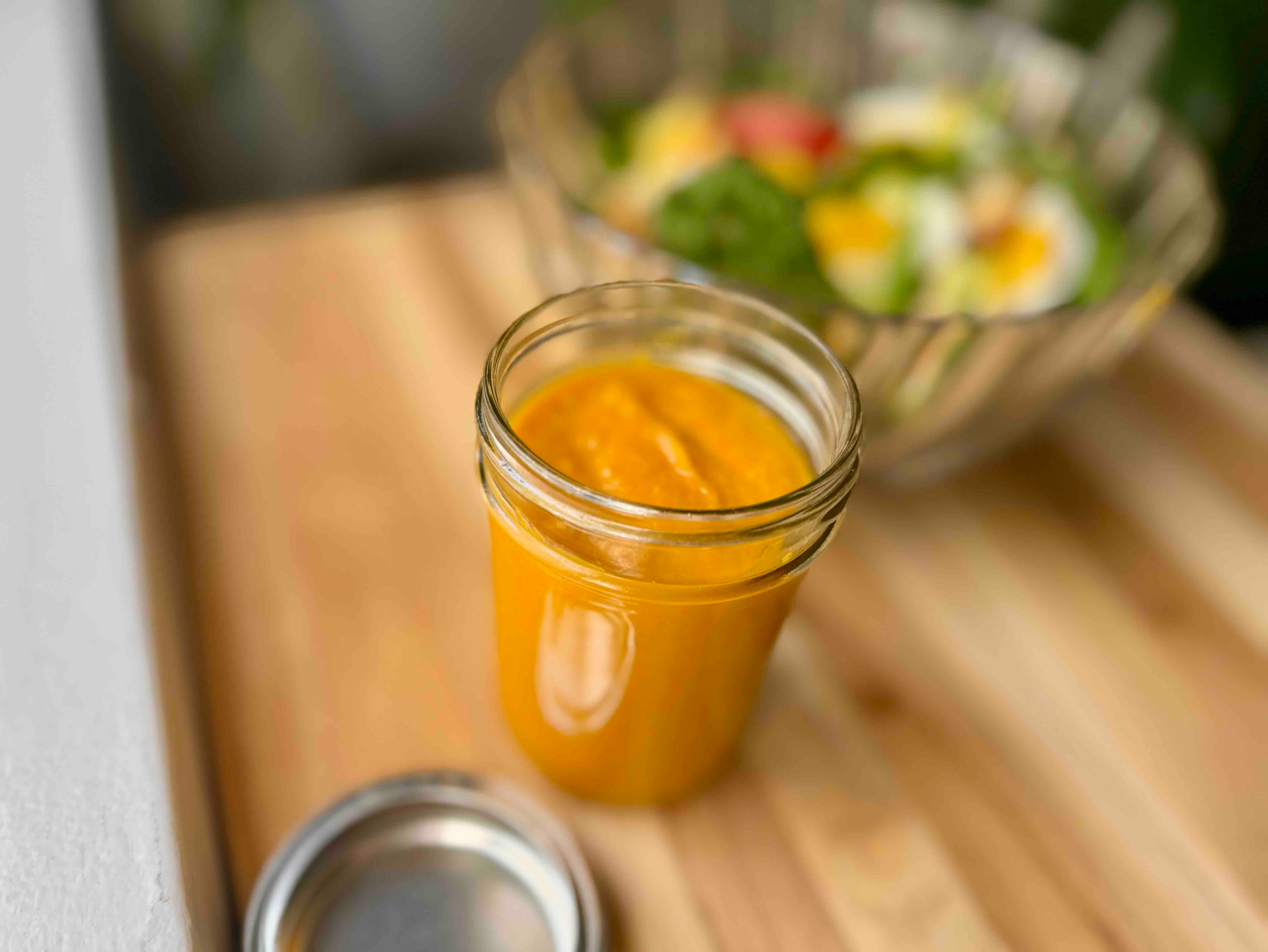
Forget thin, watery vinaigrettes. This Fermented Carrot Koji Dressing is what I call an “eating-style” sauce—thick, vibrant, and packed with enough substance to be the star of the plate. By leveraging the power of Rice Koji, we transform humble root vegetables into a complex sauce that tastes like it has hours of slow-cooked sweetness, all without a single grain of added sugar. The enzymes in the koji break down the starches in the carrots and onions, resulting in a deep, mellow flavor and a beautiful golden-orange hue.
What is Koji? (The Secret to Natural Sweetness)

If you have ever enjoyed the deep complexity of miso or the refreshing sweetness of amazake, you have already experienced the magic of Koji. At its core, Koji (Aspergillus oryzae) is a noble mold that is grown on steamed grains—most commonly rice.
The reason this dressing tastes so remarkably sweet without a single gram of added sugar comes down to enzymes. Think of Koji as a tiny, natural laboratory. During our 8-hour fermentation process, the amylase enzymes in the koji act like scissors, breaking down the complex starches in the carrots, onions, and the rice itself into simple, delicious sugars.
Chef’s Sourcing Tip: For this recipe, I used Cold Mountain Dried Koji (pictured below), which has become a staple in most Japanese grocery stores across New York. If you aren’t near a local market, you can easily find quality dried koji on Amazon or through specialized retailers like The Rice Factory New York. Whether you use a local boutique brand or a trusted pantry staple, the result will be a vibrant, living sauce.

If you enjoy the deep, complex umami that fermentation brings to savory dishes, you’ll love how it transforms sweets, too. My [Miso Caramel Sauce] uses a similar fermented depth to balance out rich sweetness.
Ingredients for Carrot Koji Dressing

| Ingredient | Amount | Notes |
| Carrot | 1 large (180g) | You can keep the skin on for maximum nutrients. |
| Onion | 1/2 (100g) | Peeled and roughly chopped. |
| Dried Rice Koji | 50g | Also known as Kome Koji. |
| Soy Sauce | 50ml | Use a high-quality shoyu for the best depth. |
| Apple Cider Vinegar | 50ml | Preferably “with the mother.” |
| Taihaku Sesame Oil | 50ml | Substitute with a neutral oil if preferred. |
Step-by-Step Instructions: The Rice Cooker Method


- Prep the Base: Roughly chop the carrot and onion into chunks. No need for precision here; the blender does the heavy lifting.
- Create the Paste: Combine the vegetables, rice koji, soy sauce, vinegar, and oil in a high-speed blender or food processor. Blend until the mixture is a smooth, thick paste.
- Prepare for Fermentation: Transfer the vibrant paste into a clean glass jar. If you are using a rice cooker, ensure the jar fits comfortably inside.
- The Fermentation Process:
- Fermentation Maker: Set to 60°C (140°F) for 8 hours.
- Rice Cooker Method: Place the jar in a water bath inside the rice cooker. Use the “Keep Warm” setting. This maintains the gentle heat necessary for the koji enzymes to activate.
- Tip: If possible, give the mixture a quick stir 3–4 times during the process to ensure even fermentation.
Why You’ll Love This Fermented Dressing

- Natural Enzymatic Sweetness: As the mixture ferments, the koji enzymes (amylase) convert vegetable starches into simple sugars. You get a sweetness that feels balanced and sophisticated rather than sugary.
- A “Living” Sauce: Because it is fermented at a controlled temperature, you are preserving the beneficial properties of the koji, which aids in digestion and makes the nutrients in the carrots more bioavailable.
- The Texture: It’s thick enough to dollop. It won’t run off your salad; it clings to ingredients, making it perfect for meal-prep grain bowls.
Carrot Koji Dressing is More Than Just a Salad Dressing


While it’s incredible on a simple bed of greens, don’t stop there:
- As a Marinade: The enzymes in the koji help tenderize proteins. Brush it over white fish or roasted chicken in the final minutes of cooking.
- The Wildcard: Try it as a dip for roasted sweet potatoes or spread it inside a turkey and avocado wrap for an instant flavor upgrade.
Chef’s Pro-Tip: Storage & Aging

Once the 8 hours are up, let the dressing cool and store it in the refrigerator. While it’s delicious immediately, the flavors will continue to mellow and marry over the first 24 hours. It stays fresh for up to two weeks—though it rarely lasts that long!
What are you planning to pair your first batch with? I’d love to hear how the fermentation step worked out for you.

Fermented Carrot Koji Dressing
Ingredients
- 1 pieces large Carrot 180g roughly chopped (skin on)
- 1/2 pieces Onion 100g roughly chopped
- 50 g Dried Rice Koji Kome Koji
- 50 ml Soy Sauce
- 50 ml Apple Cider Vinegar
- 50 ml Taihaku White Sesame Oil or neutral oil
Instructions
- Prep: Chop the carrot (skin on) and onion into chunks.

- Blend: Add the vegetables, rice koji, soy sauce, vinegar, and oil to a blender. Blend until smooth.

- Ferment (Fermentation Maker): Transfer to a clean container and ferment at 60°C (140°F) for 8 hours.
- Ferment (Rice Cooker Method): Place the container in a water bath inside your rice cooker. Set to “Keep Warm” for 8 hours. Stir 3–4 times if possible.

- Finish: Once the time is up, cool the dressing. It will continue to mellow and improve in flavor in the refrigerator.

Notes
- Storage: Keeps well in the refrigerator for up to 2 weeks.
- Why it works: The koji enzymes break down the vegetable starches into natural sugars, creating a deep sweetness with zero added sugar.
- Shortcut: In a hurry? Use my [5-Minute Shio Koji Shortcut] instead of fermenting for 8 hours!
