
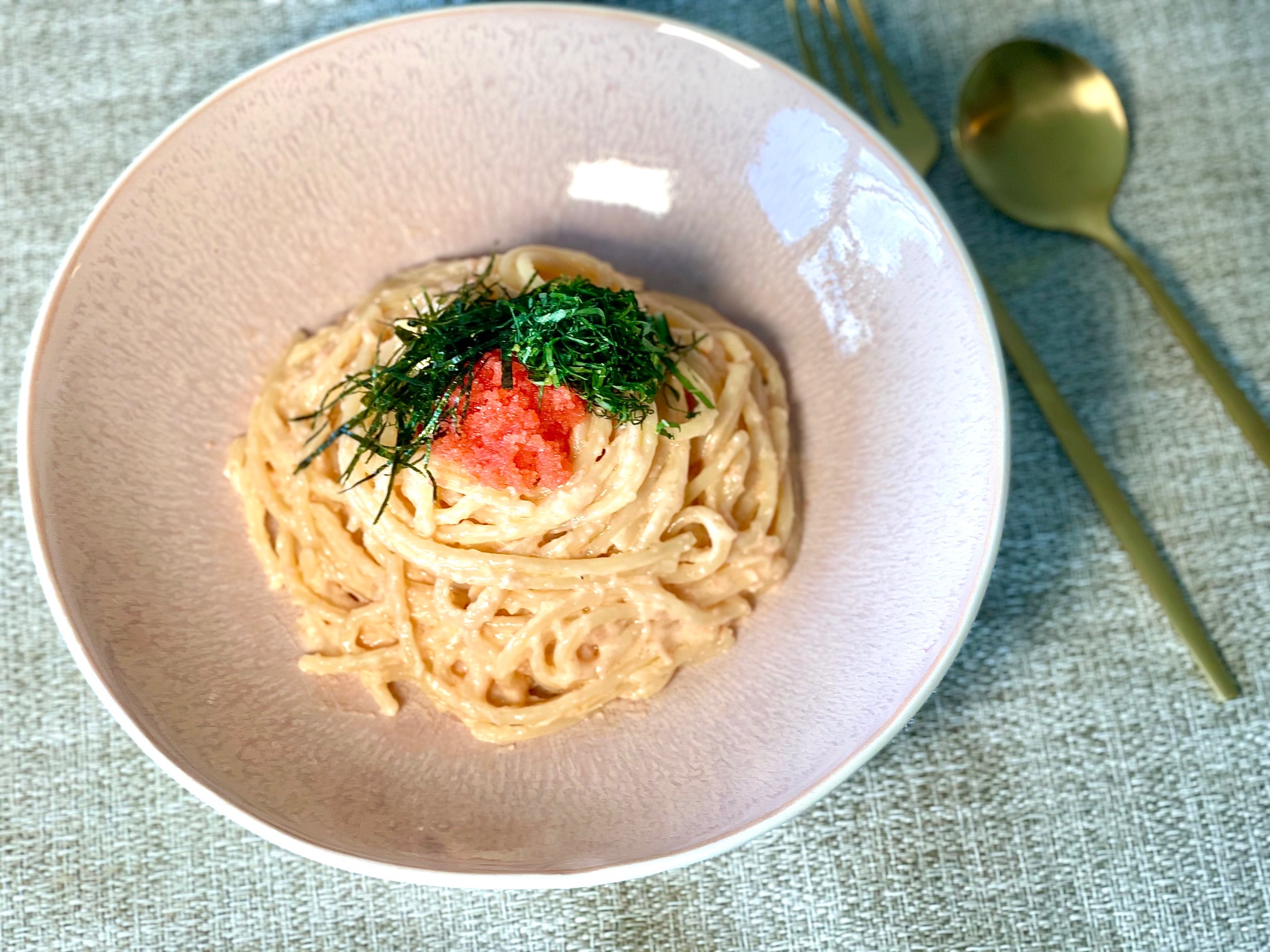
Japanese Wafu (Japanese-style) pasta is a beautiful culinary crossroads, and among them, Tarako Spaghetti—affectionately known as tarasupa in Japan—is an absolute classic. Made with salted pollock or cod roe, its rich, umami-forward flavor profile might sound unique if you haven’t tried it, but if you love salmon roe, caviar, or rich seafood bakes, this pasta will instantly become a favorite comfort food.
What is Tarako?
Tarako (たらこ) consists of whole sacs of salted, cured pollock or cod roe. It has a mild, deeply savory taste and a distinctly fine, pebbly texture. In traditional Japanese cuisine, we frequently enjoy it alongside a bowl of hot white rice or gently grilled as an accompaniment to sake. Its rich umami also makes it a versatile ingredient for modern dishes like udon, potato salad, and okonomiyaki. You can easily find it in the seafood or freezer sections of Japanese and Korean grocery stores.
The Historic Origins of “Tarasupa”
The dish traces its roots back to a legendary Tokyo pasta restaurant named Kabenoana (壁の穴). A regular customer asked the chef to recreate a luxury Italian caviar spaghetti. Because true caviar was far too expensive to serve regularly, the chef creatively substituted local tarako. The experiment was an immediate success, transforming an exclusive luxury into one of Japan’s most beloved everyday comfort foods.
Tarako vs. Mentaiko: What’s the Difference?

When shopping, you will likely see both options sitting side-by-side. While they look quite similar, their flavor profiles offer a distinct contrast:

Mentaiko (明太子): Cured pollock roe that has been marinated in chili flakes and spices. It is brighter red, punchy, and delivers a clean kick of heat.
Tarako: Purely salted and cured. It is milder, deeply savory, and features a soft pink hue.
Chef’s Note: If you prefer a spicy kick, you can substitute mentaiko into this exact recipe to make a vibrant Mentaiko Spaghetti instead.
Choosing and Cooking the Perfect Pasta


While this luxurious cream sauce pairs beautifully with almost any noodle, using a thick-cut spaghetti (around 2.2mm) or high-quality fresh pasta yields the best results.
In classic Italian cooking, al dente is the golden rule. However, for a traditional Japanese wafu pasta experience, we look for a mochi-mochi texture—which means wonderfully chewy and springy. To achieve this, cook your thick spaghetti for roughly one minute longer than the box package directions indicate. The extra starch expansion creates a perfect surface for the silky cod roe sauce to cling to.

Creamy Tarako Spaghetti (Japanese Cod Roe Pasta)
Ingredients
- 4 oz thick spaghetti such as Showa 2.2mm
- 4 quarts water
- 1.5 tbsp kosher salt for the pasta water
- 1 sack tarako cod roe, skin removed (approx. 2-3 tbsp of roe; reserve 1 tsp for garnish)
- 1 tbsp unsalted butter
- 1 tbsp Japanese mayonnaise like Kewpie
- ½ cup heavy cream
- 1 tbsp reserved pasta cooking water
- ½ teaspoon dashi powder optional, for enhanced umami depth
- 2 fresh shiso leaves sliced into thin ribbons (julienne)
- 1 tbsp kizami nori shredded nori seaweed
Instructions
- Bring 4 quarts of water to a rolling boil in a large stockpot and stir in the salt. Add the spaghetti and cook for 1 minute past the package al dente directions to achieve a chewy, mochi-mochi texture.

- While the pasta cooks, melt the butter and Japanese mayonnaise together in a large pan over medium heat. Whisk in the heavy cream and optional dashi powder. Bring to a gentle simmer, then turn the heat to low.

- Just before draining the spaghetti, scoop 1 tablespoon of the starchy pasta water and stir it into the cream mixture to emulsify. Turn off the heat completely.
- Add the hot, drained spaghetti and the raw tarako roe into the pan.

- Toss quickly off the burner using the residual heat to warm the roe without cooking it through.

- Plate immediately. Garnish with the reserved teaspoon of raw tarako, shiso ribbons, and a handful of crisp kizami nori.

