
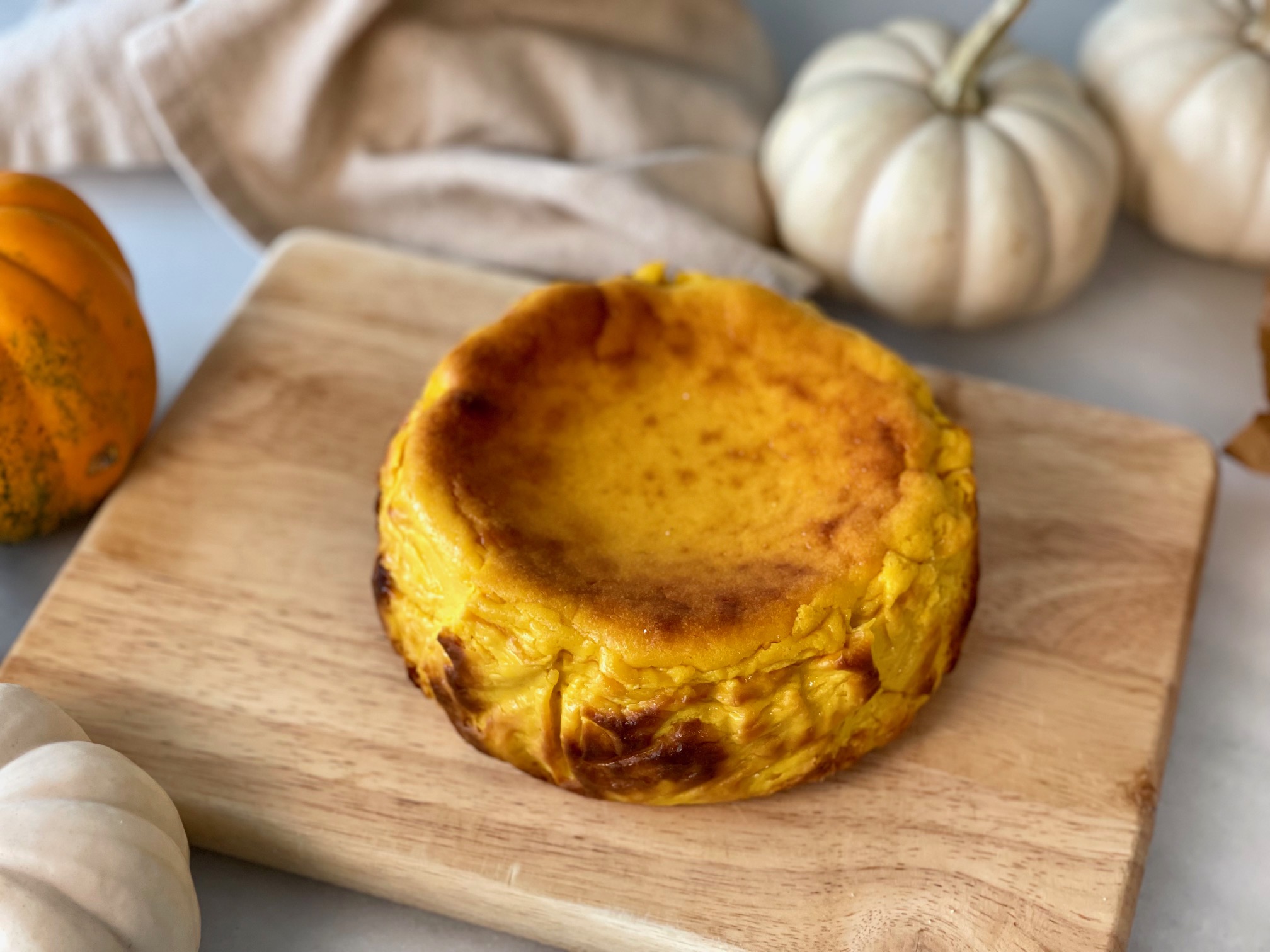
When autumn rolls around, pumpkin cheesecake is always at the top of my list for cozy, comforting desserts. But this year, I’ve been completely obsessed with making Basque cheesecakes. Naturally, I couldn’t resist combining the two into the ultimate fall treat.
Instead of using standard Western pumpkin, my go-to choice is always Kabocha squash (Japanese pumpkin). This Kabocha Basque Cheesecake is the perfect centerpiece for a crisp autumn afternoon tea, a weekend project, or a stunning Thanksgiving dinner finale.
Watch the 42-second step-by-step video!

Understanding the Ingredients

To achieve that signature silky texture and deeply caramelized flavor, every ingredient plays a vital role:
- Cream Cheese: Standard, full-fat brick cream cheese works best. Make sure it is completely softened to room temperature so it blends into a smooth, lump-free batter.
- Kabocha Paste: Roast, steam, or microwave your fresh squash until tender, then mash into a paste. Since a 6-inch cake needs 180g of paste, start with a fresh kabocha weighing at least 10 oz (280g) to account for the skin and seeds.
- White Granulated Sugar: Provides clean sweetness and helps create that gorgeous, deeply caramelized top under high heat.
- Maple Syrup: A touch of real maple syrup adds a subtle autumn aroma that pairs perfectly with the natural nuttiness of the kabocha.
- Whole Eggs: We use precisely weighed, room-temperature eggs. Bringing them to room temperature prevents the batter from breaking or curdling.
- Heavy Cream: The essential ingredient that gives a Basque cheesecake its iconic, ultra-creamy, and luscious interior.
- Pastry Flour: Just a touch helps stabilize the cake’s structure so it slices beautifully without making the texture heavy.
- Spices (Cinnamon & Nutmeg): I use just a tiny pinch of each. Kabocha has a delicate flavor, and too much warm spice will easily overpower it. Keep it subtle, or omit them entirely to let the pure flavor of the Japanese pumpkin shine!
Why Kabocha Squash Tastes Sweeter and Nuttier

If you’ve spent some time exploring my recipes, you already know how much I love baking with kabocha squash. Compared to a regular Western pumpkin, kabocha is much less watery and boasts an incredibly dense, velvety texture. Flavor-wise, it delivers a rich, deep sweetness with a distinctly nutty undertone that pairs beautifully with baked desserts.
The only downside? You can’t simply walk into a grocery store and pick up a can of pre-made kabocha puree or paste. To unlock that incredible flavor, you need to start with a fresh, whole squash.
How to Prepare Kabocha Squash

Whenever I buy a whole kabocha, I like to prep a large batch of homemade kabocha paste in advance to keep in my freezer for future cravings. My usual routine involves baking the squash, pressing it through a fine-mesh strainer, and wrapping it into individual portions to freeze. (If you need a step-by-step guide on how to safely tackle a whole squash, be sure to check out my post on How to Cut and Store Kabocha Squash).
However, if you are making this cheesecake from scratch today, don’t worry about getting your prepped squash perfectly smooth ahead of time. Because we will be passing the entire finished cheesecake batter through a fine-mesh strainer before pouring it into the pan, you can skip the extra step of pre-straining the squash itself!
You can cook your fresh kabocha using any of these three simple methods:
–Method 1 (My Favorite): Bake. Roasting it in the oven caramelizes the natural sugars and keeps the texture wonderfully dense.

Method 2: Steam. Steaming keeps the kabocha beautifully vibrant and tender.
Method 3: Microwave. The quickest option if you are short on time—just ensure it’s cooked completely through until soft.

Pastry 101: Master the Perfect Cheesecake Batter

Compared to delicate soufflé cheesecakes or chilled rare cheesecakes, a Basque cheesecake is famously forgiving. It doesn’t require complex water baths or temperamental folding techniques; it simply requires mixing all of your ingredients together into a uniform batter. You can easily make this mixture entirely by hand with a bowl and whisk, or speed things up using a standard food processor or blender.
However, to achieve that signature silky, ultra-creamy texture, you must be mindful of the mixing order.
Pastry 101 Rule: When blending ingredients together, always add a loose, liquid ingredient into a harder, denser ingredient—never the opposite. Doing this prevents stubborn pockets from forming and ensures a completely lump-free batter.
In this recipe, the cream cheese is your densest base. Always smooth it out with the sugar first before gradually introducing your liquids.
- Mixing by Hand: Start with a large bowl and a sturdy flexible spatula to cream the base. Switch over to a manual hand whisk right before you begin adding the eggs to ensure everything incorporates smoothly.
- Using a Blender or Food Processor: If you have a large, commercial-sized machine, you can run the recipe from start to finish in one go. However, if you own a compact or standard home food processor like me, the volume of the liquids might surpass the maximum fill line. If that happens, simply use the machine to blend the heavy cream cheese, sugar, and kabocha paste until smooth, then transfer the dense mixture into a large bowl to whisk in the eggs and heavy cream by hand.
Baking for the Perfect “Jiggle” and Serving

Unlike a traditional New York cheesecake, which is baked low and slow to keep it pristine and white, a Basque cheesecake thrives on high heat. We intentionally bake it at a high temperature to deeply caramelize the top into a gorgeous, dark brown crust while keeping the center incredibly luscious.
The secret to a flawless bake is the dual-temperature method. We start hot at 450°F (230°C) to get that signature burnt top, then drop the temperature slightly to 430°F (220°C) to let the interior cook to a velvety custard consistency.
When you pull the cheesecake out of the oven after its 30-minute bake, it should still be very jiggly in the center. Don’t panic—this is exactly what you want! A freshly baked Basque cheesecake is far too delicate to slice or eat right away. As it cools to room temperature, the cake will gently sink, and the flavors will begin to settle.
For the ultimate texture, transfer the cooled cake to the refrigerator and let it chill completely overnight. When you are ready to serve the next day, dip a sharp knife into hot water, wipe it clean, and slice through the chilled cake for beautiful, clean, professional portions. Enjoy!

Kabocha Basque Cheesecake
Ingredients
The 6-Inch Mold Version (Base Batch)
- 410 g Cream Cheese softened
- 180 g Kabocha Paste cooked and mashed
- 90 g White Granulated Sugar
- 25 g Maple Syrup
- 170 g Whole Eggs room temperature
- 20 g Pastry Flour
- 200 g Heavy Cream
- 1 pinch Cinnamon Powder
- 1 pinch Nutmeg Powder
The 8-Inch Mold Version (Upscaled Batch)
- 553 g Cream Cheese softened
- 243 g Kabocha Paste cooked and mashed
- 122 g White Granulated Sugar
- 34 g Maple Syrup
- 230 g Whole Eggs room temperature
- 27 g Pastry Flour
- 270 g Heavy Cream
- 1 pinch Cinnamon Powder
- 1 pinch Nutmeg Powder
Instructions
- Preheat your oven to 450°F (230°C) and line your cake pan (6-inch or 8-inch) with two overlapping layers of parchment paper, leaving at least a 2-inch overhang around all edges.

- In a large bowl or food processor, combine the softened cream cheese and granulated sugar. Mix or blend until completely smooth and free of lumps.

- Add the maple syrup and kabocha paste to the cream cheese mixture, blending thoroughly until fully incorporated.

- Add the room temperature whole eggs one at a time (or stream in your weighed eggs slowly), blending thoroughly after each addition until just combined.

- Slowly pour in the heavy cream while continuing to whisk gently until the mixture is uniform.
- Sift the pastry flour, cinnamon, and nutmeg evenly over the top of the batter, then whisk slowly until just combined and a silky-smooth consistency is reached.

- Pass the entire cheesecake mixture through a fine-mesh strainer. Transfer the batter into the preprared mold.

- Bake at 450°F (230°C) for exactly 15 minutes to initiate the caramelized exterior.

- Reduce the oven temperature to 430°F (220°C) without opening the oven door, and bake for an additional 15 minutes until the top is deeply dark brown and the center still has a distinct, prominent jiggle. (additional 5 minutes for 8 inch mold)

- Remove from the oven and allow to cool completely to room temperature in its pan (it will sink slightly), then transfer to the refrigerator to chill and set overnight before using a hot knife to slice and serve.

